
Key Takeaways
- Central Texas electrical contractor demand remains elevated heading into late 2026 and early 2027, driven largely by sustained data center and mission-critical investment along the Austin, San Antonio, and Waco corridor.
- National nonresidential construction spending has risen for multiple consecutive months, with data center projects accounting for a disproportionate share of gains, signaling persistent demand for electrical and low-voltage trades even as other commercial segments soften.
- Counties including Travis, Williamson, Hays, Caldwell, and Bexar host dozens of active and proposed data center projects, concentrating opportunities and labor pressure around Austin, Round Rock, San Marcos, San Antonio, and nearby communities.
- Contractors should respond now by tightening bid selectivity, reviewing backlog exposure to data centers versus other sectors, and aligning staffing plans and apprenticeship enrollment with realistic capacity.
- ABC Central Texas can help contractors interpret these signals and build workforce capacity through registered apprenticeship programs, safety training, and regional market intelligence.
Introduction: What the Latest Data Center Spending Signal Means for Central Texas
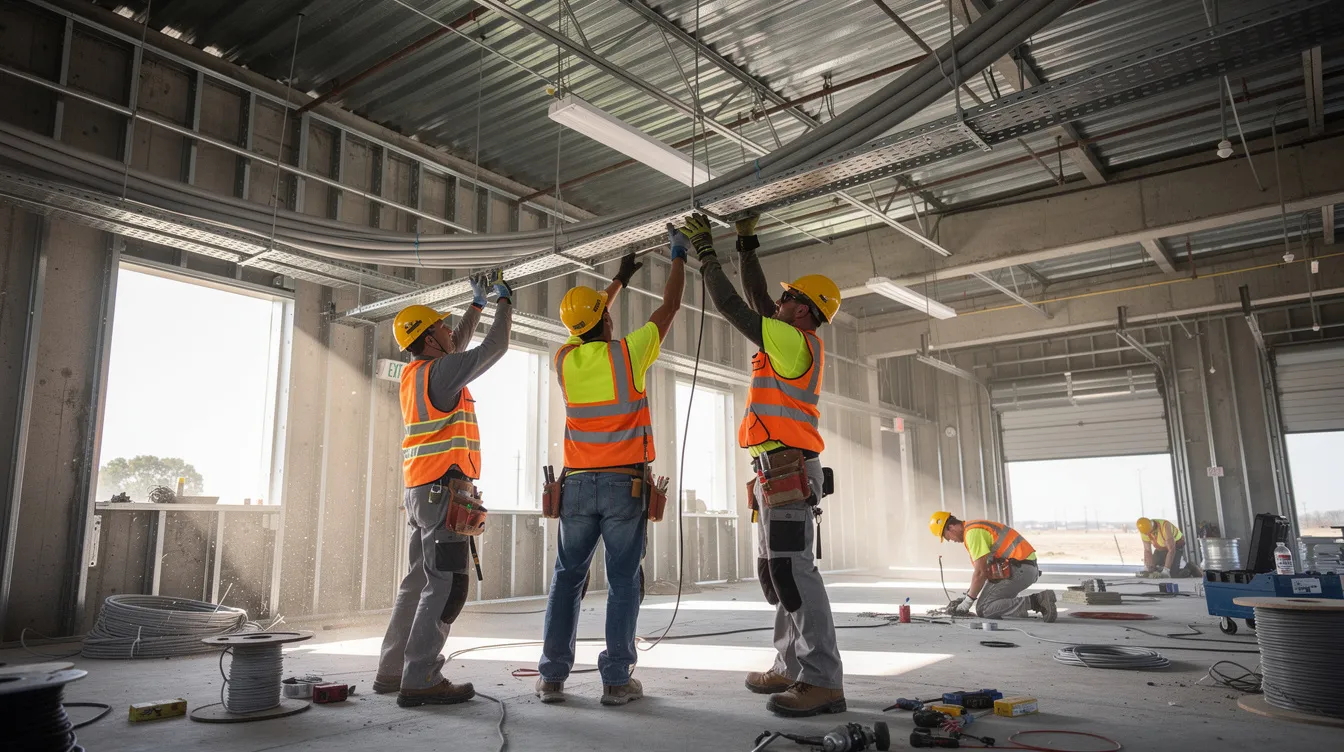
Recent federal construction data confirms what contractors across Greater Austin already feel on their jobsites: nonresidential construction spending keeps rising, and data center investment is doing most of the heavy lifting. That pattern directly shapes demand for Central Texas electrical contractors, creating both opportunity and operational risk for firms along the I-35 corridor.
This article translates national data-center-driven spending trends into on-the-ground implications for contractors operating in Austin, Round Rock, San Marcos, Waco, San Antonio, and surrounding markets. It focuses on how sustained data center and mission-critical work affects electrical and specialty trade demand, staffing choices, backlog quality, and pricing decisions through 2027. It builds on broader regional analysis but narrows to current demand conditions and the short-term decisions contractors need to make now.
National Context: Data Centers as the Engine of Nonresidential Spending
Federal construction spending releases in mid to late 2026 show overall nonresidential spending increasing, with recent gains heavily concentrated in data centers and related categories. Other segments, including office, retail, and standard commercial buildings, show more modest or mixed growth. Texas is experiencing significant growth in electricity demand, particularly from data centers, and the national numbers confirm this is not a regional anomaly.
Nonresidential construction spending data is compiled monthly by the U.S. Census Bureau at a seasonally adjusted annual rate. When a rising slice of that figure is tied to data centers, it signals durable demand for power-intensive projects and the trades that build them. Earlier 2026 releases indicated that month-over-month gains in nonresidential spending were driven largely, and at times almost entirely, by data center work. This established a multi-month pattern rather than a one-off spike. Data center expansion is a primary driver of electrical contracting demand nationwide.
Industry member surveys have reported that roughly one in six commercial contractors and related companies now touch data center projects, underscoring how widespread this sector’s influence has become on labor allocation and subcontractor availability. The Central Texas electrical contracting market is experiencing strong demand driven by megaprojects. Even if some commercial or office segments soften, ongoing data center spending keeps national demand for electrical contractors and mission-critical trades elevated.
Why Central Texas Feels Data Center Impacts Early and Intensely
Central Texas, particularly the Austin, Round Rock, San Marcos metro and the broader I-35 corridor toward Waco and San Antonio, is one of the regions where data center and advanced industrial spending shows up on jobsites fastest. Central Texas is a national hotspot for high-tech manufacturing and digital infrastructure, which means spending trends translate into local labor competition almost immediately.
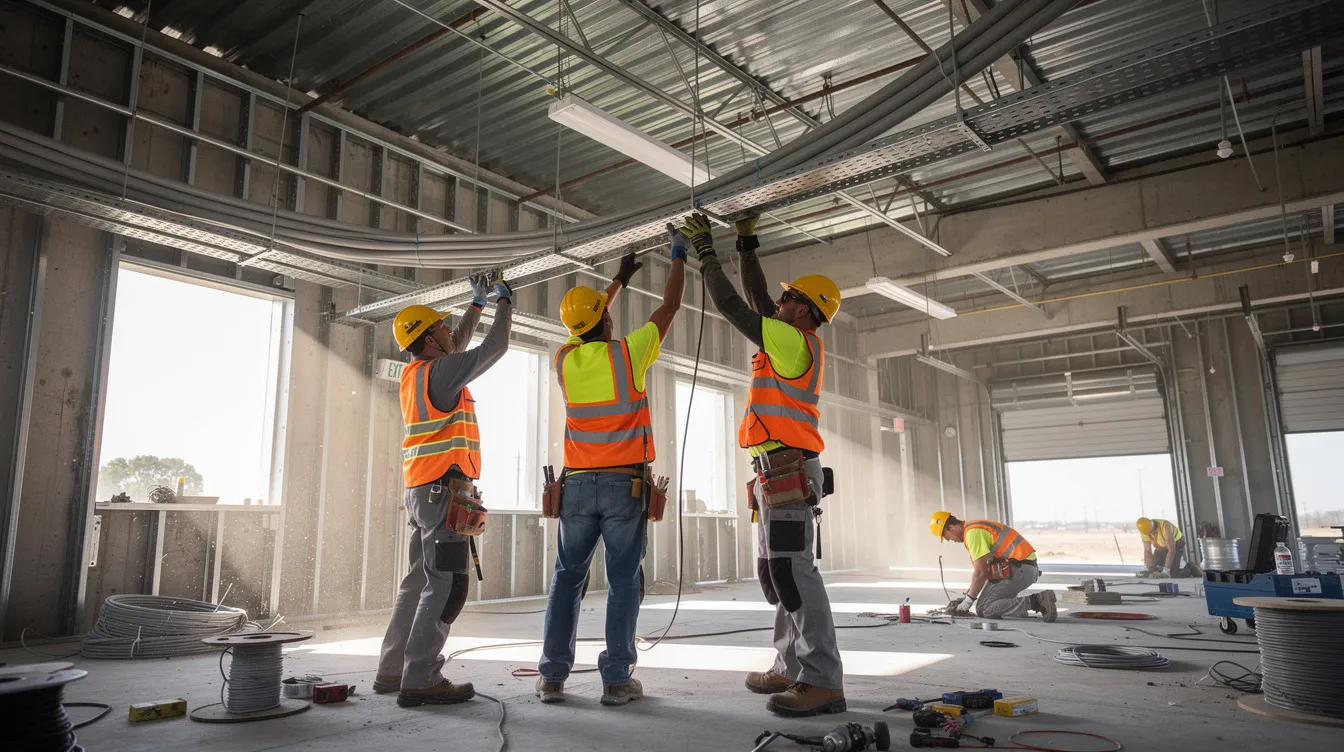
Recent labor statistics for the Austin, Round Rock, San Marcos area report approximately 99,600 construction jobs in mining, logging, and construction, indicating a sizable but heavily utilized regional workforce. Rapid population growth around Austin is driving demand for electrical services across residential, commercial, and industrial segments simultaneously. Severe workforce shortages are affecting the regional construction labor market, and constrained labor availability in Central Texas is affecting project timelines and bidding across sectors.
The region’s appeal for data center developers includes:
- Proximity to major tech campuses and downtown Austin employment centers
- Access to substations and transmission infrastructure
- Highway connectivity along I-35
- A historically business-friendly climate
Central Texas also carries active pipelines in public construction, higher education, healthcare, and manufacturing, which compete with data centers for the same electricians, low-voltage specialists, and superintendents. Ongoing municipal infrastructure updates create a resilient market for contractors, while local utility investments fuel a constant need for specialized electrical contractors. Demand for commercial and public electric vehicle charging stations is also rising, adding another layer of electrical scope to the region’s project mix. Public infrastructure updates are driving demand for electrical contracting work alongside private-sector growth.
Geographically, demand clusters around Austin and Round Rock, stretches south toward San Marcos and Hays and Caldwell counties, and ties into San Antonio and Bexar County. Commercial and industrial corridors are actively developing across the I-35 region, creating a continuous belt of opportunity and competition.
From National Trend to Local Jobsites: Central Texas Data Center Footprint in Round Rock
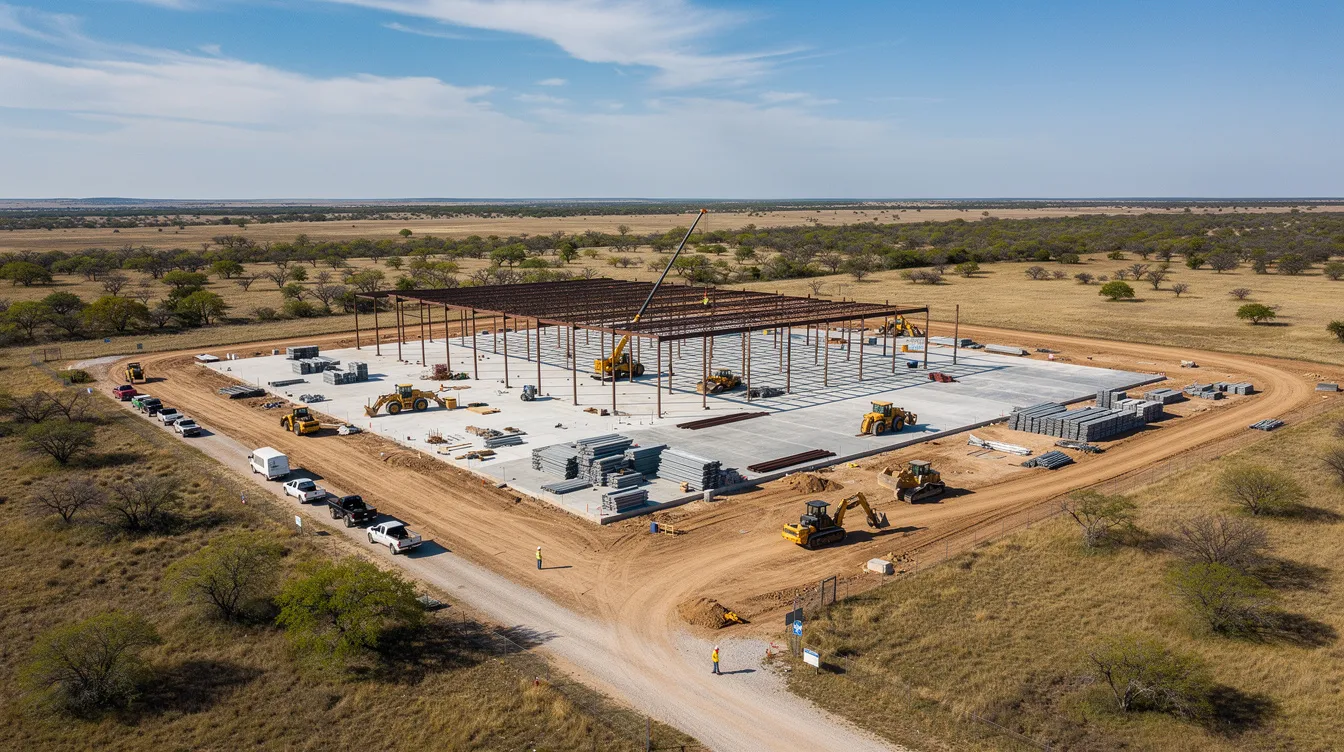
Multiple counties in and around Central Texas now host a dense cluster of operating, under-construction, and proposed data center sites. The spending trends visible in national data are already on the ground in the region, and major industrial projects are anchoring regional demand for electrical contracting work.
Williamson County hosts partially operational and under-construction campuses in Round Rock, Hutto, Taylor, and Georgetown. Facilities with capacities ranging from 25 MW to well over 75 MW need electrical and mechanical systems that help campuses operate continuously, drawing civil, low-voltage, and other contractors from across the Austin area.
Travis County includes operational campuses near the Austin airport area and planned facilities in Pflugerville and northern suburbs. Many carry capacities measured in tens or hundreds of megawatts, requiring substantial electrical systems, infrastructure upgrades, and the supporting technology these campuses rely on.
Caldwell and Hays Counties around San Marcos, Maxwell, and Martindale host several very large data center campus proposals, including some with planned capacities in the hundreds to thousands of megawatts across multiple phase builds.
Bexar County in San Antonio includes campuses from major hyperscale operators. Although Bexar sits just beyond the core ABC Central Texas area, projects there still pull from the same regional electrical and specialty trade labor pool. The scale of these campuses, measured in power capacity, water demand, and site acreage, reflects the volume of construction activity that feeds demand for electricians and related trades.
Electrical and Mission-Critical Demand: Who Feels the Pressure First?
Data centers are among the most power-intensive nonresidential projects. Most construction value often flows to electrical distribution, backup power, grounding, and low-voltage systems. Electrical infrastructure modernization is essential as power and construction requirements grow across the region. Facilities often use N+1 design for power redundancy, meaning every critical electrical system has a built-in backup layer that must be installed, tested, and commissioned to support continuous operation during disruptions.
Central Texas electrical contractor demand spikes early in a data center schedule and stays high throughout, since electrical scopes drive commissioning milestones, uptime reliability, and owner acceptance. Mission-critical construction ensures 24/7 operation without interruptions, and monitoring and automation improve issue detection and response before small faults turn into larger disruptions. That standard requires stringent regulatory compliance, specialized materials for durability in mission-critical projects, and layered testing protocols.
Related mission-critical trades also feel early pressure:
- Controls integrators and fire alarm and life-safety subcontractors
- Security and structured cabling firms
- Mechanical contractors delivering chilled water or direct-to-chip cooling systems
Even contractors who never set foot inside a data center feel indirect effects. A tenant-improvement electrician in Round Rock or a small commercial GC in Waco experiences tighter labor markets and subcontractor pricing because experienced crews gravitate toward mission-critical work. Consider the difference: a conventional tilt-wall warehouse in the Austin suburbs might require a handful of electricians for a few months, while a 100+ MW data center in the same county pulls far more electricians and low-voltage technicians per square foot over an 18- to 30-month build.
Reading the Signal: Demand, Not Just Backlog, Is the Story
It matters to distinguish between backlog (work under contract) and current demand (new opportunities and active solicitations). Recent data center spending signals tell contractors more about demand intensity than about their individual backlog levels. Persistent data-center-led spending means Central Texas contractors can assume a strong underlying demand floor for mission-critical and industrial work through at least the next 12 to 24 months.
Contractors should watch a combination of real-time demand indicators:
- Bid volume from data center owners
- RFP frequency from repeat hyperscale and colocation clients
- The pace of design-build inquiries for electrical and mechanical scope
However, high demand does not automatically mean high profit. Advanced risk management is essential in mission-critical construction, and high opportunity volume can mask local constraints in labor, supervision, and power availability that make some projects harder to deliver profitably. Read the signal honestly: strong demand is only valuable if your team can execute.
Operational Implications: Bidding, Pricing, and Schedule Risk in 2026 to 2027
This is where estimators, project executives, and owners need to change behavior. When data center and mission-critical demand is strong, standard bidding and pricing habits can create serious exposure.
Large data center pursuits are capacity-defining decisions, so contractors need to weigh the effort required against realistic capacity, not just top-line revenue. A single win in Williamson, Hays, or Caldwell County can tie up multiple electrical and supervisory crews for 18 to 30 months. Small contractors face uneven growth opportunities in 2026, and small firms feel pricing mistakes faster than larger competitors. Labor capacity limits what small firms can pursue responsibly, and small contractors must protect cash flow while pursuing revenue.
Tighten bid screening for data center and heavy industrial jobs by asking:
- What is the utility timeline, and who owns interconnection risk?
- What are the change-order mechanisms and commissioning expectations?
- How fast does the owner make decisions, and what is the budget reality, since decision speed can matter when schedule pressure is high?
Schedule risk increases when many projects chase the same critical-path trades. Ask whether your operations can realistically staff overlapping MEP-intensive work in Austin, Round Rock, and San Antonio simultaneously without resorting to unsustainable overtime. Consider these scenarios for a mid-sized electrical contractor:
| Scenario | Mix | Margin Profile | Crew Utilization |
|---|---|---|---|
| One large data center shell-and-core package | High concentration | Higher potential margin, higher risk | Crews locked in 18+ months |
| Multiple smaller TI or public-sector projects | Diversified | Moderate margin, steadier cash flow | Flexible scheduling |
| Balanced blend of one data center phase plus two to three commercial projects | Mixed | Balanced margin, moderate risk | Staggered crew deployment |
Staffing and Workforce Planning: Using Labor Statistics to Convert Demand into Sustainable Capacity
Sustained data center-led demand translates directly into sustained recruiting and training pressure, particularly for electricians, low-voltage technicians, foremen, and mission-critical project managers. Texas’s construction unemployment rate is about 3%, indicating limited slack in the available workforce. Competition for skilled electricians is driving up wages and training costs statewide.
Key staffing data points contractors should know:
- Peak employment for electrical tradespeople in Central Texas is projected to exceed 9,000 workers.
- Texas ranks second nationally in electrician employment levels.
- Electricians in Texas earn an annual mean wage of $56,350.
- Electrician employment is projected to grow by 11% from 2023 to 2033.
- Over 52% of regional contractors identify skill gaps as their main operational challenge.
- The construction industry needs an estimated 349,000 new workers by 2026.
- The Austin-Round Rock-San Marcos metro had 99,600 construction jobs in the latest reported period.
Contractors in Austin, Round Rock, San Marcos, Waco, and surrounding communities should map expected data center and mission-critical work against known crew counts, retirements, and internal promotions to identify gaps 12 to 24 months ahead. Diversify recruitment: combine targeted hiring, internal upskilling, and deliberate use of subcontractors with longer-term solutions like registered apprenticeship instead of chasing the spot labor market at the last minute.
Using Registered Apprenticeship to Meet Electrical Demand
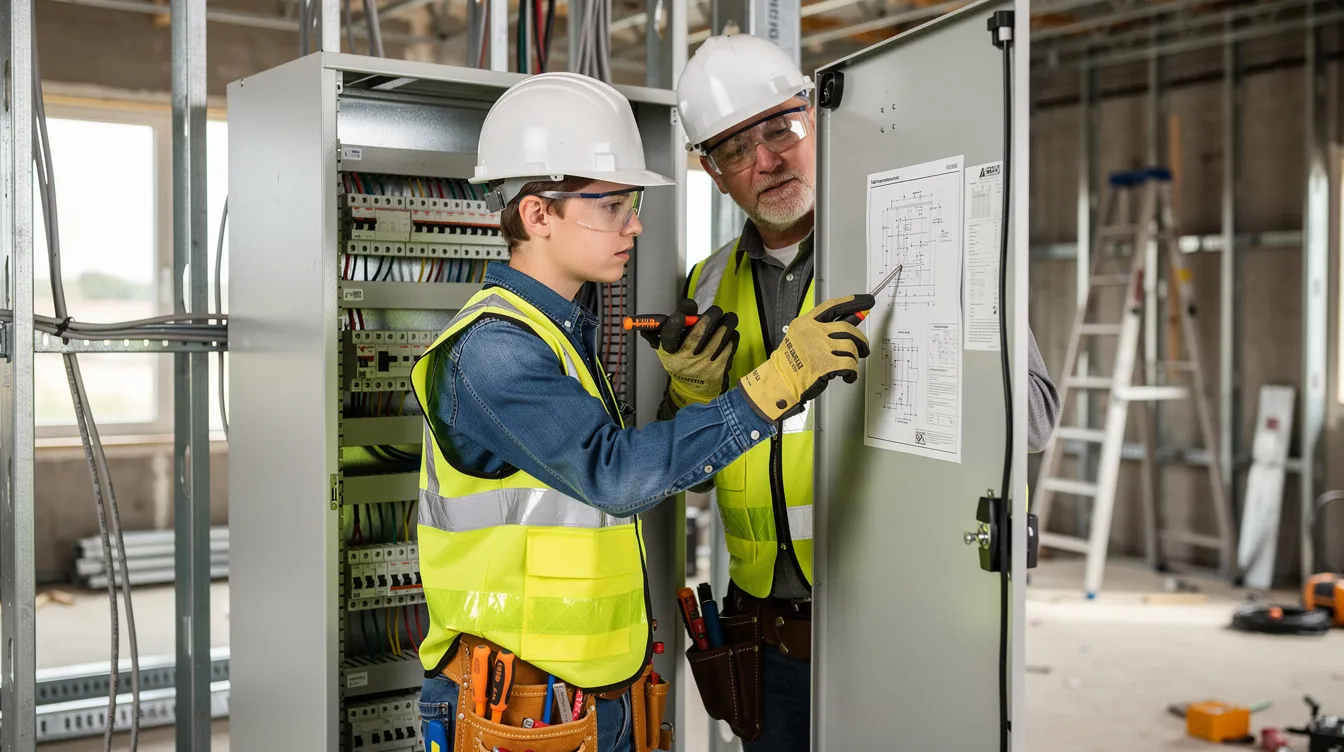
Apprenticeship is one of the few levers that can realistically increase the supply of journey-level electricians and other key trades in Central Texas over the next several years. Workforce development programs are vital to address labor shortages in electrical contracting. Apprenticeship programs in Central Texas have seen rising enrollment but do not meet state projections, meaning the gap between demand and pipeline remains wide.
ABC Central Texas operates U.S. Department of Labor registered apprenticeship programs in Electrical, Carpentry, Concrete, HVAC, Pipefitting, Plumbing, and Sheet Metal. The earn-while-you-learn model allows contractors to place apprentices on jobsites in Austin, Round Rock, San Marcos, and Waco while they complete classroom and lab training focused on safety, code, and complex electrical systems.
A simple three-step approach for contractors:
- Assess projected electrical and low-voltage demand tied to upcoming data center work.
- Set multi-year apprenticeship enrollment targets aligned with that demand.
- Align internal mentoring, supervision, and scheduling capacity with those targets.
What Central Texas Contractors Should Do in the Next 60 Days
Translate the analysis above into concrete moves before the next bid cycle and budget season:
- Review pipeline concentration. Quantify how much revenue and crew time is already tied to data center and mission-critical projects versus other sectors.
- Conduct a quick labor audit. Focus on electricians, low-voltage technicians, MEP coordinators, and superintendents. Can your existing team realistically support another major data center award in 2027?
- Update your go/no-go screen. Build or revise a “pursue, price carefully, or pass” framework that explicitly considers data center complexity, utility risk, and supervision requirements before committing to new pursuits in Williamson, Travis, Hays, Caldwell, or Bexar counties.
- Schedule an internal strategy session. Bring estimators, operations, HR, and safety together to align backlog goals with workforce capacity. Identify where apprenticeship enrollment, training, or selective hiring should increase.
- Contact ABC Central Texas. Get help interpreting market signals, aligning apprenticeship slots with projected electrical demand, and accessing additional regional intelligence.
The spending signal is clear. Demand for electrical contractors in Central Texas remains exceptionally high. What matters now is whether your organization converts that intelligence into staffing, bidding, and capacity decisions before the next cycle locks in.
FAQ: Central Texas Electrical Contractor Demand and Data Centers
These questions address practical concerns not fully covered above, focused on how data center spending affects everyday decisions for Central Texas contractors.
How does data center spending affect smaller electrical contractors that do not work directly for hyperscale owners?
Even if a small contractor never bids a large data center, regional demand from those projects pulls experienced electricians and foremen into mission-critical work, tightening the labor pool and raising wage expectations for all employers. Smaller firms may see fewer bids from preferred subcontractors, longer lead times, and higher quote levels on complex electrical and low-voltage scopes, especially near Round Rock, Hutto, San Marcos, and north San Antonio. Small contractors should respond by sharpening project selection, investing in apprenticeship to grow their own talent, and differentiating through service, responsiveness, and niche expertise instead of trying to match every large-project wage escalation.
Is it risky to let data centers become our largest single market segment?
Concentration risk increases when any one segment, including data centers, accounts for more than half of a firm’s revenue or crew hours. Policy shifts, utility constraints, or changes in owner strategy can quickly alter project dates and schedules. Track the percentage of backlog tied to data centers, then balance with public, healthcare, higher education, or light industrial projects in Austin, Round Rock, San Marcos, Waco, and nearby markets. Adopt a simple internal threshold, for example, a maximum share of backlog from a single sector or client, and use it to guide go/no-go decisions on new pursuits.
What signs suggest that electrical demand from data centers might be slowing in Central Texas?
Practical indicators include fewer RFPs from known data center owners, delays in power-interconnection milestones, extended decision timelines on new shells or expansions, and a noticeable increase in available mission-critical electricians on the open market. A sudden drop in overtime requests or premium pay for mission-critical work can also signal cooling. Monitor both national spending releases and local permitting, utility-substation upgrades, and large campus announcements along the I-35 corridor to gauge whether a slowdown is structural or temporary.
How should non-electrical specialty contractors respond to data center-driven demand?
Mechanical, fire protection, concrete, steel, roofing, and sitework contractors can all benefit from data center projects but will feel similar capacity and supervision constraints when many jobs launch simultaneously. Coordinate closely with electrical partners on scheduling and prefabrication strategies, since MEP coordination and logistics for just-in-time deliveries become critical on power-dense facilities. Non-electrical contractors should still consider apprenticeship, cross-training, and selective pursuit strategies, because their crews face many of the same travel, overtime, and performance pressures as electrical teams.
What is one practical next step if we are unsure how exposed we are to data center demand?
Spend a half day building a simple list of active and likely 2027 to 2028 projects. Tag each as data center, industrial, commercial, public, or residential, and estimate required electrician-hours and key supervision positions for each. This quick inventory often reveals whether the company is overly dependent on data centers, underinvested in development, or positioned to strive for another major mission-critical award. Contact ABC Central Texas after this exercise to compare findings with regional market insights and to explore how registered apprenticeship programs and training can close identified gaps.