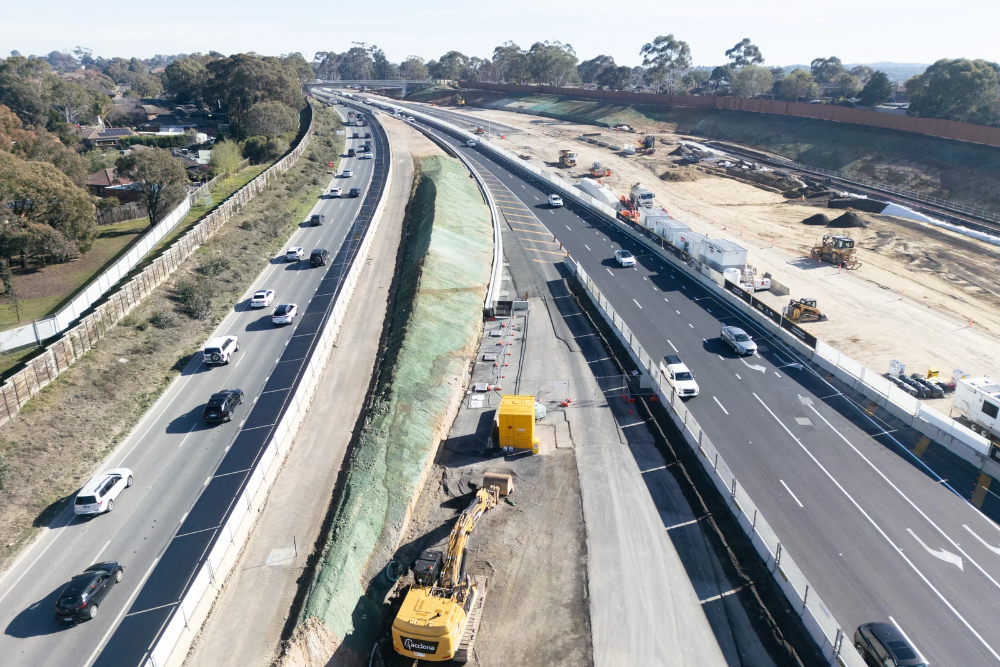
Commercial drone compliance in construction has shifted from a niche tech issue to an operational risk for Central Texas contractors. Drones remain useful and, in many cases, fully lawful on construction sites, but federal scrutiny is increasing, and FAA rules still govern every commercial flight. For contractors in Greater Austin, Waco, and along the I-35 corridor, the practical question is not whether drones still matter. It is whether your company can document that each flight, pilot, and aircraft meets the rules that already apply.
This article focuses on compliance and federal policy, not project-controls ROI. It explains what has changed in the national debate over certain foreign-made drone equipment, what has not changed under FAA rules, and what Central Texas construction leaders should review now to keep surveying, inspections, mapping, and progress documentation moving without creating avoidable risk.
Key Takeaways
- Commercial drone use on construction sites is still permitted in many situations, but contractors should verify registration, Remote ID compliance, pilot qualification, and airspace status before flight.
- The FAA’s Part 107 framework still governs most small-drone commercial operations, including many construction uses such as site photography, progress monitoring, inspections, and mapping.
- Current federal debate over certain foreign-produced drones is mainly about procurement, import, marketing, and national security restrictions, not an immediate blanket ban on all private construction drone flights.
- The remote pilot certificate does not expire on a two-year cycle, but the pilot’s aeronautical knowledge currency must be kept current through recurrent FAA training every 24 calendar months.
- One internal owner should oversee the company’s drone program so registration records, pilot documentation, equipment status, airspace checks, and project-specific restrictions do not fall through the cracks.
Why Drone Compliance Matters Now for Central Texas Construction
Drones are now part of routine construction operations, not a novelty. ABC reported in 2026 that many construction firms using drones rely on them for progress monitoring, inspections, mapping, and related jobsite tasks. That fits what many contractors across Austin, Round Rock, San Marcos, and Waco already see on the ground: aerial documentation can support faster site review, safer visual inspection, and more consistent records.
At the same time, the policy environment has become more complicated. Construction Executive has reported on the industry’s close attention to federal drone-ban developments, while ABC has urged federal officials to avoid restrictions that would unnecessarily disrupt ordinary commercial construction uses. For Central Texas contractors, that means two compliance tracks now matter at once: the long-standing FAA rules that already govern flight operations, and the evolving federal restrictions that may affect what equipment is acceptable on future projects or procurements.
That distinction matters. A contractor can still have a lawful drone operation under FAA rules and, separately, face owner, contract, or procurement restrictions on specific hardware or data-handling expectations. Treating those as the same issue can create confusion. Treating them as related but distinct helps project teams ask the right questions before they fly.
What Changed at the Federal Level and What Has Not
Recent federal actions have increased pressure on the drone supply chain, especially around certain foreign-produced unmanned aircraft systems and components. In July 2026, the FCC issued a public notice seeking comment on whether to prohibit the continued importation and marketing of certain previously authorized foreign-produced UAS and UAS components that meet defined military-grade criteria. ABC later responded by urging the FCC to narrow any restrictions so they address national security concerns without unnecessarily blocking routine commercial construction applications such as surveying, mapping, and inspection.
That debate matters for construction firms because today’s procurement decisions can affect fleet flexibility later. But it is important not to overstate the current legal effect. The federal discussion does not mean every privately used drone on every Central Texas construction site suddenly became unlawful to fly. For many contractors, the more immediate operational question is whether a current or upcoming project owner, public agency, insurer, or prime contract imposes equipment-specific restrictions beyond the FAA’s flight rules.
In practical terms, contractors should separate three questions:
- Can we lawfully operate this drone under FAA rules? That is the flight-compliance question.
- Is this drone acceptable under the owner’s contract, security policy, or procurement rules? That is the project-eligibility question.
- Would buying this model now create future procurement problems if federal restrictions tighten further? That is the fleet-planning question.
Keeping those categories separate will help Central Texas firms avoid both extremes: assuming all drones are suddenly banned, or assuming an FAA-compliant aircraft is automatically acceptable for every project type.
FAA Part 107 Basics Every Construction Team Should Understand
For most small drones used in construction, the core federal operating rules still come from FAA Part 107. The FAA says Part 107 covers a broad range of commercial and government uses for drones weighing less than 55 pounds.
Remote pilot qualification: To operate a drone under Part 107, a person must hold a remote pilot certificate with a small UAS rating, or operate under the direct supervision of someone who does. That means contractors should verify the certificated role required for the operation, rather than assume everyone physically involved in a flight needs a separate certificate. The FAA also says applicants must be at least 16 years old to qualify. For ongoing compliance, the important check is currency of aeronautical knowledge: the certificate itself is not renewed every two years, but recurrent FAA training must be completed every 24 calendar months to stay current.
Operating limits that matter on construction sites:
- Visual line of sight: The drone must remain within sight during flight unless the operator holds an applicable waiver.
- Altitude: The maximum allowable altitude is generally 400 feet above ground level, with an allowance for operations higher when the drone remains within 400 feet of a structure.
- Speed: Maximum speed is 100 mph.
- Time of operation: Flights may occur during daylight and qualifying twilight periods, and anti-collision lighting is required for twilight operations under the FAA conditions described in Part 107 guidance.
- Operations over people or vehicles: These can trigger additional rule analysis and should not be treated casually on active jobsites.
- Waiver situations: Beyond-visual-line-of-sight operations and some other atypical mission profiles may require a waiver or other FAA approval.
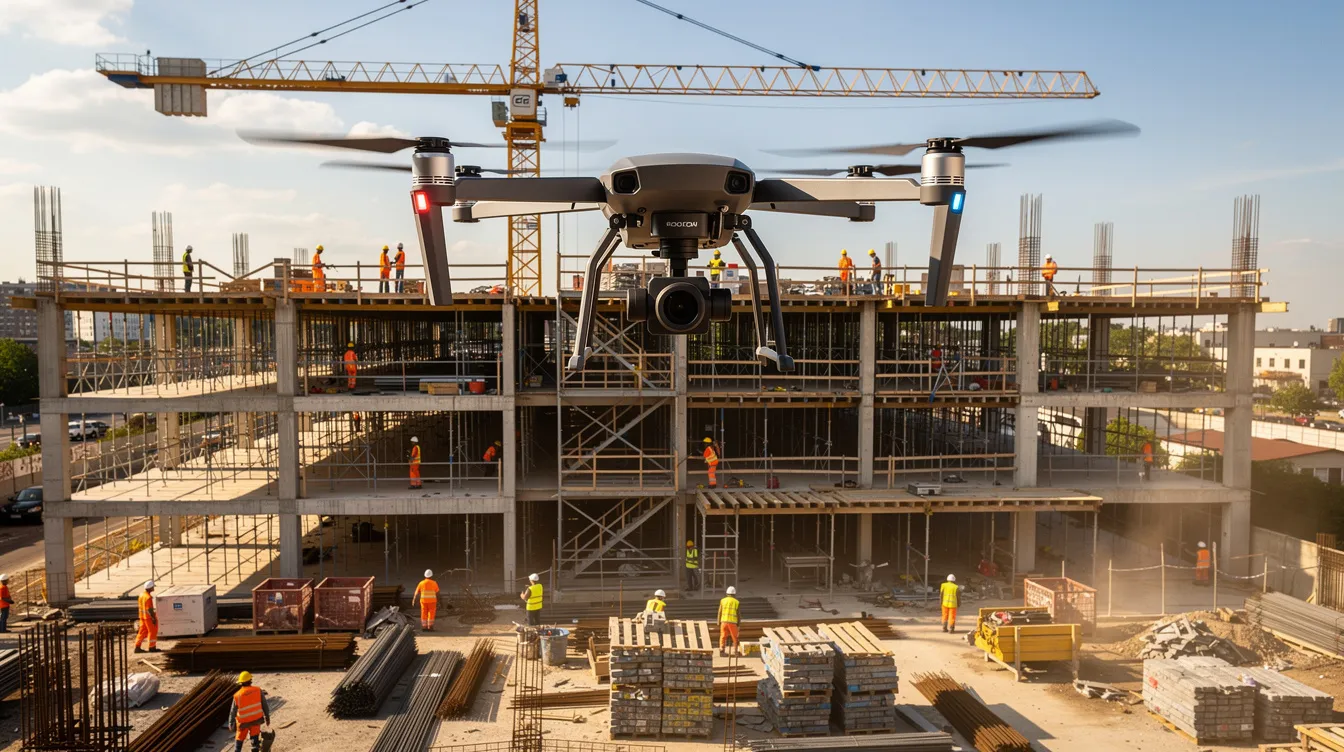
Preflight discipline: The FAA places responsibility on the operator to ensure the drone is safe before flight, including required preflight checks. For contractors, that means battery condition, communications link, airframe condition, mission objective, weather, and site hazards should all be part of the pre-launch review. This is basic operating discipline, but it is also one of the easiest places for informal jobsite drone use to drift out of compliance.
Registration, Remote ID, and Airspace Authorization
Several of the most important drone compliance checks are administrative rather than technical, which is exactly why they are easy to miss when field teams treat a drone like ordinary camera gear.
Registration: The FAA says anyone flying under Part 107 must register each drone they intend to operate. Operators must place the registration number on the drone and be able to produce the required records.
Remote ID: The FAA says all drone pilots who must register, or who have registered their drone, must operate under the Remote ID rule. Remote ID is the drone’s ability in flight to provide identification and location information through broadcast. For construction companies, the takeaway is simple: if a drone in the fleet must be registered for business use, confirm it also meets Remote ID requirements before assigning it to a project.
Airspace authorization: FAA guidance distinguishes between uncontrolled and controlled airspace. Operations in Class G airspace are allowed without air traffic control permission, while operations in Class B, C, D, and E airspace require authorization. LAANC often provides the fastest route to near-real-time authorization for eligible airspace, but not every location falls neatly into the same process.
That matters in Central Texas. Jobs near Austin-Bergstrom International Airport, regional airports, heliports, and other controlled-airspace areas may require more review than a contractor expects, especially on infill or institutional work. The safest operational habit is to verify airspace status before each project phase that involves flight, not just at the start of the job.
One caution: contractors should avoid absolute assumptions about incident reporting. FAA rules do require reporting of certain serious injury, loss-of-consciousness, or property-damage events within 10 days, but project teams should not rely on informal beliefs about broader immediate-report obligations for every possible airspace mistake. When something goes wrong, escalate internally and promptly confirm the applicable reporting path.
Where Compliance Risk Shows Up on Real Jobsites
Many drone problems do not start with intentional rule-breaking. They start with informal use, incomplete records, or assumptions that someone else handled the details.
Common risk points on construction jobs include:
- A superintendent or project engineer launches a drone for site photos without confirming whether a certificated remote pilot is flying it or directly supervising it.
- The company owns several drones, but no one maintains a current registration and equipment-status list.
- An older drone remains in circulation even though no one has confirmed its Remote ID status.
- A subcontractor or consultant brings a drone to the site, and the prime contractor assumes their compliance program is fully documented.
- A project team checks FAA flight legality but misses an owner’s hardware, cybersecurity, or data-storage restrictions.
These issues are more likely to surface during owner review, insurer review, FAA enforcement questions, post-incident investigation, or federal and public-project contract scrutiny than through ordinary day-to-day site activity. That is why drone compliance should be treated as a managed company process rather than a field convenience.
Insurance and contract exposure also make this operationally important. A construction company may not need every project executive to become a drone specialist, but it does need someone to verify that flights follow the right rules and that project documents don’t contain overlooked restrictions on equipment or data handling.
Who Should Own Drone Compliance Inside the Company?
Drone use crosses safety, operations, legal review, and information management. When that responsibility is fragmented, the usual result is that no one sees the full risk picture.
For many Central Texas firms, the best internal owner will be one of these roles:
- The safety director, if the company already manages regulatory checks through a centralized safety function.
- A project controls or VDC leader, if drone flights are tightly tied to documentation, mapping, and model workflows.
- A risk manager or operations leader, if the biggest exposure is contract review, insurance, and vendor oversight.
That owner does not have to fly the drone personally. But that person should coordinate the company’s drone program and make sure these responsibilities are covered:
- Maintaining a current fleet inventory.
- Tracking registration records and Remote ID status.
- Verifying remote pilot qualification and recurrent training currency.
- Reviewing whether a specific project has owner, public-sector, or procurement restrictions that go beyond FAA flight rules.
- Establishing a preflight approval routine for sensitive or higher-risk jobsites.
- Coordinating incident-escalation and record-retention procedures.
For a growing company with multiple active jobs between Austin and Waco, centralizing this function can prevent the same compliance questions from being solved differently on every project.
Data Handling, Privacy, and Security Considerations
Construction drone data can include more than simple progress photos. Depending on the mission, it may capture site logistics, adjacent properties, building systems, or detailed imagery that an owner considers sensitive. That makes data handling part of the risk conversation, even when the flight itself is compliant.
Contractors should avoid overstating privacy-law conclusions. It is too broad to say that every construction drone workflow automatically triggers specific laws such as GDPR or the California Consumer Privacy Act. Applicability depends on the facts, the entities involved, the nature of the data, and the governing contracts. A better practice is to review project-specific privacy, security, and retention requirements with the appropriate internal stakeholders and counsel when needed.
Practical company steps can still be straightforward:
- Limit drone-data access to personnel with a business need.
- Use company-approved storage and transfer methods.
- Define how long you will keep project drone records.
- Review owner or public-project requirements on where data may be stored or shared.
- When flights may affect neighboring properties, treat advance communication as a prudent site-relations step when appropriate rather than assuming a universal legal notice rule.
For many firms, the most important shift is simply recognizing that drone footage belongs inside the same information-governance discussion as other project records.
Emergency Response and Incident Planning
Integrate drones into the company’s broader site-risk planning, especially on active jobs with heavy equipment, public interfaces, or tight staging.
A basic jobsite drone response plan should address:
- Who has authority to stop operations if a drone issue develops.
- How the operator will respond to loss of link, unstable flight, or a forced landing.
- How the area will be secured if the drone crashes or causes a near miss.
- Who must be notified inside the company.
- How flight logs, imagery, and witness information will be preserved after an incident.
Frame this as operational preparation, not legal prediction. The goal is to align drone incidents with the same disciplined response culture contractors already apply to equipment events, near misses, and other site disruptions.
A 30-Day Compliance Checklist for Central Texas Contractors
If your company is already using drones, the next step should be an internal review rather than a wait-and-see approach.
- Create or update a full drone inventory with make, model, serial number, and assigned owner.
- Confirm FAA registration for each drone operated under Part 107.
- Verify which aircraft have built-in Remote ID capability or an appropriate compliance path.
- Review who is acting as the certificated remote pilot on company flights and confirm recurrent training currency.
- Map current and upcoming projects for likely airspace-authorization needs.
- Review active contracts and owner requirements for hardware, cybersecurity, or data restrictions.
- Update the company drone policy so field teams know who may request, approve, or conduct flights.
- Separate current operational compliance from future procurement decisions so fleet planning is not done ad hoc.
- Confirm where drone data is stored, who can access it, and how long it is retained.
- Add drone incident response steps to site safety or operations planning where appropriate.
- Brief project leaders at the next safety or operations meeting so informal drone use does not outpace the compliance program.

How ABC Central Texas Supports Members
ABC Central Texas serves contractors who need practical operating guidance, not just headline awareness. For members across Greater Austin and the I-35 corridor, that means connecting federal policy developments to real questions about jobsite operations, procurement, safety systems, and risk management.
At the national level, ABC has urged regulators to avoid overly broad restrictions that would unnecessarily disrupt ordinary commercial construction uses of drones while still addressing legitimate national security concerns. Locally, contractors can use ABC Central Texas programs and peer networks to compare how firms are handling compliance, training, and project restrictions as the federal landscape develops.
For broader policy context on how construction leaders can stay engaged on fast-moving issues that affect bidding, regulation, and operations, see ABC Central Texas coverage of construction policy and affordability pressures in Central Texas.
A practical next step is to bring your current drone policy, fleet list, and pilot documentation into one internal review session, then identify any open questions before the next project launch rather than after a flight is already scheduled.
Bottom Line
Drones still offer real value on Central Texas construction projects, and the underlying FAA rules for lawful commercial operation remain clear enough to manage with discipline. What has changed is the level of federal attention around equipment sourcing, procurement, and national security.
For contractors, the right response is neither panic nor complacency. It is a documented compliance process: know who is authorized to fly, verify registration and Remote ID status, check airspace requirements, review contract-specific restrictions, and separate today’s flight legality from tomorrow’s procurement risk.
If your company uses drones now, use the next 30 days to tighten records, clarify ownership, and close the gap between informal site practice and a defensible compliance program.
Frequently Asked Questions
Below are answers to common questions about this topic.
Do subcontractors’ drones on our project create risk for us?
They can. Even when a subcontractor owns and operates the aircraft, the prime contractor or construction manager may still face contractual, owner-relations, or site-management consequences if drone activity is not properly controlled. Site rules should address what documentation outside operators must provide before flight.
Are private Central Texas contractors required to stop using all Chinese-made drones right now?
Not as a blanket rule based on the federal developments discussed here. The more accurate question is whether a specific project, owner, procurement program, or future equipment purchase is affected by emerging restrictions. Contractors should monitor new federal action and review project-specific requirements before assuming existing private-site operations are prohibited.
Does Remote ID still apply if the construction site is fenced and private?
In most business-use situations, yes. The FAA ties Remote ID to drones that must be registered or have been registered, not to whether the site is private property.
How should we handle drone use during emergency or disaster-related work?
Do not assume emergency conditions relax aviation rules. Contractors should check for temporary flight restrictions, coordinate with the relevant public authorities when required, and confirm the exact operating authority before launch. Emergency work calls for tighter planning, not looser planning.
What is the best way to train field leaders without turning everyone into a drone specialist?
Keep jobsite training practical. Field leaders should know who is authorized to approve flights, who may act in the required certificated role, when to review airspace or owner restrictions, and what to do if a drone incident occurs. Detailed aviation training can stay with the designated remote pilots and the internal program owner.