

Key Takeaways
- Construction change management and change orders in construction projects usually fail on day one because the field launch is incomplete, not because the substitute product is defective.
- Strong construction change management connects estimating, procurement, project managers, superintendents, foremen, and crews through one clear communication chain before work begins.
- Central Texas schedule pressure, labor constraints, and multi-site coordination along the I-35 corridor make disciplined project communication and a reliable change order process non-negotiable for protecting margins and schedules.
- A concrete, step-by-step “day-one launch” checklist helps contractors verify that every material substitution or scope change is truly ready for the field.
- ABC Central Texas resources on project management communication, construction safety management, and workforce training give members practical tools to strengthen this discipline.
Introduction: Why Construction Change Management Fails on Day One
Picture a Central Texas commercial project where the project team approves a switch from standard masonry to a lighter block system. The cost works. The lead time works. The engineering works. But on the first morning of installation, crews grab the same anchors they always use, apply adhesive the way they always have, and skip the precision leveling the new product requires. Within a week, the superintendent is staring at visible quality issues, and the schedule is already slipping.
This is not a rare event. It is the predictable outcome of construction change management that stops at paperwork and never reaches the field, especially when updates on site realities and field conditions don’t reach decision-makers early. Change orders can add 10 to 20 percent to project timelines when they are not executed cleanly, and change management minimizes disruptions in construction projects only when it extends from approval through first installation.
Early identification helps teams adapt economically and avoid rework. But identification alone does not prevent failure. For construction professionals across Greater Austin, Round Rock, San Marcos, Waco, and the I-35 corridor, the stakes include rework costs, safety exposure, inspection failures, and strained trade relationships. ABC Central Texas views disciplined change management as inseparable from ethical, safety-focused, merit shop construction practice.
The Real Problem: The Handoff, Not the Material
By the time either the owner or the contractor signs off on a material substitution or scope change, most teams assume the hard work is done. The reality is the opposite: risk spikes at first installation.
Unmanaged alterations can cause confusion and financial drain, not because the new material is wrong, but because the installation team received incomplete instructions. Pricing, procurement, and engineering approvals focus heavily on cost, supply, and structural equivalency. They often ignore practical questions:
- Does the crew know the new product requires different fasteners or adhesives?
- Are tolerances tighter or looser than what foremen are used to?
- Will inspectors have the updated detail sheets they need to verify compliance, and can crews and inspectors easily access the latest information on site?
Change orders modify the original construction contract terms, but they do not automatically update crew habits, jobsite drawings, or trade partner expectations. Poor project communication, not bad intent, causes most breakdowns. A different wall system, a new anchor type, or an alternative mechanical unit increases jobsite complexity if the field isn’t briefed before work begins.
The goal here is straightforward: give Central Texas contractors a repeatable, field-first playbook for launching changes without chaos.
The Construction Change Management Chain: Who Touches a Change?
Every change in a construction project passes through a chain of custody, and each handoff is a place where information can be lost, diluted, or delayed.
| Role | What They Add | Common Failure Point |
|---|---|---|
| Owner / design team | Initiates or approves the change | Vague scope language or late notification |
| Estimating | Costs the change, confirms feasibility | Focuses on price, ignores field installation needs |
| Procurement | Secures the product | Generic descriptions, missing accessories |
| Project managers | Manages the formal change order document, schedule impact, contract price | Delegates field communication without follow-through |
| Superintendent | Translates change into crew-ready instructions | Not briefed personally, passes along partial info |
| Foremen / trade partners | Execute the work | Default to old habits when documentation is unclear |
| Inspectors / QA | Verify compliance | Working from outdated drawings or submittals |
Change orders require mutual agreement between both the owner and contractor. But mutual agreement at the contract level does not mean every foreman on the jobsite received the same page of instructions.
Structured change management enhances accountability among project stakeholders because it forces each link in this chain to confirm what they received and what they passed along. On fast-track projects across the I-35 corridor, where many teams support multiple construction projects at once, the risk of partial or outdated information reaching the field multiplies. General contractors who map their own internal change pathway can see exactly where messages and responsibilities regularly get lost.

What a Day-One Ready Change Looks Like
A material change or scope change is “day-one ready” only when every element required for correct field execution is confirmed, not just the approval process. The minimum conditions include:
- Signed approval with a formal change order document tied to the original project scope, including cost and schedule impact analysis.
- Updated construction documents: drawings, specs, RFIs, and submittals that reflect the actual change, not just an email thread or informal note.
- Product compatibility verified: installation requirements, inspection criteria, and code compliance confirmed with design professionals and affected trade partners.
- Logistics confirmed: lead times, staging locations, delivery sequencing, and required accessories all verified so the right material reaches the right crew.
- Responsibilities assigned: one clear owner for every action item, with parties involved documented.
Budget control prevents scope creep that can cause cost overruns, but only when cost and schedule changes are reflected in the project budget before field work starts. Change management also improves financial clarity for project adjustments by documenting what changed, what it costs, and who is accountable, creating clear documentation that supports the field and office alike.
Only 25 percent of construction projects stay within 10 percent of their original budget. Relying only on project management software without a real field briefing often causes change order process breakdowns. Software solutions centralize information, but they cannot replace the direct conversation that confirms a superintendent and foreman clearly understand what is different and why.
Superintendent and Foreman Buy-In: The Make-or-Break Step
The superintendent is the central node in the jobsite communication chain. If the super does not fully understand the change, no one downstream will either. Effective communication strengthens collaboration among project stakeholders, but only when you include the people closest to the work before installation starts.
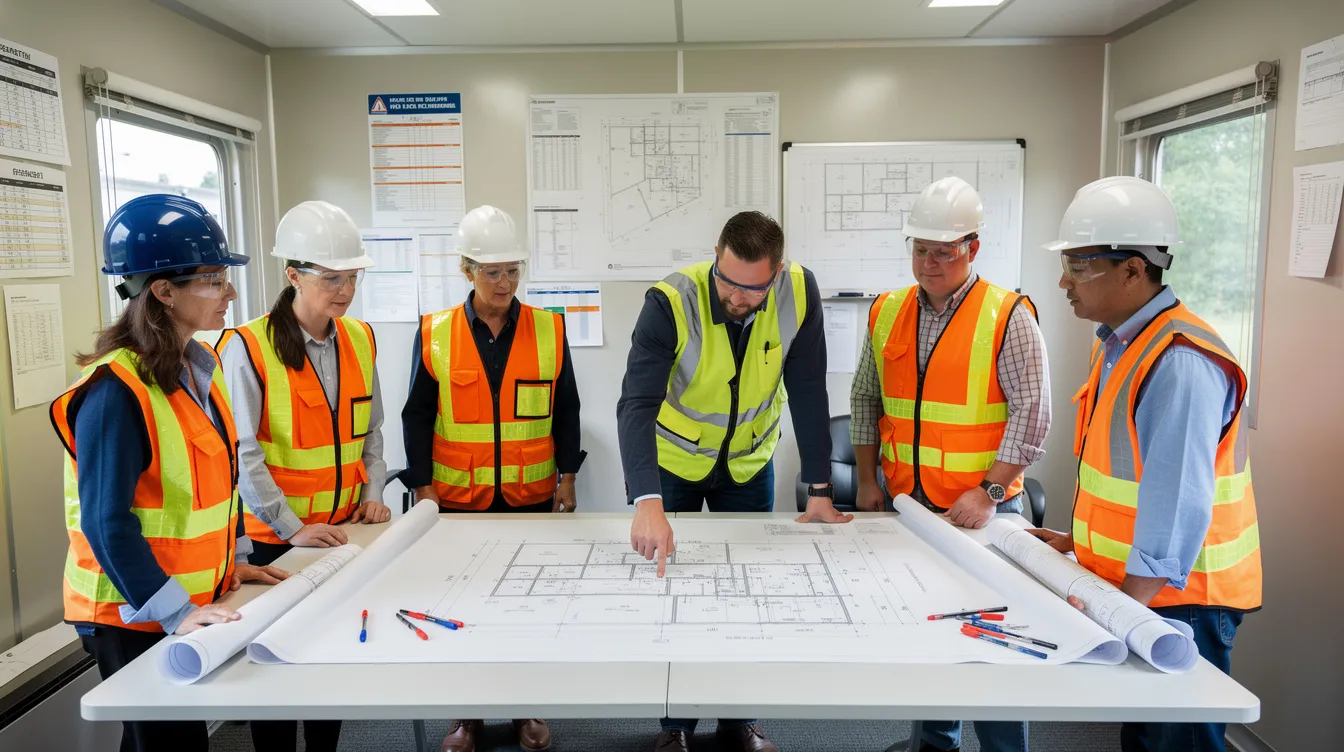
A pre-launch huddle between the project manager, superintendent, and key foremen should cover:
- What is changing (material, method, detail, or sequence).
- Why the construction project is making this change (so field leaders can anticipate risks, not just follow orders).
- What is the same (so crews do not overcorrect).
- What tools, fasteners, adhesives, or accessories are different.
- What the inspection criteria are and who to contact with questions.
A clear change management process fosters trust among team members because foremen and trade partners feel informed rather than surprised. Trust improves communication performance in construction projects, especially when changes come under schedule pressure.
On day one of the change, hold a quick toolbox talk or tailgate meeting to walk crews through new materials, tolerances, and safety considerations. Superintendents should document key instructions and questions during this meeting. That record protects field teams and the company if disputes arise later.
Designing a Clear Communication Chain for Changes
Good communication around changes does not require inventing a new system. It requires plugging change-related updates into the existing project communication chain in a structured way to improve information flow, not create extra admin work.
- Assign a single “change owner” (often the project manager) who drives each change from approval through final installation. Clear roles reduce confusion in construction communication.
- Maintain one source of truth for latest drawings, change orders, RFIs, and schedule updates. Standardized channels prevent version confusion in project communication. This could be a central location in your project management software, a clearly marked binder in the jobsite trailer, or both.
- Combine digital and physical tools. Field personnel should never have to guess which version is current. Keep updated plan sets accessible in the trailer and on mobile devices.
Regular communication among stakeholders reduces conflicts and misunderstandings and helps prevent misunderstandings when design modifications hit multiple trades at once. Federal safety guidance expects that information be shared before on-site work starts and again whenever conditions change. This ties changes back to safety, not only to cost or schedule performance.
Warning Signs a Change Is Not Ready to Launch
Before any crew touches changed work, project managers and superintendents should check for these red flags:
- Crews are hearing about the change through rumors, partial text messages, or gossip rather than a formal briefing.
- Multiple conflicting emails exist about the same detail, and no one can point to the official change order number.
- Material arrives at the jobsite with no updated detail sheets, submittals, or inspection criteria.
- The foreman cannot explain what is different about this installation compared to the original project scope.
- Required accessories (anchors, adhesives, connectors) are missing or do not match the substitute material.
- The project schedule has not been updated to reflect the change’s impact on sequencing or trade coordination.
These symptoms are especially common in Central Texas when teams juggle several active construction projects, night work, or tight handoffs around extreme weather days. Proactive issue management reduces risks and keeps schedules on track.
When these signs appear, pause the changed element and escalate for clarification. Change management helps maintain project quality despite alterations, but only when teams treat “go/no-go” criteria as a normal management practice, not a sign of resistance. It is always cheaper to stop and clarify than to build ahead and hope it matches the intent.

A Simple Day-One Change Management Checklist
Print this. Keep it in the jobsite trailer. Use it every time.
- [ ] Formal change order approval is signed and numbered.
- [ ] The project budget and contract price reflect the change.
- [ ] Update and distribute drawings, specs, and submittals.
- [ ] Affected subs and foremen have been briefed in person or by recorded video.
- [ ] Delivery timing, staging, and storage are confirmed.
- [ ] Required tools, fasteners, and accessories are on site and verified.
- [ ] The project schedule is updated with the full scope of changed work.
- [ ] Inspection criteria and code requirements are confirmed with the design team.
- [ ] The official “start of changed work” date is recorded.
- [ ] Photos or notes from the first installation are captured for documentation.
- [ ] Questions or deviations are logged immediately for quick resolution and to improve project performance over time.
Effective change management reduces costly rework by documenting changes at every step. Using a simple, repeatable checklist helps both large general contractors and smaller trade contractors maintain better control across multiple construction projects. Adapt this list into your management software templates or company standards so it becomes a routine part of every change order process, not a one-time exercise.
Field-First Practices for Multi-Site Central Texas Projects
Central Texas contractors who manage job sites across Austin, Round Rock, San Marcos, and Waco face a specific challenge: limited superintendent bandwidth spread across heavy traffic corridors and a tight trade labor supply. When a material substitution is approved on one project, the super may be physically at another site.
Practical tactics for this reality:
- Short, standardized change brief templates that a project manager can complete and hand off without a lengthy meeting.
- Recorded video walkthroughs of new assemblies or installation sequences that foremen can review before the crew mobilizes.
- Staggered rollouts starting with one pilot crew under direct field supervision, then expanding after confirming the process works.
- Detailed information packets staged at each site’s trailer, so that even if the superintendent is traveling, the foreman has what is needed.
Well-run construction change management protects both productivity and construction safety management when crews are spread between commercial, industrial, and infrastructure work. ABC Central Texas resources on project management communication and leadership development help members build stronger field supervision capacity for exactly this kind of operational challenge.
Integrating Change Management With Project Controls and Documentation
Effective change management cannot live in a silo. It must integrate with existing project controls: project scheduling, cost tracking, and the change order log.
A change order log tracks every change order’s status and impact, but it is only the contract record. Integrated estimating and tracking workflows can improve accuracy and help reduce costs, while the broader operational steps needed to make each change work in the field (briefings, procurement confirmations, schedule updates, inspection coordination) require their own tracking.
Key integration steps:
- Update look-ahead schedules and constraint logs with change-related tasks so trades stay aligned and potential issues surface early.
- Use construction management technology to centralize records; it can improve change management accuracy and efficiency across teams.
- Continue relying on clear human conversations, toolbox talks, and field walks to close gaps that software alone cannot.
- Strong documentation protects parties and resolves disputes effectively, especially in Texas, where change orders function as legal documents and written approval should precede altered work.
Maintaining a change order log alongside operational execution records gives project managers and owners clear project information about when work changed, who approved it, and how it was implemented.
How ABC Central Texas Can Support Better Construction Change Management
ABC Central Texas, as a merit shop trade association serving the construction industry across Greater Austin and the I-35 corridor, helps members strengthen the disciplines that prevent day-one failures.
Relevant resources include:
- Project management communication courses and ConstructionU classes that sharpen how project managers, superintendents, and foremen communicate changes.
- Registered apprenticeship programs in trades like carpentry, concrete, electrical, HVAC, pipefitting, plumbing, and sheet metal that build detail-aware craft professionals who recognize when something on site does not match the plan.
- STEP safety programs and OSHA training that embed the communication discipline needed to manage changes without compromising jobsite safety.
- Member networking and committees focused on operations and safety where construction professionals share practices that reduce delays and avoid disputes.
Proper change management is not just a paperwork exercise. It is a field leadership skill. Explore ABC Central Texas education opportunities, connect with member committees, or reach out directly to find the training that fits your team’s next priority.
Frequently Asked Questions About Construction Change Management
Below are answers to common questions about this topic.
How is construction change management different from basic change orders paperwork?
Paperwork documents the decision. Construction project management of changes covers everything required to execute that decision safely and correctly in the field, including owner-requested design revisions: communication planning, crew briefings, material logistics, updated drawings, inspection coordination, and field supervision during the first installation. A formal change order document captures the contract modification, but the approval process alone does not prevent rework or schedule impact if the field is not prepared.
What should small contractors without dedicated project managers focus on first?
Owners and working supervisors of small firms should prioritize a simple, written change checklist and one clear communication chain for all changes. Start with written confirmation of the change, one updated plan set, a quick crew briefing before work begins, and a basic change order log, even if it is a spreadsheet. These steps create accountability without requiring software solutions or dedicated staff.
How can trade contractors protect themselves when GCs push last-minute changes?
Subs should request written change directives, updated drawings, and confirmation of schedule impact before starting work on revised scope. Document any missing information, raise safety or constructability concerns early, and maintain your own change order log for each construction project. This protects against unforeseen site conditions and scope changes that could otherwise create cost and schedule disputes.
Does construction change management slow projects down?
A brief, structured launch usually saves time by preventing rework, inspection failures, and disputes that otherwise delay the project schedule. Project outcomes improve because crews do the work right the first time. Contractors who measure rework or punch list items tied to changes before and after applying a day-one checklist consistently see net time savings and better schedule performance.
Where can Central Texas contractors learn more about improving project communication around changes?
Visit ABC Central Texas online resources focused on project management communication, construction safety management, and the Central Texas construction outlook. Contact ABC Central Texas about upcoming classes, workshops, or networking events that help sharpen communication and leadership skills. These programs support the kind of field-first discipline that keeps construction projects on budget, on schedule, and free of avoidable rework. ABC Central Texas learning resources can also point members to foundational texts from John Wiley & Sons on construction administration and management.