
Every Central Texas contractor running multiple job sites faces the same equipment question: do you know where your rented assets are right now, whether they are working, and whether you are paying for machines that are sitting idle? Construction fleet management means using telematics, GPS tracking, and connected rental technology to monitor, dispatch, and maintain owned and rented equipment across jobs so every asset is visible, accountable, and productive. For Central Texas owners, executives, fleet managers, project managers, and operations teams, that level of control can reduce rental waste, improve utilization planning, support more timely maintenance, and protect margins in a fast-moving regional market.
Connected rental technology is driving that shift. As Construction Executive has reported in related coverage, contractors are increasingly using telematics and equipment-management software to locate machines in real time and make better decisions about equipment use, care, and ownership mix. This article looks at how connected rentals, telematics, and GPS tracking can improve equipment visibility, utilization, maintenance planning, and rental cost control, then walks through workflow changes, pilot implementation, and the metrics that show whether your fleet strategy is working.
Why Connected Rental Technology Matters to the Construction Industry in Central Texas
Growth along the I-35 corridor from Austin through Round Rock, San Marcos, and Waco is pushing construction companies to manage more dispersed job sites with fewer supervisors. Commercial, residential, and infrastructure projects are running simultaneously across fast-growing suburbs, and each site needs heavy equipment, tools, and attachments on tight schedules. That geographic spread multiplies the cost and complexity of equipment logistics and rental coordination.
The operational question is straightforward: should connected rental data remain a back-office tool that someone checks occasionally, or should it become part of the day-to-day operating system for dispatch, utilization, and maintenance across active projects? In an industry where effective fleet management helps control downtime and operating costs, treating equipment visibility as optional can lead teams to make expensive decisions with incomplete information.
Define Connected Rental Technology and Equipment Management
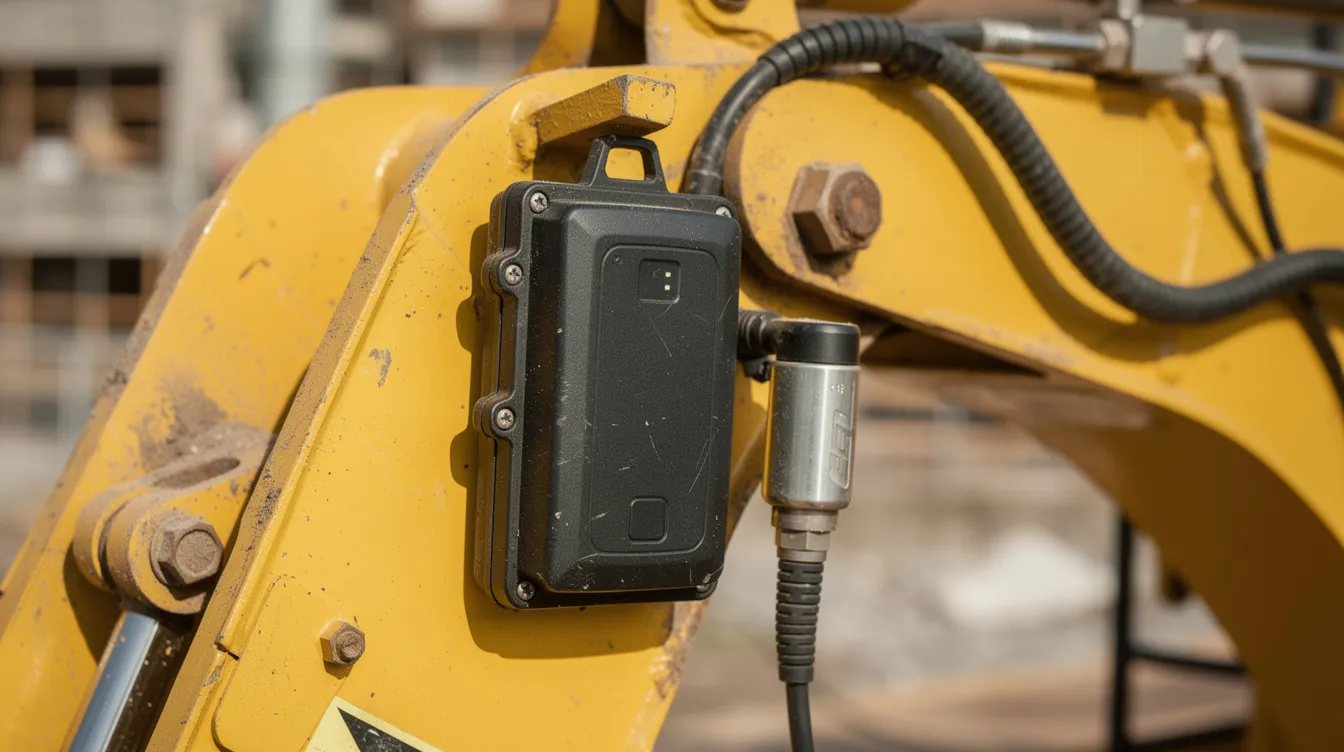
Connected rental technology means rental equipment supplied with sensors, telematics hardware, GPS trackers, and diagnostic capability. These devices collect data from construction equipment and transmit location, engine hours, fault codes, fuel use, and operating status through cellular or wireless networks into dashboards or asset-management software.
A construction fleet management system relies on telematics and GPS for asset tracking, but it is important to distinguish two layers:
- Telematics collects machine-level data such as asset location, engine diagnostics, idle time, and fault codes.
- Fleet management software adds workflows such as maintenance schedules, rental contract details, job and site allocation, cost accounting, and utilization dashboards.
For construction companies operating a mixed fleet of owned and rented units, equipment management requires bringing both layers together. ABC’s Field Tech Report notes that nearly two-thirds of contractors have improved their field data capabilities in recent years, and more than 80% now rely on cloud-based solutions to manage progress, productivity, safety, and equipment data. For many mid-size contractors, that broader shift makes it more practical to digitize fleet management without a major capital buildout. The goal is one dashboard that shows every asset, regardless of ownership, alongside its rental terms, physical location, operating condition, and likely availability for the next assignment.
What Connected Rental Technology Actually Changes on the Jobsite
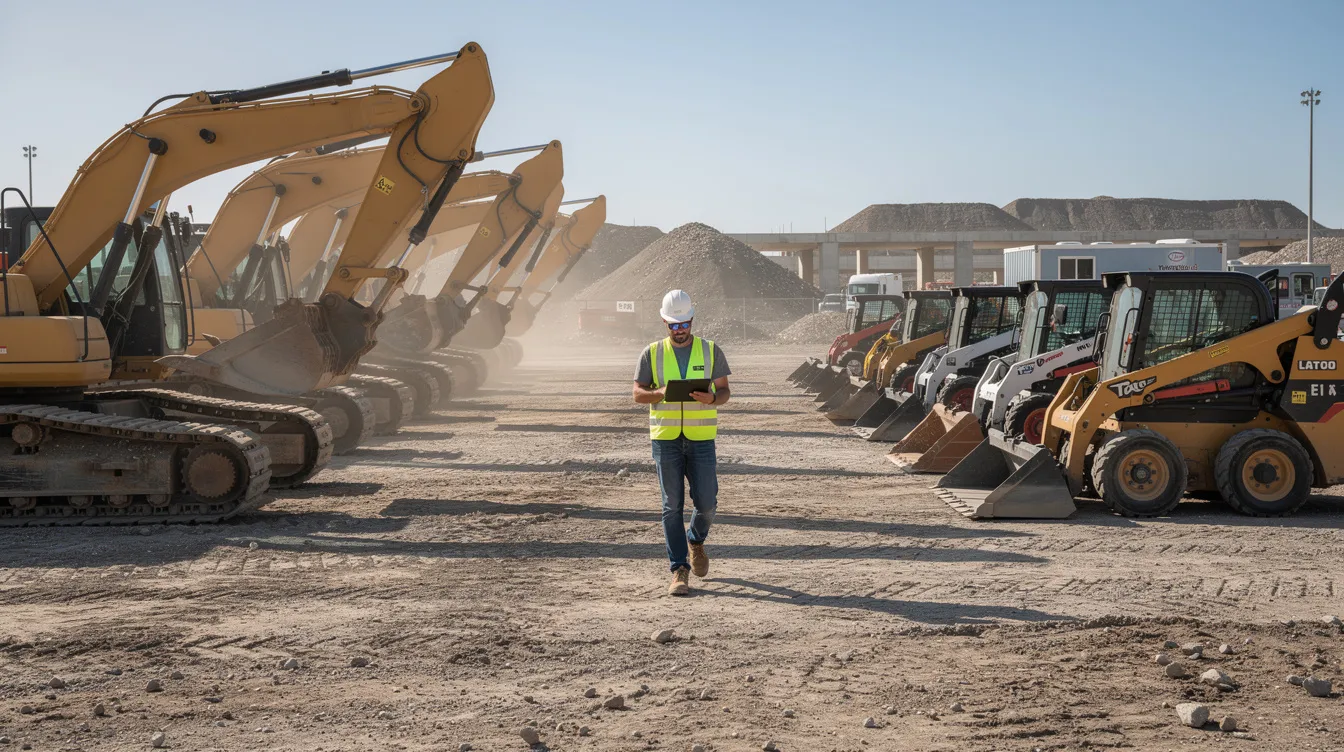
Four practical changes usually appear first when rented equipment carries connected sensors:
Real-time visibility. Telematics can provide location and status data that reduce phone calls and guesswork about whether a boom lift is still on the Round Rock site or already en route to Waco. Centralized fleet software can give leadership a single view across multiple job sites.
Faster dispatch and redeployment. When a project manager can see that a skid steer in San Marcos logged little or no recent use, they can redeploy that unit to an active site instead of triggering a duplicate rental. This is where telematics can improve utilization planning by exposing idle patterns that manual tracking often misses.
Tighter rental turnaround. Better visibility into return dates, in-use hours, and condition can help teams avoid paying for rentals longer than necessary. It can also reduce the chance of double-renting when a suitable unit already exists within the fleet.
Improved accountability and documentation. Digital logs can support internal documentation by recording fault codes, operating hours, and movement history. That kind of recordkeeping can make rental reconciliation, maintenance communication, and damage discussions more objective, even though it does not replace a contractor’s broader safety or compliance program.
Key Features: GPS Tracking, Asset Tracking, and Inventory Management
The key features of connected rental platforms typically fall into four categories:
| Feature | What It Does | Why It Matters |
|---|---|---|
| GPS tracking | Locates equipment geographically and can enable geofencing alerts for unexpected movement | Supports theft deterrence, logistics planning, and asset visibility across dispersed Central Texas sites |
| Asset tracking | Tracks serial-numbered tools, attachments, and heavy equipment through sensors, QR codes, or RFID | Improves check-out workflows and reduces the time spent locating equipment |
| Inventory management | Provides central dashboards showing which units are rented, where they are, and their maintenance status | Helps planners decide when to rent, shift, or return equipment with less guesswork |
| Rental-availability dashboards | Shows proximity, return timelines, and match against upcoming project needs for the mixed fleet | Can reduce duplicate orders and highlight underused units |
Construction companies should match device selection and installation to each asset class, from aerial lifts down to light-duty trucks and compaction equipment. Telematics can track engine hours, support maintenance planning, and improve visibility. Mobile apps connected to these platforms also let field supervisors pull location and status data without returning to the office.
Artificial Intelligence and Predictive Asset Management
Artificial intelligence is entering construction workflows, but contractors should keep expectations grounded. In fleet operations, the most practical use case is predictive maintenance: using engine hours, operating conditions, and historical service patterns to estimate when a component may need attention before a failure affects the schedule. Similar analytics can also help forecast rental demand and support rent-versus-own decisions.
Still, contractors should be cautious about black-box claims. Models trained on other fleets may not reflect Central Texas soil, terrain, climate, or operating habits. Results are only as useful as the quality and consistency of the underlying data. Before accepting any AI-driven promise, ask what inputs the model uses, how it explains recommendations, and whether field teams can verify the output against actual equipment conditions.
Why Central Texas Contractors Should Care
Austin’s tech-driven construction economy compresses schedules aggressively. Permit delays, rising input costs, and competitive bidding mean a delayed machine can cascade into lost labor time and avoidable overhead. Using fleet management software can help optimize resource allocation when project planning leaves little room for equipment surprises.
Equipment visibility is also tied to span-of-control problems. With fewer field supervisors overseeing more assets across Round Rock, San Marcos, and Waco, remote visibility can replace some windshield time and reduce the need for manual status checks between job sites. Contractors should still treat driver safety, operator training, and compliance decisions as part of a broader company safety program tied to current OSHA requirements and company policy, not as something telematics solves by itself.
For merit shop contractors competing on open bids, the ability to reduce waste, cut unplanned downtime, and tighten rental spend can translate directly into stronger margin protection after award. That operational discipline becomes a competitive advantage, not just a defensive measure.
Business Impact: Utilization, Maintenance, and Margin
Effective construction fleet management requires balancing asset utilization and maintenance, and connected rental data makes both more measurable.
Utilization. Monitoring asset utilization helps avoid under-allocation or redundant rentals. When dashboards reveal significant idle time on a rented unit, it becomes easier to decide whether to return it early, share it across sites, or stop ordering duplicates. The key is not chasing a generic benchmark. It is setting internal targets from your own baseline and reviewing them consistently.
Maintenance. Telematics can support preventive maintenance by triggering service reminders from engine hours and diagnostic codes rather than relying only on calendar intervals. It can also help teams spot unusual fuel consumption or operating patterns that may justify an inspection before a larger failure occurs.
Margin protection. After a contract is won, cost leakage from idle rental days, late-return charges, and avoidable downtime can quickly erode profit. Better visibility into machine use, service timing, and redeployment options gives project and operations leaders more chances to intervene early.
Illustrative example: A general contractor in Waco runs three active sites and pilots tracking on rented aerial lifts. Over a month, telematics shows one lift sitting idle for long stretches while another site considers an additional rental. The corrective action is straightforward: review whether the existing unit can be redeployed before ordering another machine. In the same pilot, service alerts prompt earlier inspection of a developing issue. The point is not that the software guarantees savings on every job. Better visibility can improve the speed and quality of fleet decisions.
What Fleet Managers Must Ask Before Adoption
Contractors considering connected rental technology should answer four questions before committing:
- Which asset classes create the largest cost exposure? Focus first on equipment with high rental rates, high idle risk, or high downtime cost.
- Who will own data and daily utilization reviews? If the rental house controls the telematics feed, will the contractor receive real-time access? Define who monitors the information, who acts on it, and who is accountable for follow-through.
- How will rented and owned assets be unified? Platforms should handle both in the same view with normalized data across OEMs and rental providers.
- What short-term wins will prove value? Examples may include measurable rental savings, better return timing, fewer emergency rentals, or improved maintenance scheduling during the pilot period.
A Practical Pilot Plan for Construction Fleet Management
Start with a confined pilot rather than a full-fleet rollout:
- Pick one high-churn equipment category. Powered aerial lifts, skid steers, or compaction equipment that you rent frequently and move between sites.
- Run a 30-to-90-day baseline utilization audit. Document current rental spend, idle hours, delayed deliveries, maintenance surprises, and fuel-use concerns using the best records you already have. This baseline is essential for measuring improvement honestly.
- Instrument both rented and owned pilot assets where practical. A mixed-fleet view drives many of the biggest decisions.
- Set measurable success criteria before launch. Track rental savings in dollars, changes in unplanned downtime, fewer emergency rentals, or a utilization target based on your own baseline rather than a generic industry promise.
Keep the pilot narrow enough that field teams can adopt the workflow without adding unnecessary complexity.
How Telematics Fits Into Daily Equipment Management Workflows
Telematics data only creates value when it is embedded into daily routines, not reviewed once a quarter:
- Dispatch and checkout. Confirm arrival and readiness through location tracking and status data. Equipment tracking at checkout can capture machine hours, condition, and operator assignment.
- Preventive maintenance scheduling. Use engine hours and diagnostic codes to trigger maintenance review instead of relying only on calendar-based guesses. Where available, operating-pattern data may also help teams identify rough use or conditions that justify earlier inspection.
- Return and rental reconciliation. Telematics can help confirm return timing, hours used, and unit status, reducing billing disputes and improving handoff documentation.
- Field and office roles. Field supervisors verify placement, enforce check-out routines, and flag idle time. Office planners review utilization dashboards, schedule redistributions, and analyze rent-versus-own decisions. Both roles need clear ownership of their part of the process.
Company culture matters here. Teams that see telematics as a tool for better resource management tend to adopt it faster than teams that see it only as surveillance.
Operational Implementation Checklist
- Standardize device selection and installation. Uniform hardware guidelines improve data consistency across assets.
- Validate cellular coverage for Central Texas jobsites. Rural stretches near Waco and fast-growing exurbs can have inconsistent signal. Test coverage and confirm store-and-forward capability where connectivity is spotty.
- Create operator-facing policies that encourage buy-in. Explain the practical benefits: faster replacement, less downtime, fewer surprise rentals, and clearer assignment records.
- Phase rollout from pilot to broader deployment. Expand to more equipment classes and sites only after the pilot proves useful and workflows are refined.
Measuring Success: Key Metrics for Fleet Managers
Fleet managers should track three categories of metrics to evaluate connected rental technology:
- Utilization rate by equipment class. Compare hours worked versus hours available across rented and owned units.
- Idle hours and emergency rental days. Measure how often equipment sits idle and how often a rental was ordered because an existing asset was not visible or available.
- Maintenance-related downtime and repair events. Track frequency, duration, and cost trends, clearly distinguishing planned from unplanned downtime.
Connected systems can make these metrics available weekly or even daily rather than quarterly, turning fleet management from a reporting exercise into a more active operating discipline.
Internal Links and ABC Central Texas Resources
Contractors exploring connected rental technology should not treat it as an isolated initiative. It fits within a broader construction operations management playbook that connects field execution, technology adoption, and margin protection. For firms working tight-bid jobs, connected fleet data also strengthens the tight-bid job controls that separate profitable projects from break-even ones.
Data-driven equipment decisions also align with predictive risk management, where leading indicators replace reactive firefighting. Contractors looking for a broader adoption framework can also review a construction technology roadmap that sequences investments for maximum return. And for firms focused on visibility across the whole project, project delivery visibility resources help connect equipment accountability to overall project performance.
Conclusion and Recommended Next Step
Connected rental technology is not a futuristic concept for the construction industry. It is an available operating tool that Central Texas contractors can use now to reduce idle time, tighten rental spend, improve maintenance planning, and gain better visibility across active sites. The value is not in the hardware alone. It is in the workflow changes that data supports: faster dispatch, better accountability, and more confident rent-versus-own decisions.
Start with an equipment visibility review of your highest-cost rental category. Run a baseline utilization audit. Then launch a confined telematics pilot with measurable success criteria tied to your own operating reality. That is how construction fleet management becomes a competitive advantage rather than a back-office afterthought.
ABC Central Texas supports merit shop contractors with the operations, technology, workforce development, and peer-learning resources needed to compete in this market. If your firm is working to improve execution across multiple job sites, connect with the chapter through membership, training, and regional events such as the Construction Summit.