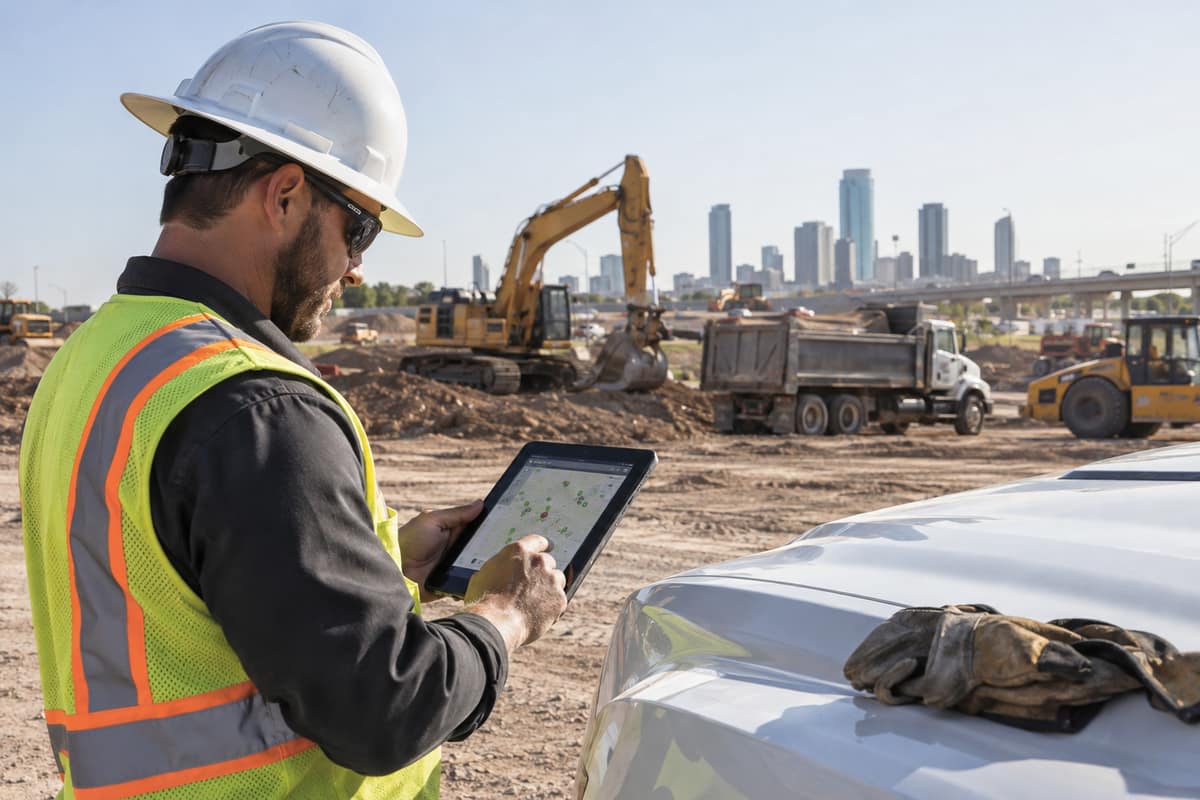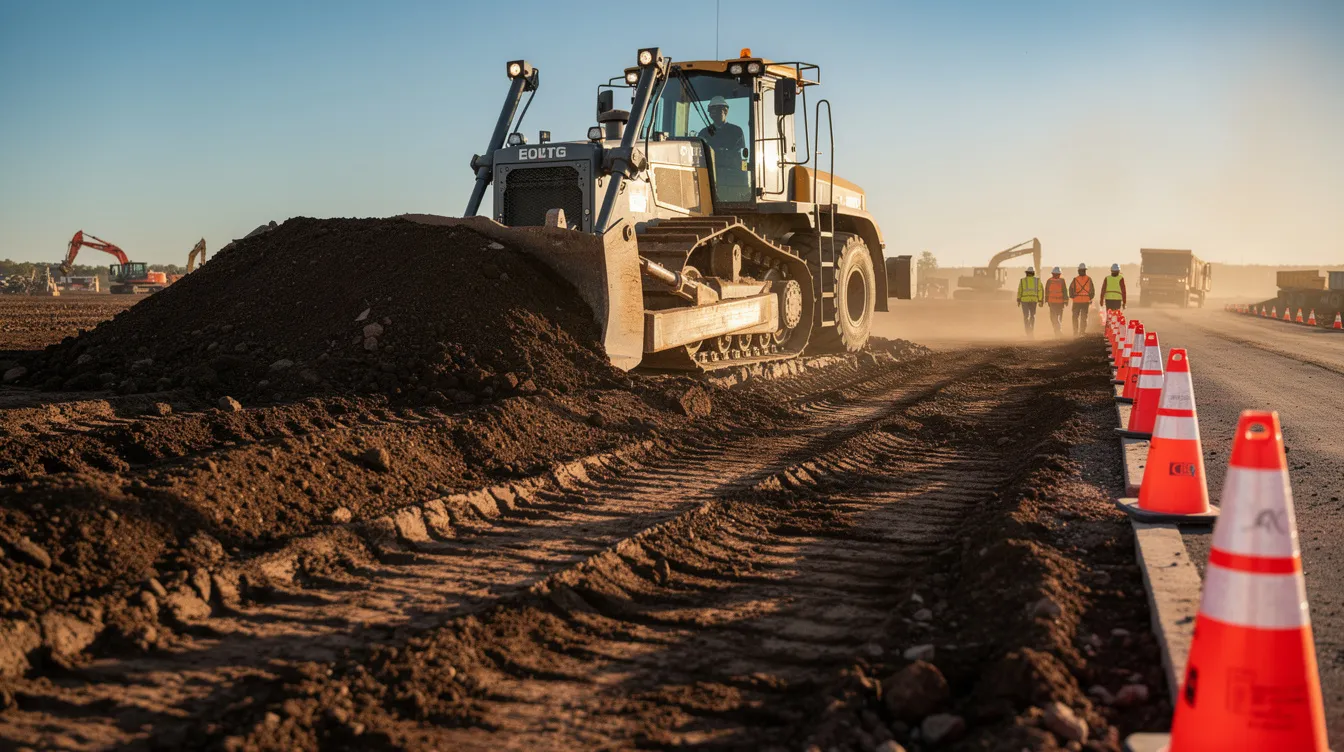

Construction robotics safety is becoming a real jobsite issue as autonomous dozers, self-driving haul trucks, layout robots, and demolition machines show up on construction sites across the country. For Central Texas contractors managing fast-moving projects in Austin, Round Rock, San Marcos, Waco, and along the I-35 corridor, these machines change the safety equation in ways that traditional hazard programs were never designed to handle.
Key Takeaways
- Construction robotics safety is about managing the interaction between autonomous or semi-autonomous machines and the human workers, trades, and traditional equipment that share the same dynamic work zones on active construction sites.
- Robots and autonomous machines can remove workers from hazardous tasks such as earthmoving, demolition, and heavy lifting, yet they create new struck-by and caught-between risks when humans share the same workspace.
- OSHA has no robotics-specific construction standard. Safety leaders must rely on hazard analysis, updated safety practices, and clear human control over autonomous systems to meet their obligations.
- Central Texas jobsites present unique challenges: layouts, trades, and weather shift throughout the day in Austin and along the I-35 corridor, making fixed barriers and one-time risk assessments insufficient.
- The article concludes with a practical checklist and an invitation to use ABC Central Texas safety resources and training to build a robotics-ready safety program.
What Autonomous Construction Equipment Means for Jobsite Safety
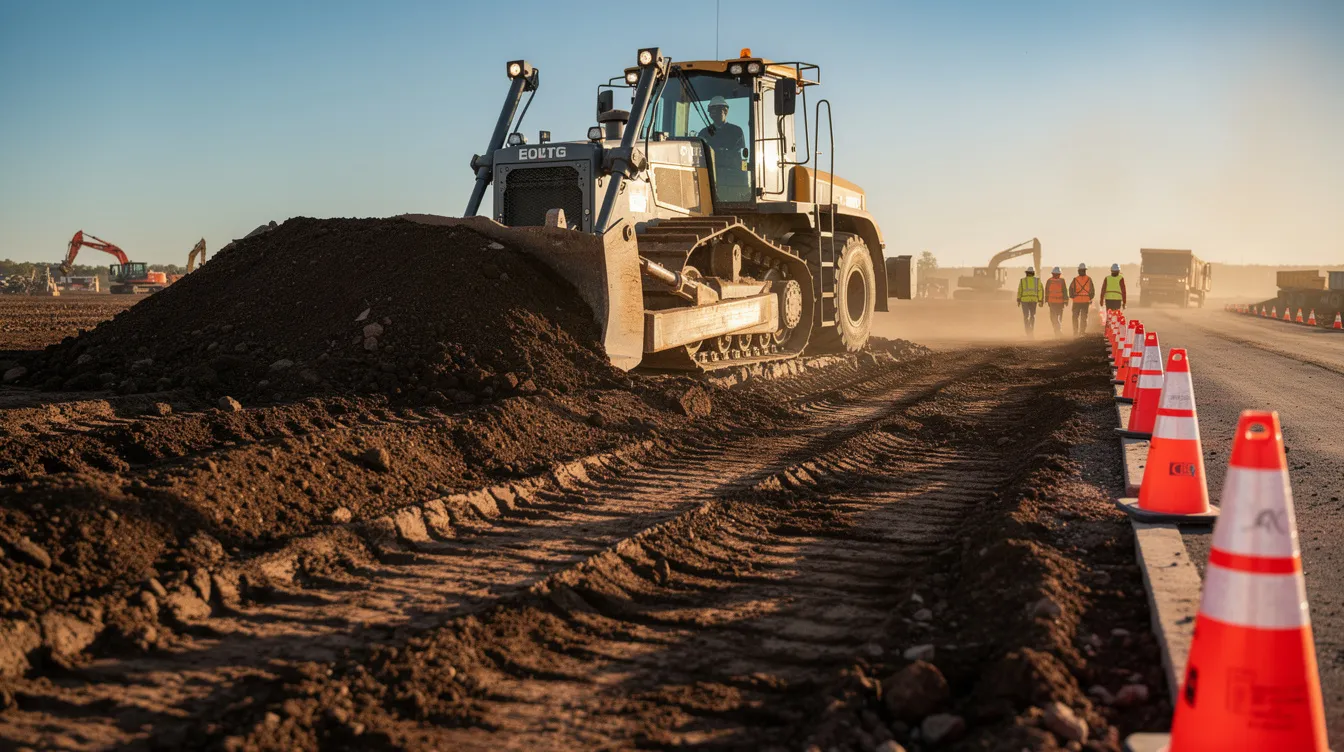
Autonomous construction equipment includes self-driving haul trucks, auto-grading dozers, autonomous excavation systems, layout robots, and demolition robots. These machines operate with minimal human input, relying on GPS, lidar, cameras, and programmed task logic to perform work that traditionally required an operator in the cab. Robots automate hazardous tasks like demolition and heavy lifting, as well as precision tasks on construction sites where repetitive manual labor creates physical strain and injury risk.
These machines already appear on large civil, industrial, and commercial construction projects, performing tasks like earthmoving, material hauling, and repetitive layout. Autonomous robots reduce worker exposure to hazardous environments, and construction robots enhance safety by automating repetitive tasks that cause musculoskeletal injuries. Robots can automate dangerous tasks like heavy lifting and demolition, shifting risk away from crews.
Construction robotics safety is not just about the robot itself. It is about how people, traditional equipment, and autonomous systems interact within the same work zones. Consider an I-35 corridor earthwork project where autonomous dozers operate at night while utility crews work nearby. The dozer follows its programmed path precisely, but the utility crew may not understand the machine’s operating envelope, blind spots, or how it reacts to an unexpected obstacle. That gap between machine capability and human awareness is where incidents happen.
Autonomous equipment should be folded into your existing safety culture and the Safety Programs hub, not treated as a one-off experiment.
Where We Are Today: Guidance on Construction Robotics and Safety
NIOSH’s October 2026 bulletin on safety in construction robotics confirms that robots are increasingly used to perform hazardous and physically demanding tasks, including material handling, inspection, project layout, earthmoving, demolition, and other repetitive construction activities. The bulletin warns that when robots work alongside humans in shared workspaces, new hazards emerge. Robotics can reduce worker exposure to hazardous tasks, but construction robots share hazards documented in manufacturing and mining, and autonomous systems may introduce new safety hazards on sites that were never part of the original risk profile.
OSHA’s robotics page states plainly that it has no specific OSHA standards for the robotics industry. Central Texas contractors must apply existing construction safety requirements, including machine guarding, lockout/tagout, powered mobile equipment rules, and the General Duty Clause, plus structured hazard analysis and training for autonomous equipment. The Texas Department of Insurance has also highlighted how robotics can support safer construction sites, while emphasizing the need for a formal safety program when machines and workers share space.
Construction Executive has covered the emergence of autonomous construction equipment and its implications for worker safety nationwide. The practical question for local construction firms is how to turn that awareness into a working safety program as robotics become part of everyday construction practices. Robotics allow construction firms to shift towards proactive safety management, and integrating robotics into construction lowers injury and fatality rates when managed correctly. Early adopters in the construction industry will be judged on how well they manage safety, not how futuristic their machines look.
Key Hazards When Robots and Workers Share Construction Sites
This section reads like a field-ready hazard checklist. If your project uses autonomous or semi-autonomous equipment, these are the common hazards your pre-task planning must address, covering both known risks and potential hazards created by changing site activity and automation.
Classic mobile equipment hazards, amplified by automation:
- Struck-by incidents from autonomous haulers, dozers, or excavators striking pedestrians or workers who fail to clear paths. Automated equipment reduces risks associated with moving heavy machinery on site, but only when exclusion zones and communication are enforced.
- Caught-in and caught-between injuries when limbs or bodies enter pinch points near robotic arms, under tracks, or between moving and fixed structures.
- Crushing during reversing, blade repositioning, or repositioning of an excavator arm. Autonomous machines keep operators away from acute dangers like falling debris, but bystanders nearby may not receive the same protection.
- Dropped loads during heavy lifting or hoisting operations where a robotic system misjudges weight, grip, or placement.
Technology-specific hazards identified by NIOSH:
- Unexpected movement during programming, startup, or restart, when workers prematurely enter the machine’s operating envelope.
- Blind spots that workers misjudge because they assume the robot “sees everything.” Collaborative robots use advanced sensors to prevent struck-by collisions, but sensor arcs have limits, especially outside their designed field of view.
- Sensor degradation from dust, mud, glare, rain, or poor lighting on Central Texas jobsites can cause misreads or missed detections.
- Robotic systems can detect hazards before accidents occur through monitoring, but only when sensors are clean, calibrated, and operating within their design parameters.
Communication and connectivity problems:
- Loss of GPS signal, wireless network failures, software bugs, or incorrect digital maps can cause autonomous equipment to stop in unsafe positions or move unpredictably.
- Firmware changes or settings updates that alter machine behavior without field verification.
Robots can reduce worker exposure to hazardous tasks, and robotic technologies enhance job site safety by improving precision and reducing human error. Construction robotics help prevent falls through dynamic site monitoring and inspections. Remote-operated vehicles reduce risks associated with heavy equipment incidents. But many serious risks occur during non-routine tasks: troubleshooting, clearing jams, or repositioning a stalled autonomous machine, when workers are inside the machine’s operating envelope and traditional safeguards are bypassed. OSHA data confirms that accidents historically cluster around these non-routine moments.
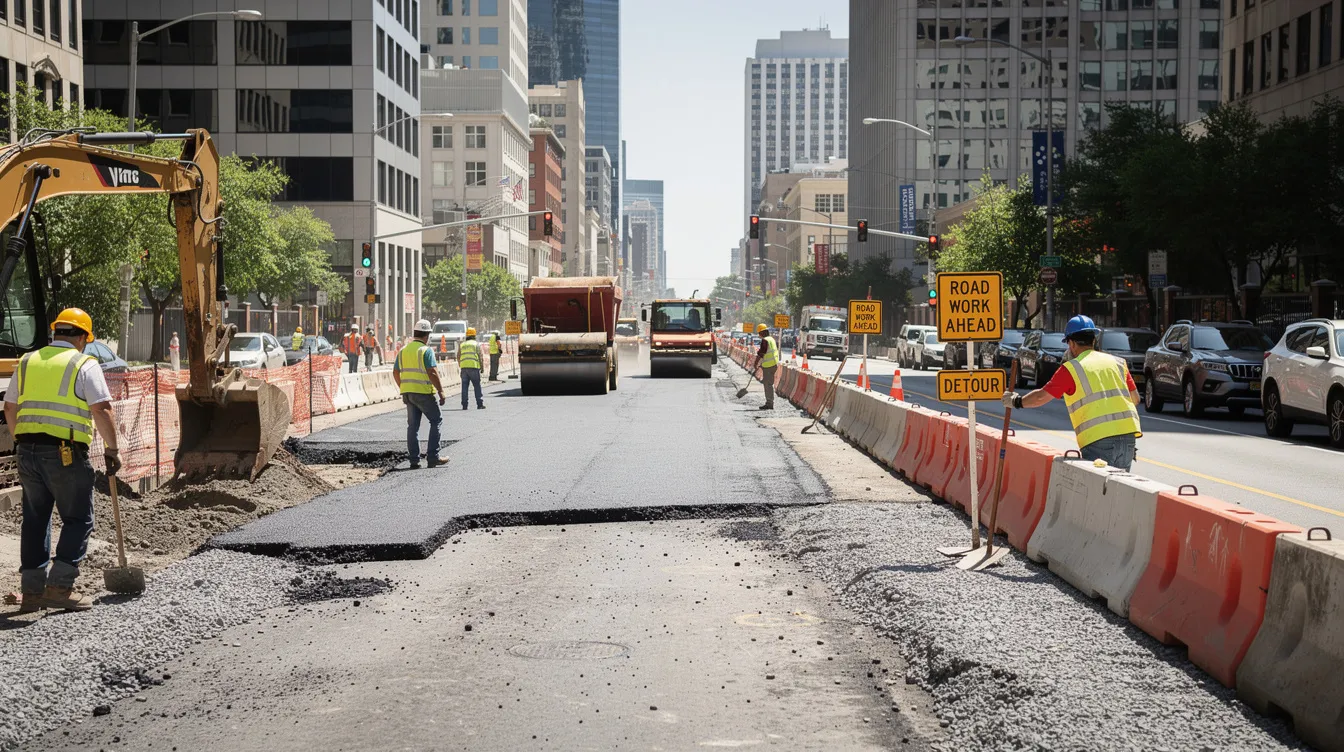
On tight, multi-employer construction sites in Austin and along the I-35 corridor, overlapping trades and delivery traffic increase the odds of unplanned human-robot encounters. Coordination is not optional.
Why Construction Sites Are Harder to Control Than Factories
In a factory, robotic systems operate inside fixed cells with enclosed or guarded zones, predictable material flow, consistent lighting, clean floors, and known boundaries. Human entry into robot envelopes is severely constrained and scheduled.
Construction sites are always in flux. The main reasons construction environments make construction robotics safety harder include:
- Continually shifting work areas, access routes, and laydown zones
- Multiple employers and subcontractors sharing space with different levels of robotics familiarity
- Variable ground conditions, from soft spots and slopes to standing water
- Frequent changes to temporary power, lighting, and signage
- Dynamic environments where the work face moves daily or weekly
Central Texas weather adds another layer. Sudden thunderstorms, extreme heat, dust storms, and seasonal low-angle sun glare can affect both robot sensing and human visibility on construction sites. Continuous assessment of work conditions is crucial for safety. Automation in construction reduces exposure to hazardous materials and environments, but only when the safety program adapts as fast as the site changes.
Fixed perimeter fences or permanent exclusion zones, which work well in factories, can fail on jobsites where excavation limits, crane swing radii, and laydown areas move week to week. Construction robotics safety depends on continuous, task-based risk assessment and communication, not one-time machine-guarding decisions made at commissioning.
Updating Pre-Task Planning for Autonomous Equipment
This is your playbook for when autonomous construction equipment first arrives on a Central Texas project.
Integrate autonomous equipment into existing PTP and JHA processes:
- Define the robot’s task, full movement envelope, inputs (GPS, sensors), failure modes, and likely human touchpoints such as loading, unloading, and maintenance.
- Ask the essential planning questions: Where will workers be in relation to the robot during startup, normal autonomous operation, maintenance, and emergencies? What must go right to keep them out of harm’s way?
- Plan dynamic exclusion zones around the machine that change as the work face moves. Use visual markings, digital maps, and daily huddle communication so crews know where they can and cannot be.
- Set criteria for when a dedicated spotter, backup alarm, or temporary barricade is required, such as congested areas, night work, or operations within a set distance of pedestrian walkways or existing structures.
- Include software and firmware management in planning, with steps to verify any updates or setting changes before the robot returns to service, especially on complex jobsites with steep grades or tight clearances.
Regular inspections are crucial for identifying safety issues with autonomous equipment, just as they are with conventional machines. Robots can automate hazardous tasks and improve worker safety, but only when the planning framework keeps up with the technology. Readers can deepen their planning framework by consulting the chapter’s automation decision-making guide for broader governance around when and how to deploy autonomous systems.
Managing Human-Robot Interaction in Mixed Work Areas
Many workers will not operate autonomous equipment directly, yet they will walk, drive, or work near it every day. Human-robot interaction controls must extend beyond the operator’s manual.
Practical controls for mixed work areas:
- Mark robot travel paths clearly with paint, flags, or cones. Use equipment lighting and signage that explains, in plain language, how and where the machine moves.
- Establish standardized communication rules: horn or light signals, radio call phrases, and confirmation protocols when people need to approach or cross a robotic work area.
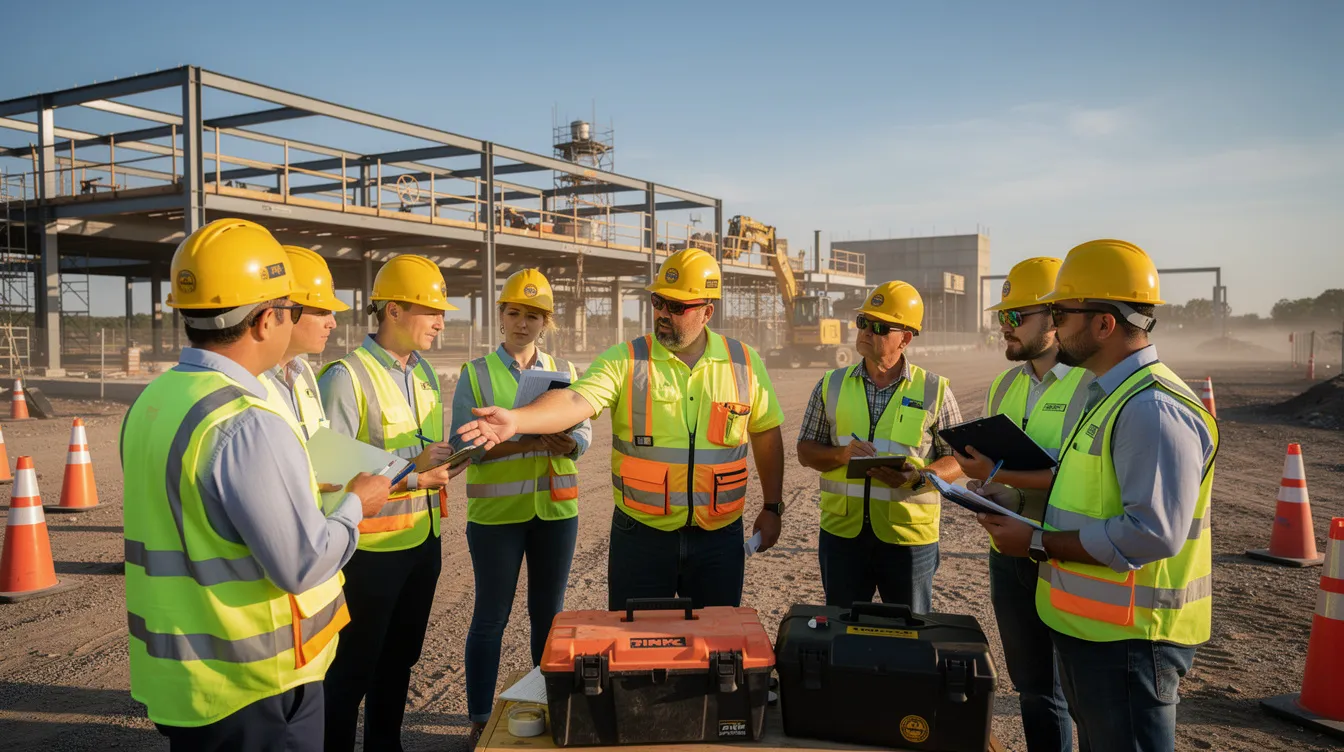
- Coordinate between multiple trades and employers through pre-construction meetings and weekly coordination sessions that explicitly cover autonomous equipment schedules, routes, and change impacts.
- Assign clear authority: who can pause robotic operations when conditions change, who responds to alarms, and how close calls are reported and reviewed.
Drones and robots can perform site inspections and site monitoring remotely, providing real-time data on worker positions relative to machine paths. Combining drones and robots improves construction site safety by giving supervisors a layered view of the work zone and helping them identify hazards in mixed work areas earlier. For options that complement robotics, explore the proactive safety technology resource.
Training Crews for Construction Robotics Safety
OSHA guidance emphasizes hazard analysis and training as foundational controls. Autonomous equipment on construction sites demands a tiered training approach.
Operators and technicians need to master robot operating modes, safe startup and shutdown, programming limits, emergency stop procedures, lockout/tagout integration, and how to verify safe states before entering the work envelope.
General workers and subcontractor crews working nearby need to recognize robotic work zones, understand basic machine behavior, and know when and how to communicate with the operator or supervisor. Proper training is essential for safe robotics use in construction. Training strengthens safety awareness among construction workers who may otherwise assume autonomous machines fully understand their surroundings.
Supervisors should participate in scenario-based drills: a stalled autonomous haul truck blocking a haul road, a sensor failure during heavy lifting, or a sudden weather change that impacts aerial inspections or navigation. These drills build muscle memory for real incidents.
Robots assist in heavy lifting and repetitive tasks to prevent musculoskeletal disorders, and robots mitigate ergonomic and repetitive strain injuries in construction tasks. But those benefits only materialize when construction teams understand the technology and its limits. ABC Central Texas OSHA and safety courses, along with apprenticeship programs in trades like Electrical, Carpentry, Concrete, and HVAC, can embed robotics-related safety modules so new workers are ready for modern construction technology. Document all robotics-related training and toolbox talks to demonstrate due diligence.
Special Risk Scenarios: Demolition Robots, Aerial Inspections, and Confined Areas
Certain construction tasks present high-risk scenarios where robotics and autonomous systems deliver the greatest safety benefit, but also require extra planning.
Demolition robots: Remote-controlled and semi-autonomous demolition robots used in interior gut work or structural demolition reduce human exposure to falling debris and silica dust. Autonomous demolition robots prevent injuries from falling debris, and robotics remove human workers from high-hazard environments. Hazards include floor-loading limits, collapse risk, and line-of-sight issues for operators managing dangerous jobs from a remote station.
Aerial inspections: Drones conduct aerial inspections to identify safety hazards on roofs, facades, and towers across Central Texas commercial buildings. Drones can quickly survey large construction sites for hazards, and drones equipped with thermal cameras detect structural weaknesses that might not be visible to the eye. Managing airspace, coordination with cranes, and bystander safety around launch and landing zones is essential.
Confined spaces: Inspection robots in tanks, tunnels, or utility corridors reduce atmospheric and engulfment risk in hazardous environments, yet still require a confined-space plan, emergency retrieval strategy, and clear criteria for when humans may need to enter specific areas.
Robotic arms perform precise welding and material placement tasks in structural and mechanical work. Robotic arms handle heavy lifting to reduce worker strain and perform precise welding and material placement in several ways throughout the construction process. Contractors should incorporate these advanced technologies and robotics scenarios into their overall construction safety and quality control programs rather than handling them as disconnected experiments.
Weather, Lighting, and Site Conditions: How the Central Texas Environment Affects Robotics Safety
Many autonomous systems assume certain visibility, traction, and signal quality conditions that are often challenged on active Central Texas construction sites. Heavy rain, standing water, and mud can disrupt advanced sensors, affect braking distances, and obscure ground markings robots use for navigation or restricted zones.
Central Texas heat, dust, and bright sun affect cameras and lidar, as well as human workers’ reaction times and decision-making during long shifts with autonomous equipment. Poor lighting during early morning or night work, common on highway and industrial construction projects, can distort sensor inputs and make it harder for workers to see and hear machines approaching. Robots reduce worker exposure to hazardous tasks, but site conditions determine whether that potential hazard reduction is real or theoretical.
Tie robotics operating rules into your company’s broader Central Texas weather safety guidance. Pause autonomous runs during severe storms, high winds, or visibility-reducing conditions. Use lessons from that guidance when drafting robotics-specific safe-work criteria so safety protocols remain consistent.
Documenting, Reviewing, and Improving Robotics Safety Performance
Construction robotics safety is not a one-and-done setup task. It is an ongoing process built on documentation, leading indicators, and structured reviews.
What to document on each project:
- Risk assessments and JHAs specific to autonomous equipment
- Exclusion zone plans and any changes made during the project
- Software configurations, firmware versions, and update logs
- Training records, toolbox talks, and orientation sign-offs
- All alarms, emergency stops, near misses, and incidents
Leading indicators to monitor:
- Number of unauthorized entries into robotic work zones
- Frequency of emergency stops and connectivity interruptions
- Repeated operator overrides of safety limits
- Sensor faults or calibration failures
Use post-task or end-of-phase reviews to refine procedures. Robotic systems can detect hazards before accidents occur through monitoring, but only when someone is reviewing that data systematically. Firms ready to formalize this continuous improvement approach and streamline operations can benefit from the chapter’s jobsite safety playbook, which provides a broader operational framework for integrating robotics into day-to-day safety management.
What Central Texas Contractors Should Do Next
Here is a concise action plan for owners, project executives, and safety directors responsible for safe, productive construction sites.
“First project with robotics” checklist:
- Identify upcoming jobs that will use autonomous or semi-autonomous equipment
- Assign a responsible lead for robotics safety coordination
- Conduct a focused risk assessment covering the machine’s envelope, failure modes, and human touchpoints
- Define human control authority: who can stop or override the machine
- Update pre-task plans and daily huddle formats to include robotics zones
- Schedule targeted training for operators, nearby crews, and supervisors
- Establish documentation and leading indicator tracking from day one
Tools like HP SitePrint enhance risk management and quality control in construction by automating layout tasks with precision, showing how advanced machine learning and other technological advances are entering the job site through several practical channels. Companies already piloting construction robotics should hold a dedicated safety review meeting with procurement, operations, and safety teams to align on standards for vendor selection, commissioning, and field supervision.
Use the Safety Programs hub as the central place to integrate robotics into broader safety culture. The automation decision-making guide and proactive safety technology resource serve as complementary planning tools.
The future of construction technology on Central Texas jobsites is not a question of whether autonomous equipment will appear. It is whether your safety program will be ready. Connect with ABC Central Texas for safety training, peer learning, and committee engagement so autonomous construction equipment becomes a competitive, safe advantage rather than a new source of incidents.
Frequently Asked Questions about Construction Robotics Safety
Below are answers to common questions about this topic.
How should we decide whether a specific autonomous machine is appropriate for a given project?
Evaluate task suitability, site geometry, traffic patterns, environmental conditions, and workforce experience rather than relying only on vendor claims about autonomy or efficiency. Ask whether the work area can be clearly separated, whether the robot’s sensing technology handles expected dust and lighting, and whether supervisors have time and training to oversee its operation safely. Consider piloting equipment on simpler tasks or less congested phases before deploying it in complex downtown Austin or I-35 interchange projects where the benefits must outweigh the coordination burden.
Who should have authority to stop or override autonomous equipment on the jobsite?
Designate specific roles, such as superintendent, foreman, or safety manager, along with trained operators who can pause or shut down robotic operations when conditions change. Workers who regularly enter nearby work zones should be trained to recognize danger signs and know how to quickly request a stop through radio or other communication, even without direct control access. Document these authority rules in site-specific safety plans and discuss them in pre-task and orientation meetings so every worker on a multi-employer site knows the chain of command.
How can smaller contractors participate in robotics safely if they rely on rental equipment or specialty subs?
Smaller construction firms can still insist on safety by vetting rental providers and specialty subcontractors for clear operating procedures, training documentation, and incident histories related to autonomous equipment. Include language in subcontracts about robotics safety expectations, coordination requirements, and incident reporting so responsibilities are clear on multi-employer construction sites. Lean on association resources like ABC Central Texas training and peer networks to understand best practices before robots arrive on your own projects.
Does using autonomous equipment change our OSHA responsibilities or liability?
While OSHA has no robotics-specific construction standards, employers are still responsible for providing a workplace free from recognized hazards under the General Duty Clause. That includes managing risk created by autonomous and semi-autonomous machines. Consult legal counsel or risk managers for detailed liability advice, but strong documentation of hazard analysis, training, and incident follow-up is a critical layer of protection. Treat robotics hazards as part of your core construction safety program, not an experimental exception.
How can we keep up with rapidly evolving technological advancements without constantly rewriting our safety program?
Build flexible, principle-based safety practices that focus on hazard types (mobile equipment, energy sources, human-machine interaction in dynamic environments) rather than naming individual brands or models. Schedule periodic technology and safety reviews, perhaps annually or at major project milestones, to update procedures in light of new equipment features, information modeling capabilities, digital twins integration, or regulatory guidance. Stay engaged with industry resources, including ABC National, Construction Executive, and ABC Central Texas events, so your construction teams are not reinventing robotics safety practices alone. This approach lets your program absorb new machines, systems, and building information modeling tools without starting from scratch each time.