
Key Takeaways
- Construction safety management systems give Central Texas contractors a documented, repeatable way to treat suicide prevention as a managed jobsite risk instead of a one-time awareness campaign.
- OSHA says the construction industry’s suicide rate is four times higher than the general population, making mental health a safety issue, not just an HR topic.
- What executives, project managers, and superintendents consistently pass down to the field determines whether suicide-prevention efforts become part of daily operations or fade after a single toolbox talk.
- Embedding expectations, escalation steps, resource visibility, and documentation into orientations, pre-task planning, and incident reviews makes support more actionable for every crew.
- A practical rollout can begin this month with four steps: align leadership messages, update jobsite postings, train supervisors, and add mental health topics to the toolbox-talk calendar.
Introduction: Why Suicide Prevention Belongs Inside Construction Safety Management Systems
Construction safety management systems are the frameworks contractors use to control risk across policies, training, accountability, and continuous improvement. For Central Texas contractors working across Austin, Round Rock, San Marcos, Waco, and the I-35 corridor, those systems already shape how crews handle falls, electrical hazards, heat stress, and emergency response. Suicide prevention belongs in that same operating structure.
OSHA says the construction industry’s suicide rate is four times higher than the general population. That matters operationally, not just emotionally. Distress, fatigue, substance misuse, and untreated mental health challenges can affect attention, judgment, communication, and safe decision-making on active job sites.
This article is a leadership implementation guide for using construction safety management systems to move suicide prevention from good intentions into daily practice. ABC Central Texas already has a broader guide on warning signs, awareness, and general support steps. This piece focuses on rollout mechanics, supervisor expectations, documentation, and accountability for Central Texas construction leaders who want to strengthen their systems this quarter.
The Risk Picture: Mental Health, Suicide, and Construction Work
OSHA describes construction as an industry with a suicide rate four times higher than the general population. Separately, CDC data for 2021 reported a male suicide rate of 65.6 per 100,000 in the Construction and Extraction occupational group. Together, those sources show why this topic belongs inside everyday safety planning.
For contractors in Central Texas, national data meets local operating pressure:
- Fast project schedules across the Austin region can intensify stress on supervisors and crews.
- Long travel times up and down I-35 can add fatigue and reduce recovery time between shifts.
- Heat exposure, physically demanding work, and cyclical workloads can compound strain over time.
Not every stressed worker is in crisis, and supervisors are not clinicians. But construction leaders control whether support is visible, escalation paths are clear, and field personnel know what to do when something feels off. That is exactly why suicide prevention should be built into construction safety management systems instead of left to improvisation.

From Intent to System: What Leadership Must Pass Down
Executives may support suicide prevention in principle, but crews experience what project leaders and supervisors repeat, reinforce, and model on the job. If the message stops at a poster or annual meeting, the field reads it as optional.
The core messages leadership should translate into clear expectations include:
- Mental health is part of safety. Treat it with the same seriousness as other recognized jobsite risks.
- Speaking up is a safety action. Workers should know they can raise concerns about distress, impairment, or a coworker’s well-being without being mocked or ignored.
- There is a defined escalation path. Every project should know how to connect a worker to immediate help, including the 988 Suicide & Crisis Lifeline when appropriate.
Leaders should give supervisors simple, prepared language for difficult conversations. When a foreman notices withdrawal, unusual risk-taking, severe irritability, or comments that suggest hopelessness, the worst time to invent a response is in the moment. Scripts help standardize calm, respectful first steps.
These expectations should appear in written policies, startup packets, and supervisor training, then be reinforced in routine safety meetings. Consistency matters more than slogans.
Where Suicide Prevention Fits Inside Construction Safety Management Systems
For most contractors, the smartest approach is not building a separate stand-alone mental health program. It is adding suicide-prevention practices to the safety routines crews already know.
Here are practical places to integrate it:
- New-hire orientations. Introduce available support resources, explain who workers can contact with concerns, and identify 988 as a crisis resource.
- Pre-task planning. Add a brief prompt for supervisors to watch for signs of distraction, exhaustion, or distress before assigning high-risk tasks.
- Toolbox talks. Add mental health and suicide-prevention topics to the regular rotation instead of saving them for one annual event.
- Safety observation programs. Train supervisors to notice behavioral changes that may affect safe work, not just physical hazards.
- Incident and near-miss reviews. Consider whether fatigue, stress, distraction, or impairment may have contributed, and use that insight to improve systems.
This is not about diagnosing workers. It is about using construction safety management systems to make concern, escalation, and resource access routine enough that supervisors are not left guessing.
Supervisor Playbook: What to Do When a Worker May Be Struggling
Superintendents, foremen, and general foremen are often the first people to notice changes on a jobsite. A practical field response should stay simple, respectful, and tied to company protocol.
When you are concerned about a worker:
- Notice specific behaviors. Look for meaningful changes such as withdrawal, unusual agitation, sudden risk-taking, hopeless comments, or sharp changes in focus and interaction.
- Move the conversation to a private setting. Do not address personal concerns in front of the crew.
- Use straightforward, prepared language. For example: “I’ve noticed you seem different lately, and I wanted to check in. How are you doing?”
- Listen without judgment. Avoid minimizing, lecturing, or turning the discussion into discipline unless an immediate safety issue requires action.
- Follow your escalation process. If the worker appears to be in crisis or mentions self-harm, contact your designated company resource and use emergency or crisis procedures, including 988, based on the urgency of the situation.
- Stay in your role. Supervisors should support, refer, and escalate. They should not try to provide clinical counseling.
What not to do:
- Do not dismiss comments about hopelessness or despair.
- Do not promise total secrecy if safety is at risk.
- Do not threaten discipline for asking for help.
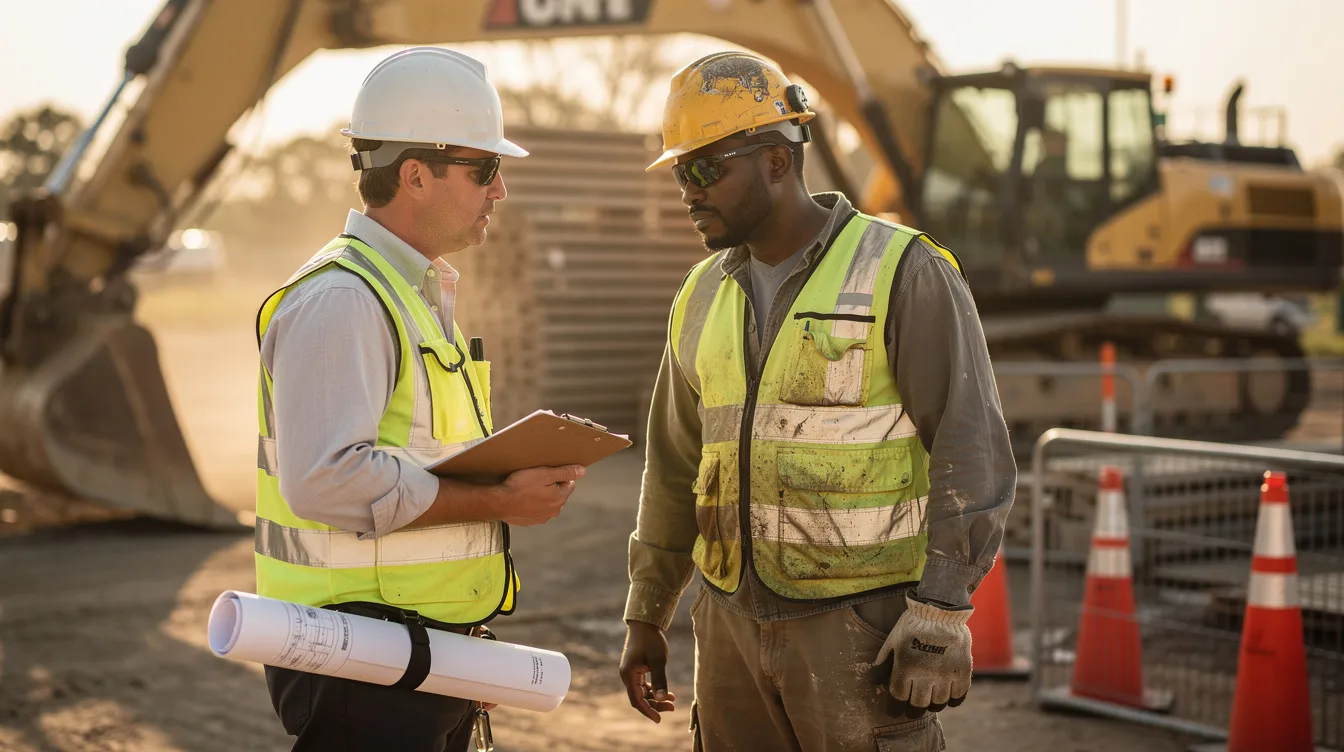
After the conversation, document according to company policy: record the date, general concern, steps taken, and who was notified. Protect privacy and route follow-up through trained HR, safety, or leadership personnel as required by company policy and applicable law. A short supervisor pocket card can help field leaders remember these first-response steps.
Building Credibility: Leadership Behaviors That Make Support Believable
Workers judge commitment by behavior, not banners. If leadership says mental health matters but supervisors never mention it, crews conclude it is not really part of safety.
Credibility-building behaviors include:
- Attending mental health toolbox talks instead of treating them as someone else’s assignment.
- Asking field teams about work pressure, fatigue, and crew well-being during jobsite visits.
- Backing up messaging with policy: avoiding retaliation for raising concerns and applying impairment or crisis procedures consistently.
- Recognizing supervisors who handle difficult conversations responsibly and escalate concerns correctly.
For Central Texas contractors competing for skilled labor, this kind of consistency also supports retention and trust. A worker who believes leadership will respond professionally is more likely to speak up before a situation becomes a crisis.
Documentation, Accountability, and Continuous Improvement
If suicide prevention is part of the safety system, it should show up in the system’s documentation and review cycle. That does not mean tracking private medical details. It means documenting whether the company has the right structures in place and whether leaders are using them.
Elements to document within construction safety management systems:
| Element | Owner | Audit Question |
|---|---|---|
| Written mental health and escalation policy | HR / Safety Director | Is the policy current and distributed to active projects? |
| Escalation protocol | Safety Director | Can supervisors explain what to do if a worker may be in crisis? |
| Supervisor training records | Safety Director | Have supervisors completed the company’s required training cadence? |
| Toolbox-talk calendar | Superintendent | Are mental health topics included in the regular schedule? |
| Jobsite resource postings | Superintendent | Are 988 and company support contacts visibly posted? |
| Incident review prompts | Project Executive | Do reviews consider fatigue, stress, distraction, or impairment where relevant? |
Quarterly safety reviews can include system-level checks such as training completion, posting compliance, and toolbox-talk delivery. Individual cases should remain confidential. The goal is not to measure private struggles. The goal is to measure whether the operating system is prepared to respond.
Training and Resources: Equipping Leaders and Crews
Even a well-designed system fails if leaders and crews do not know how to use it. Training should focus on role clarity.
Central Texas contractors can prioritize three tiers:
- Leadership sessions on policy, accountability, and the business case for treating mental health as part of safety.
- Supervisor training on conversation basics, escalation, documentation, and when to involve HR or safety leadership.
- Crew-level toolbox talks on warning signs, speaking up, and where to find help.
OSHA maintains suicide-prevention resources for employers and workers, including posters and employer guidance. Locally, ABC Central Texas’s Safety Programs hub is the most reliable starting point for current training opportunities, and the chapter’s mental health in construction safety guide provides broader context on warning signs and awareness.
Connecting Suicide Prevention to Broader Workplace Safety
When contractors treat mental health as part of the safety system, the goal is not to turn supervisors into therapists. The goal is to reduce the chance that serious distress goes unseen, unaddressed, or unmanaged until it affects a worker, a crew, or a family in the worst possible way.
That broader safety connection can show up in practical decisions such as reducing chronic fatigue where possible, checking in after serious incidents, making support resources visible, and reinforcing that asking for help fits a strong safety culture. On high-pressure projects across Central Texas, psychological strain and operational risk often intersect long before a formal incident report exists.
For merit shop contractors, this is also a workforce issue. Skilled people stay where they believe leadership values their health, safety, and long-term ability to work. Construction safety management systems that account for mental well-being can strengthen that trust.
Practical Rollout Plan: What Central Texas Contractors Can Do This Month
A safety director or operations leader does not need a major reorganization to start. A 30-day rollout can focus on clarity and consistency.
Week-by-week sequence:
- Week 1: Align leadership messages and confirm the escalation path. Decide who owns each step.
- Week 2: Update policies, supervisor guidance, and jobsite postings so 988 and company contacts are easy to find.
- Week 3: Train supervisors on scripts, first-response expectations, documentation, and when to escalate.
- Week 4: Add mental health topics to toolbox-talk and safety-meeting schedules across active projects.
Start with one or two projects if needed, gather feedback from superintendents, then standardize the approach across the portfolio. A cross-functional team from safety, HR, and operations can keep the effort practical and prevent it from becoming a disconnected side initiative.

How ABC Central Texas Can Support Your Safety Strategy
ABC Central Texas serves merit shop commercial construction across Greater Austin, Round Rock, San Marcos, Waco, and the broader Central Texas region. For members looking to strengthen construction safety management systems, the chapter offers safety education, access to OSHA training, and resources that support a broader total-human-health approach.
If your company is working to make suicide prevention more operational and less ad hoc, start with the Safety Programs hub. Then use the rollout checklist above as a quick audit of your current policies, postings, supervisor preparation, and toolbox-talk schedule. The practical next step is not a new slogan. It is deciding what your field leaders will say, do, and document the next time someone on a Central Texas jobsite needs help.
FAQ
Below are answers to common questions about this topic.
How is suicide prevention different from general mental health initiatives on a jobsite?
General mental health efforts focus on stress, well-being, and longer-term support. Suicide prevention is narrower and more urgent. It requires a clear response path for situations where a worker may be in immediate distress or at risk. In construction safety management systems, that usually means more explicit supervisor training, escalation steps, and visibility into crisis resources.
Do small Central Texas contractors need formal suicide-prevention procedures?
Yes, although formal does not have to mean complex. A small contractor can start with a short written policy, a posted list of resources including 988, and a simple supervisor response guide. The key is consistency. Smaller firms often rely even more heavily on frontline supervisors, so clear direction matters.
What should happen after a company uses its escalation path for a worker in crisis?
Once the company addresses immediate safety concerns, it should follow its policy for documentation, notification, and follow-up. Return-to-work or reintegration steps should be handled through trained HR, safety, and leadership personnel in line with company policy, privacy obligations, and applicable employment requirements. The event should also prompt a review of whether the system supported an effective response.
How can contractors talk about suicide prevention without increasing stigma?
Use direct, respectful language and frame the topic as part of worker protection. Avoid jokes, vague euphemisms, or one-off awareness messaging with no action behind it. When leaders talk about support the same way they talk about other safety expectations, crews are more likely to see it as legitimate and normal.
Where can crews find current suicide-prevention resources for construction?
OSHA provides current employer and worker materials, including posters and guidance. The 988 Suicide & Crisis Lifeline offers 24/7 support by call or text. ABC Central Texas members can also start with the Safety Programs hub and the chapter’s mental health in construction safety guide for locally relevant training and education options.