
A tool that cuts five minutes off a demo does not always cut five minutes off a real workday. For Central Texas contractors weighing new software, drones, wearables, or field data platforms, construction technology evaluation is the process of testing whether a product actually performs under schedule pressure, triple-digit heat, mixed-crew experience levels, and limited connectivity before the company commits financially. The goal is to prevent purchases that create downtime, hidden costs, and poor adoption instead of solving the problem they promised to fix.
Key Takeaways
- Construction technology evaluation goes beyond price comparison. It should test reliability, usability, training burden, interoperability, data security, and vendor support under real jobsite conditions, along with the tool’s limits as part of a full-cycle review.
- Central Texas contractors should run a structured 30- to 90-day field pilot on an active project, using the same crews, supervisors, and subcontractors who will own the tool after rollout. A disciplined framework helps teams judge innovation against real conditions such as heat, dust, connectivity gaps, and tight schedules common along the I-35 corridor.
- Evaluation should account for total financial impact, including training hours, integration work, data quality, vendor support, and the cost of downtime when a tool fails during critical work or delays documentation.
- This article walks through a step-by-step stress-test framework Central Texas contractors can adapt for software, devices, and field technology.
Why Construction Technology Buying Decisions Fail in the Field
A project manager in Round Rock watches a vendor demo on a 72-degree day inside a climate-controlled trailer. The interface is fast, the integration looks clean, and the rep answers every question. Eight weeks later, the same platform freezes during a concrete pour when cellular data drops, several foremen stop using it because training amounted to a single webinar, and the accounting team learns that payroll exports require manual cleanup. The company is already under contract.
This scenario happens because many purchases are driven by features, sales presentations, or what a competitor just bought rather than a disciplined construction technology evaluation. Common failure points include underestimated training time, poor workflow fit, unreliable performance in heat and dust, weak offline capability, and shallow integration with core systems. A polished interface doesn’t prove a tool is ready for field use.
The financial impact can show up quickly. A stalled pour, a missed inspection, or a rework cycle can erase any apparent savings from a lower license fee. That is why industry reporting from Construction Executive and ABC National has emphasized stress-testing construction technology and evaluating how it performs in actual operations, not just in demonstrations.
What Construction Technology Evaluation Should Actually Measure
Construction technology evaluation is a structured process for judging whether a tool will deliver reliable value on real jobs, not just perform well in a controlled demo. In practical terms, contractors should ask whether the technology works through a full shift, whether crews can use it without constant support, and whether it improves the workflow itis meant to improve.
Core evaluation dimensions include:
- Uptime and reliability: Does the tool work consistently over a 10- to 12-hour shift?
- Ease of use: Can both newer workers and experienced foremen complete tasks without repeated troubleshooting?
- Training burden: How much instruction is needed before users reach basic proficiency?
- Workflow fit: Does the tool support existing procedures, or force crews into extra steps and workarounds?
- Quality control: Does the technology improve consistency, documentation, or error detection?
- Scalability: A tool that works for one crew should also work for several projects or divisions.
- Total cost of ownership: Beyond the purchase price, what will implementation, support, hardware, and integration cost?
- Vendor support and data security: How quickly can the vendor respond, and how well is company data protected?
Specs and marketing materials are not enough because Central Texas jobsites operate under schedule pressure, harsh weather, and often spotty connectivity. Contractors should identify non-negotiable requirements up front, such as offline mode, Spanish-language training support, or integration with an existing platform, and use those as go-or-no-go criteria before comparing vendors or pilot results. These questions apply across categories, including drones, wearables, field data platforms, proactive safety technology, and jobsite communication tools.
Define Success Before You Test
No stress-test works without a clear definition of success tied to an actual business problem. A vague goal like “improve communication” is too loose to evaluate. A target like “reduce RFI turnaround time from 72 hours to 36 hours” is easier to measure and easier to defend if the pilot is later expanded.
Build a simple pre-pilot worksheet listing:
- Targeted workflow (for example, daily safety inspections, layout verification, or document routing)
- Baseline metric (current turnaround time, error rate, or completion percentage)
- Success threshold (for example, sustained daily adoption, limited downtime, or a target satisfaction score)
- Accountable owner (a named project executive or field supervisor, not the vendor)
- Duration (typically 30 to 90 days)
Collect the baseline before the pilot begins. Otherwise, the company cannot tell whether the tool improved anything or simply changed the reporting format. Tying decisions to one or two critical workflows keeps the evaluation grounded in operations, not hype.
Stress-Test Under Real Central Texas Jobsite Conditions
Conditions on I-35 corridor projects do not resemble conference-room demos. Central Texas summers can bring intense heat, strong sun, dust, and sudden storms. Screens become hard to read in direct light. Devices overheat. Gloves make touchscreens harder to use. Cellular coverage can weaken outside city cores or inside certain structures.
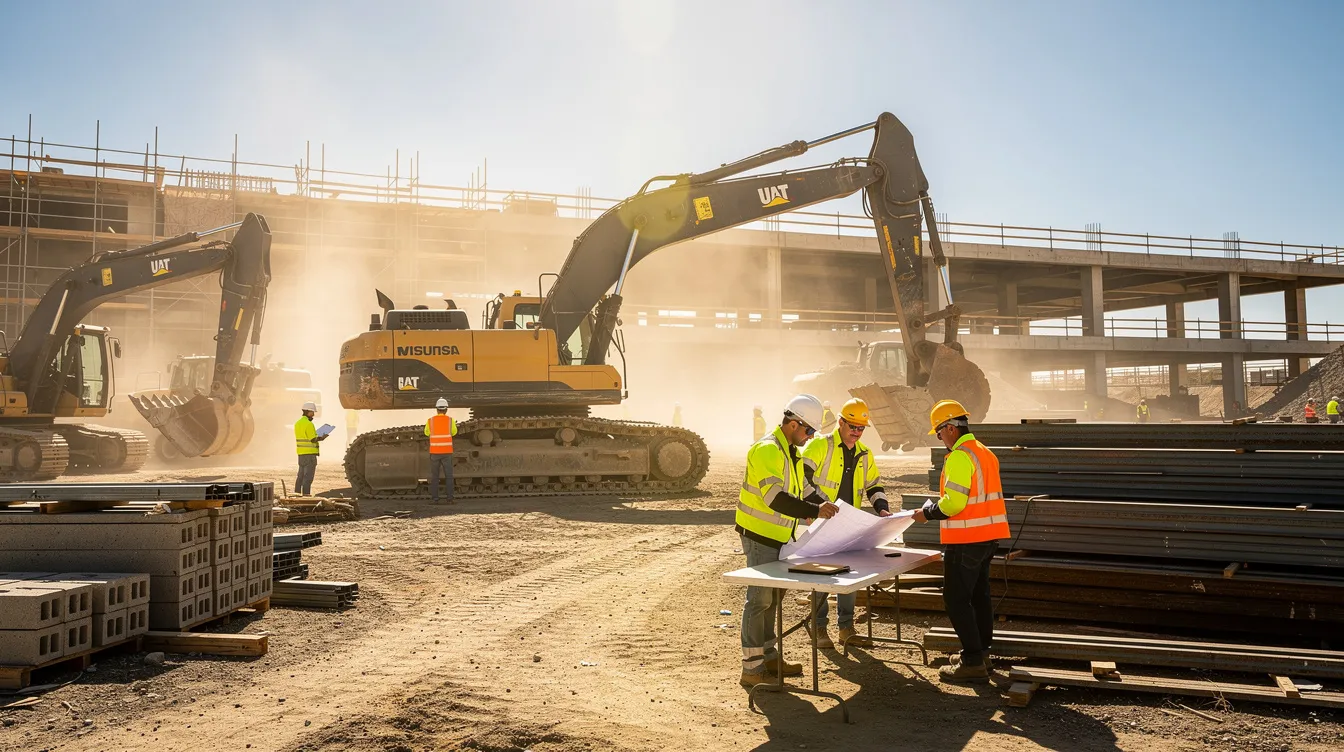
Every serious evaluation should include a field test on an active project, using the same crews, supervisors, and subcontractors who will own the tool after rollout. The point is to learn how the technology behaves under ordinary jobsite pressure, not ideal conditions.
Specific conditions to test against:
- Heat: Battery life and screen visibility across a full shift during hot weather
- Dust and moisture: Durability when devices are exposed to soil, rain, or rough handling
- Connectivity: Performance when service becomes weak or disappears temporarily
- Noise: Whether audio alerts or voice-dependent functions still work near traffic and equipment
- Glove use: Whether workers can operate the system while wearing standard jobsite PPE
For drones, test under local wind conditions and around airspace restrictions that may affect Austin-area flights. For wearables, check whether the device remains accurate and comfortable through sweat, movement, and long shifts. For safety-related tools, validate how alerts are routed, who responds, and whether the system adds clarity or just more noise to supervision.
Run a Focused Pilot Before Committing Companywide
A 30- to 90-day pilot on one representative project is often the safest way to validate a tool’s value before signing a long agreement or deploying it companywide.
Pick a pilot site with care: a mid-sized project, an engaged superintendent, and crews willing to give honest feedback. The site should reflect the kind of work the company actually performs, whether that is in Greater Austin, San Marcos, Waco, or elsewhere in Central Texas.
Define at the start:
- Scope: Which crews and tasks are included
- Duration: Long enough to cover both normal and stressed operating conditions
- Success metrics: Tied directly to the pre-pilot worksheet
- Owner: A named person on the contractor side
- Escalation path: What happens when the tool breaks during active work
Pilots should involve the actual end users. Foremen, craft professionals, project engineers, and safety coordinators usually identify friction points faster than an executive team or a sales rep. Their feedback should carry real weight in the go-or-no-go decision.
Measure the Financial Impact and the Cost of Failure
Purchase price is only one line item. The more useful question is what the tool costs to launch, support, maintain, and recover from when something goes wrong.
A simple downtime cost formula for construction is:
(Number of affected crews) × (crew cost per hour, including wages, burden, and overhead) × (hours of downtime) + idle equipment cost + schedule delay cost
During the pilot, track added overtime, schedule slippage, extra supervision time, replacement hardware, support hours, consulting fees, and tool-related delays. On tight-margin work, even short failures during a critical activity can outweigh promised efficiency gains. Financial review should also include administrative burden. A product that saves time in the field but creates extra cleanup in payroll, compliance, or closeout may not be a win.
This is also where discipline matters most. Contractors should avoid assigning precise savings figures before the pilot data supports them. A smaller, verified improvement is more useful than an ambitious ROI claim that never materializes in practice.
Check Interoperability, Data Quality, and Compliance Requirements
Interoperability in construction terms means whether the technology can exchange usable data with scheduling, ERP, BIM, timekeeping, and safety systems without forcing manual cleanup or duplicate entry.
Questions for vendors include:
- What APIs are available, and who maintains them?
- What file formats are supported?
- Is single sign-on available?
- Which mobile devices and operating systems are supported?
- Who pays for integration updates when one platform changes?
Data quality matters just as much as data flow. Contractors should ask where information is stored, who can access it, how long it is retained, and how it is backed up. If a field team cannot trust the data, or if office staff must constantly clean it up, the system is not doing its job.
Some technologies also bring category-specific compliance questions. Drones, for example, operate under federal aviation rules. Certain safety tools may affect recordkeeping or incident-response procedures. Owner contracts may also dictate file formats, documentation standards, or data-handling expectations. Involve both field operations and back-office teams early to identify downstream reporting issues before rollout.
Assess Training, User Adoption, and Change Management
The best technology fails if field teams do not actually use it. Evaluation should include training needs and adoption risk from the beginning, not after the contract is signed.
Gauge training burden by measuring:
- Hours per user to reach basic proficiency
- Interface complexity for different experience levels
- Availability of Spanish-language or visual training materials
- Whether vendor-led sessions are included or billed separately
Healthy pilot signals include consistent use, fewer paper backups, reduced workarounds, and feedback that the tool is easier to use than the old process. If crews abandon the system within two weeks, that usually points to a usability or workflow problem rather than a field attitude problem.
Practical change-management steps include identifying field champions, aligning the tool with routines crews already follow, and building training around the actual task being improved. ABC Central Texas apprenticeship, education, and safety resources can also support the broader digital skills and operational discipline that make adoption smoother.
Ask the Hard Questions Before You Sign
Once a contractor signs a multi-year agreement or buys a fleet of devices, mistakes become expensive. Press vendors with direct questions before the contract is finalized.
Vendor checklist:
- What support is available when the system goes down during active work?
- What response times are promised, and how are issues escalated?
- What exit options exist if the tool does not meet pilot goals?
- What is the full pricing structure, including hardware, minimum seats, migration fees, and renewals?
- How often do major updates occur, and how are customers notified?
- What does the vendor’s product roadmap look like for the next few years?
It also helps to compare at least two vendors using the same framework. That keeps the decision tied to operational fit instead of whichever presentation felt most polished.
Turn the Process Into a Repeatable Playbook
One successful pilot should become the company’s standard process for future construction technology evaluation efforts. A simple internal playbook can include standard criteria, a pilot template, a financial-impact worksheet, assigned responsibilities across operations and IT, and a required sign-off process before rollout.
Central Texas firms can align that playbook with broader safety, workforce development, and continuous-improvement efforts so each new evaluation becomes easier to manage. Review the process periodically and update it with lessons from each pilot, changes in company systems, and new project demands across the Austin and I-35 markets.
One practical next step is to choose the next technology decision already on your calendar and run it through this stress-test framework instead of relying on price alone or vendor promises.
How ABC Central Texas Can Support Your Next Technology Decision
ABC Central Texas serves merit shop contractors across Greater Austin, the I-35 corridor, Waco, and the broader region. For members evaluating new tools, chapter resources can support the discipline behind better technology decisions, including safety education, apprenticeship and workforce development, and peer networking with contractors comparing what has worked in the field.
If your company is considering a pilot or preparing for a broader rollout, ABC Central Texas can help you connect that decision to training, safety planning, and workforce development resources that support stronger implementation.
Contact ABC Central Texas to learn which education, safety, or workforce resources may fit your next construction technology evaluation.

Frequently Asked Questions
These FAQs address common follow-up questions Central Texas contractors may have after working through the evaluation framework.
How long should a construction technology pilot last?
A 30- to 90-day window is common. The duration should match the workflow being tested and allow enough time to experience both normal and stressed conditions, such as weather changes, crew rotation, or schedule pressure. Very short trials often miss the problems that show up only after initial enthusiasm fades.
Who should own the technology evaluation process inside a construction firm?
A named contractor-side leader should own it, often in operations or project leadership, with support from IT, safety, and finance. Don’t leave it entirely to the vendor or a single enthusiastic user.
How many projects should we include in our first pilot?
Start with one representative project. Expand only after the first pilot meets its success criteria. Running too many pilots at once can dilute feedback and make it harder to determine what caused the result.
What if a vendor will not support a field pilot or short-term trial?
Treat that as a risk factor. If a vendor won’t let you test a tool under realistic conditions before a larger commitment, the contractor should weigh that reluctance as part of the buying decision.
How often should we revisit past technology decisions?
A yearly or project-cycle review of major tools is a practical habit. Review whether each system still delivers value, integrates with newer platforms, and fits current operating needs, rather than assuming an earlier decision still makes sense unchanged.