
Key Takeaways
- The construction workforce pipeline in Central Texas is under pressure from persistent replacement demand, tight skilled-trade labor markets, and a shrinking flow of experienced workers into and through the industry.
- For contractors, the biggest workforce risk is not just hiring for today’s openings. It is replacing retiring and departing craft professionals fast enough to protect schedules, quality, and supervisory depth over the next several years.
- Registered apprenticeship programs give construction companies a practical way to build replacement capacity instead of relying only on reactive recruiting.
- ABC Central Texas operates registered apprenticeship programs in Carpentry, Concrete, Electrical, HVAC, Pipefitting, Plumbing, and Sheet Metal to help employers and workers build a stronger long-term workforce pipeline.
Why a Shrinking Labor Force Is Rewriting the Construction Workforce Equation
The construction workforce pipeline is the long-term flow of people entering the industry, building skills, and advancing into productive craft and supervisory roles. That pipeline matters in every market, but it matters even more in Central Texas, where contractors across Austin, Round Rock, San Marcos, Waco, and the I-35 corridor are competing for many of the same skilled workers.
The workforce challenge is bigger than a bad hiring month. ABC National said in January 2026 that the construction industry must attract an estimated 349,000 net new workers in 2026 to meet demand, and that a majority of that demand will be tied to retirement rather than increased demand for construction services. The U.S. Bureau of Labor Statistics also projects about 587,000 openings each year, on average, in construction and extraction occupations from 2025 to 2035 because of employment growth and the need to replace workers who permanently leave those occupations.
That is why the labor shortage is best understood as a pipeline problem, not just a recruiting problem. For Central Texas contractors, the business impact shows up in staffing pressure, thinner supervisory benches, tougher competition for experienced crews, and more risk to schedule reliability on commercial and industrial work.
This article explains what is weakening the construction workforce pipeline, why traditional hiring alone cannot solve the problem, and how registered apprenticeship through ABC Central Texas can help contractors create a steadier source of future craft talent.
Labor Shortages, Retirements, and Replacement Demand
National workforce data helps explain why so many contractors feel like every experienced hire is harder to replace than it used to be.
- The Bureau of Labor Statistics projects about 587,000 openings each year, on average, across construction and extraction occupations from 2025 to 2035.
- For many construction roles, replacement demand is a major driver of those openings. The Bureau of Labor Statistics notes that many openings for construction laborers and helpers are expected because workers transfer to different occupations or leave the labor force, including retirement.
- ABC National’s 2026 workforce estimate points in the same direction: a majority of 2026 worker demand is expected to come from retirement rather than new demand alone.
- Associated General Contractors reporting has also shown that most firms continue to struggle to fill hourly craft positions, which matches what many contractors experience in the field.
- When long-tenured foremen, superintendents, and journeymen leave faster than companies can develop newer workers, they lose productivity, mentoring capacity, and institutional knowledge at the same time.
In other words, the problem isn’t just the number of openings. It is the type of openings. Replacement openings are harder on contractors because they often involve workers who carried years of trade knowledge, field judgment, and crew leadership.

How the Construction Workforce Pipeline Breaks Down on Central Texas Jobsites
In Central Texas, national labor trends meet a region already shaped by sustained commercial growth, infrastructure work, and strong competition for specialty-trade talent. That means a shrinking labor force does not stay theoretical for long.
- Open positions stay open longer when contractors pursue the same limited pool of experienced craft workers.
- Project teams may need to resequence work, stretch existing crews, or pass on opportunities they are not confident they can staff well.
- Supervisors spend more time covering labor gaps and less time coaching newer workers, which can slow development of the next layer of leaders.
- Heavy dependence on spot hiring can make it harder to maintain consistent expectations around production, quality, and safety culture.
- Over time, firms without a deliberate workforce pipeline become more vulnerable to losing talent mid-project to other employers offering immediate pay increases or faster advancement.
For owners and contractors alike, the result can be fewer bidding options, tighter schedules, and more uncertainty around who will actually perform the work. In a market like Greater Austin and the broader corridor, workforce planning becomes a delivery issue, not just an HR issue.
Why Traditional Hiring Alone Cannot Fix the Construction Workforce Pipeline
When labor gets tight, most companies start with the fastest tools available: job postings, recruiters, wage increases, referrals, and signing incentives. Those tools have a place, but they can’t rebuild a weakened pipeline on their own.
Reactive hiring can help fill an immediate vacancy, but it rarely creates new capacity for the industry. In many cases, it simply moves an already trained worker from one contractor to another. That may solve a short-term staffing problem for one firm while leaving the regional labor market just as constrained.
- Short-notice hiring gives companies less time to evaluate technical habits, safety discipline, and long-term fit.
- Temporary fixes do little to replace the lost mentoring capacity that disappears when experienced workers retire or leave.
- Trades such as electrical, HVAC, plumbing, pipefitting, and sheet metal require structured skill development over years, not weeks.
- BLS occupational requirements data also shows how training-intensive the field is: in 2025, 71.4% of construction and extraction workers required on-the-job training.
- Without a repeatable training system, contractors stay exposed to the same labor shock every time a large project ramps up or a key employee departs.
That is the core issue behind the shrinking labor force story. If the industry needs more trained people and many openings are replacement openings, contractors need a way to develop workers deliberately instead of waiting for the open market to solve the problem.
Why Registered Apprenticeship Is a Stronger Long-Term Response
Registered apprenticeship is one of the clearest ways to turn workforce concern into workforce capacity. These programs combine paid on-the-job training with structured classroom instruction under an established training framework.
That matters because apprenticeship is built for the exact problem contractors face: replacing departing experience with rising talent over time.
- Apprentices earn wages while they learn, which makes the pathway more accessible than debt-heavy alternatives for many workers.
- Employers gain a structured process for developing workers to company and industry standards, rather than relying only on informal learning.
- Classroom instruction and documented on-the-job training help apprentices build technical knowledge, code familiarity, and jobsite discipline together.
- For existing employees, apprenticeship can also provide a clearer framework for advancement into higher-skill or leadership-track roles.
- Over time, apprenticeship helps contractors build replacement capacity from inside the company instead of depending only on external recruiting.
This is also where the approved source topic and the Central Texas response connect most clearly. A shrinking labor force changes the workforce equation because replacement demand becomes more important. Apprenticeships change the contractor response because they create a more deliberate path to replace that lost capacity.
Inside the ABC Central Texas Apprenticeship Pipeline
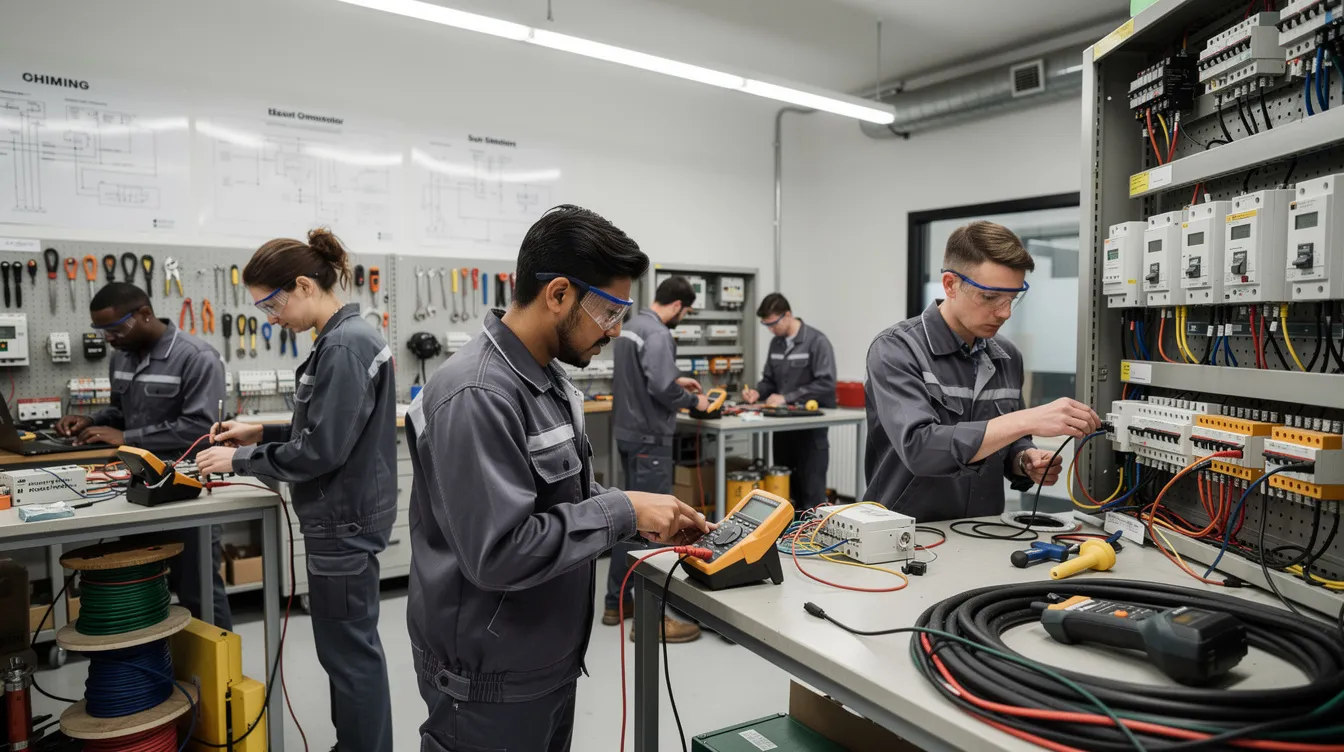
ABC Central Texas operates registered apprenticeship programs built around the trades that many regional contractors need most. The chapter’s apprenticeship page presents the model clearly: apprentices earn while they learn through paid on-the-job training and structured classroom instruction.
- Trades currently listed include Carpentry, Concrete, Electrical, HVAC, Pipefitting, Plumbing, and Sheet Metal.
- The program serves both individuals entering the trades and employers investing in long-term workforce development.
- Because apprentices work while training, employers can develop talent in live project environments instead of separating learning from field experience.
- The chapter also emphasizes the affordability and accessibility of apprenticeship compared with traditional college pathways.
For Central Texas contractors, that creates a practical regional option rather than an abstract workforce idea. If your firm knows replacement demand is coming, registered apprenticeship gives you a way to start building the next layer of craft talent now.
Contractors looking for a broader advancement framework can also review ABC Central Texas resources on construction career paths, which connect apprenticeship to longer-term retention and leadership planning.
From Labor Risk to Workforce Plan: What Contractors Can Do Now
A shrinking labor force becomes less overwhelming when companies turn it into a planning exercise. For many contractors, the first useful step is not a major new program. It is a clearer picture of where the workforce risk actually sits.
- Map likely retirements, departures, and hard-to-replace roles across your crews and supervision over the next several years.
- Compare those risks against your backlog and expected project mix by trade.
- Identify which positions create the greatest schedule and quality risk if they stay open too long.
- Decide where apprenticeship could help create bench strength, especially in trades that are consistently difficult to staff.
- Assign experienced employees to mentor developing workers in a structured, consistent way rather than only when time allows.
- Review the plan at least annually so hiring, training, and field leadership development stay connected.
The goal is not to predict every labor movement perfectly. The goal is to stop treating replacement demand as a surprise when broader labor data already shows it is persistent.
How Apprenticeship Supports Day-to-Day Operations
Apprenticeship works best when it is integrated into normal operations instead of treated as a side project.
- Give apprentices consistent supervision so expectations around quality, safety, and work methods stay clear.
- Align field exposure with what apprentices are learning in class whenever possible.
- Set clear progression milestones so both the apprentice and the employer know what improvement should look like over time.
- Use apprenticeship as part of succession planning, not just entry-level recruiting.
- Track simple outcomes such as retention, advancement, and reduced dependence on last-minute hiring to evaluate whether the pipeline is improving.
That operating discipline matters. A construction workforce pipeline isn’t just about bringing in people. It is to develop workers who are productive, promotable, and prepared to support the next phase of company growth.
What Happens If Contractors Ignore the Pipeline Problem?
The cost of ignoring the construction workforce pipeline usually appears gradually, then all at once.
- Recruiting stays expensive because the company keeps buying labor at the point of crisis.
- Supervisors get stretched thin because too much knowledge sits with too few people.
- Growth opportunities narrow because the firm cannot confidently staff additional work.
- Company culture becomes harder to sustain when crews are assembled reactively instead of developed intentionally.
- Each departure becomes more disruptive because there is no real bench behind the role.
For Central Texas contractors, that matters in a region where labor competition is unlikely to disappear on its own. Firms that invest in pipeline-building are not just filling jobs. They are protecting their ability to deliver work reliably as the labor market stays tight.
Taking the Next Step with ABC Central Texas
A shrinking labor force changes the construction workforce equation by increasing the importance of replacement demand, internal development, and long-term workforce planning. For contractors in Central Texas, that makes the construction workforce pipeline an operational priority.
Registered apprenticeship is one of the most practical ways to respond because it helps companies develop new talent while experienced workers are still available to teach, supervise, and transfer knowledge. It also gives workers a structured, paid path into the trades and into long-term careers.
- Review ABC Central Texas registered apprenticeship programs and identify which trade areas align with your biggest workforce risks.
- Evaluate where your current backlog depends most heavily on hard-to-replace craft or supervisory talent.
- Build apprenticeship into your workforce planning discussion before labor gaps become urgent staffing problems.
The contractors that treat workforce development as part of operations, not a separate initiative, will be better positioned to keep projects staffed and schedules moving across Central Texas.
Frequently Asked Questions
Below are answers to common questions about this topic.
What is a construction workforce pipeline?
A construction workforce pipeline is the long-term flow of people entering the industry, gaining skills, and advancing into productive craft and leadership roles. For contractors, it includes recruiting, training, mentoring, advancement, and retention rather than hiring alone.
Why is the shrinking labor force such a big issue for construction?
Because many construction openings are replacement openings, not just new positions created by growth. When experienced workers retire or leave the field, contractors lose labor capacity and job knowledge at the same time.
Why is apprenticeship a better long-term response than reactive hiring alone?
Reactive hiring can help fill immediate vacancies, but it does not reliably create new skilled capacity. Apprenticeship gives employers a structured way to develop workers over time through paid jobsite training and classroom instruction.
What trades does ABC Central Texas support through apprenticeship?
ABC Central Texas lists registered apprenticeship opportunities in Carpentry, Concrete, Electrical, HVAC, Pipefitting, Plumbing, and Sheet Metal.
Can apprenticeship help existing workers, not just brand-new entrants?
Yes. Employers can use structured training and advancement pathways to support current workers as they build higher-level trade skills and prepare for greater responsibility.