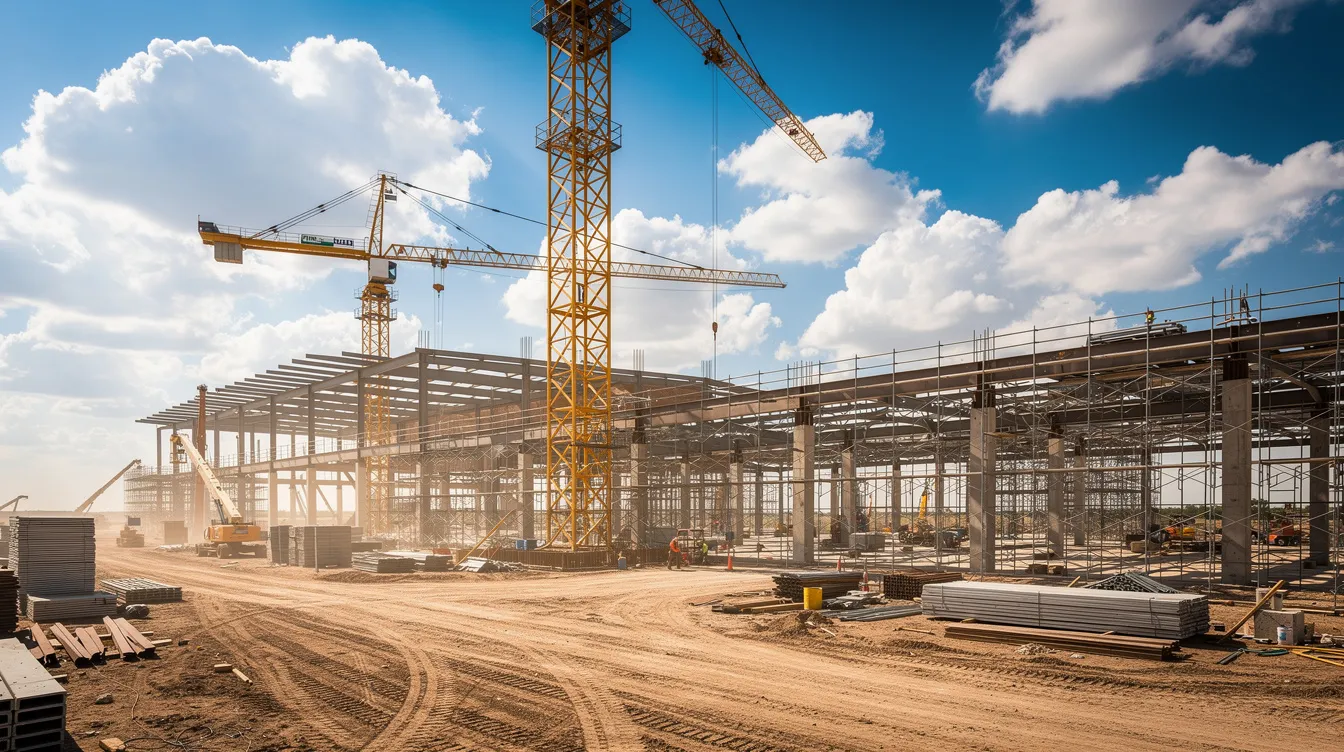

Construction Executive recently highlighted a shift many contractors already feel in the field: extreme weather risk on construction sites can no longer be handled as an occasional interruption. It now requires the same daily planning, decision authority, and documentation discipline as any other high-hazard activity. For Central Texas contractors, that means turning heat, lightning, wind, and heavy rain into a repeatable operating process from the morning huddle through shutdown and restart.
This field guide is the decision-focused companion to ABC Central Texas’s broader construction site weather preparation resource. It is built for superintendents, project managers, and safety leaders working in Austin, Round Rock, San Marcos, Waco, and across the I-35 corridor who need clear steps for when to modify work, pause operations, secure the site, and restart safely.
Key Takeaways
- Extreme weather construction safety in Central Texas now demands daily supervision, not seasonal reminders. Heat, pop-up thunderstorms, lightning, wind, and heavy rain can change site conditions faster than crews can improvise.
- The most reliable field sequence is simple: monitor, decide, communicate, secure, inspect, restart. Assign shutdown authority in advance so the person closest to the hazard can act without delay.
- OSHA expects employers to plan ahead for heat hazards, update emergency plans as site conditions change, and protect workers from recognized hazards including heat stress, lightning exposure, flooding, and wind-related instability.
- ABC Central Texas supports members with training and safety resources, including its Safety Programs hub and related weather-preparation guidance.
Why Extreme Weather Is a Daily Jobsite Management Issue in Central Texas
Central Texas contractors don’t need convincing that weather can change the workday. What has changed is how often weather affects operational decisions. Across Greater Austin, Round Rock, San Marcos, Waco, and the broader I-35 corridor, active job sites regularly face long heat seasons, fast-building afternoon storms, lightning risk on open structures, and heavy rain that can compromise access, excavations, and temporary power.
The practical question is no longer whether weather belongs in the safety plan. It is how field leaders should make consistent decisions about when to keep working, when to modify tasks, and when to shut down. That is the core issue raised by Construction Executive’s source article, and it is the same issue this Central Texas guide addresses.
For contractors in a fast-moving regional market, weather disruptions are not only safety events. They can also affect sequencing, inspections, deliveries, site access, and restart timing. That is why weather decisions should be treated like other high-risk field controls: defined in advance, communicated clearly, and documented when conditions change.
What OSHA Expects Before Conditions Deteriorate
OSHA’s General Duty Clause requires employers to keep workplaces free from recognized hazards that are causing or likely to cause death or serious physical harm. On construction sites, that can include heat stress, lightning exposure, flooding, unstable temporary structures, and wind-related hazards.
For heat, OSHA says employers should plan ahead and develop a written heat illness prevention approach that addresses who provides daily oversight, how workers acclimatize, what controls are used, and how the company responds when heat risk increases. OSHA also emphasizes that heat stress depends on more than the air temperature alone. Humidity, workload, sun exposure, clothing or PPE, and air movement all matter.
For emergency planning, OSHA states that an emergency action plan on a construction site may need to change as conditions at the worksite change. That matters on jobs that are moving from excavation to structure, from structure to exterior work, or from mild spring conditions into peak summer heat and storm season.
A workable site weather plan should include:
- Who monitors forecasts and real-time alerts
- Who has authority to pause or stop work
- How workers and subcontractors will be notified
- Where crews shelter during lightning or severe storms
- How shutdown, inspection, and restart decisions will be documented
Build a Weather Response System Before the First Alert
Extreme weather construction safety works best when it is built into daily operations rather than triggered by panic. Every active jobsite should know, before the shift begins, who owns the forecast review, who makes the call, and what conditions could change the day’s work plan.
At a minimum, assign these roles:
- Weather monitoring lead: checks forecast, radar, alerts, and changing site conditions
- Shutdown authority: empowered to pause or stop work when thresholds set by the company or equipment requirements are reached
- Communication lead: relays instructions to foremen, subcontractors, operators, and visitors on site
On smaller jobs, one person may handle more than one role. What matters is that there is no confusion when conditions change quickly.
Morning huddles should include a short weather brief. It doesn’t need to be complicated. Review the forecast, identify likely risks for the shift, and explain what actions will follow if those risks escalate. If the day may involve a high heat load, move heavier tasks earlier. If afternoon storms are likely, crews can pre-stage tie-downs, covers, and shutdown assignments before lunch instead of reacting at the last minute.
High-Heat Days: How to Turn OSHA Planning Into Field Action
Heat remains one of the most persistent weather-related jobsite hazards in Central Texas. Open slabs, roofs, steel, concrete, and limited natural shade can increase exposure even when the posted temperature doesn’t look extreme on paper.
OSHA’s planning guidance translates into several practical field controls:
- Place cool drinking water near active work, close to the crew.
- Provide shaded or cooled recovery areas close enough that workers will actually use them.
- Build rest breaks into the day as heat risk rises.
- Acclimate new hires and returning workers gradually over the first 7 to 14 days.
- Train supervisors and crews to recognize early signs of heat illness such as dizziness, headache, cramps, confusion, and unusual fatigue.
- Use a buddy approach so workers notice symptoms before they become emergencies.
Central Texas contractors can also reduce exposure by sequencing work differently. Common examples include earlier starts, heavier tasks in the morning, and lighter or indoor work later in the day. The point is not to rely on a single number like ambient temperature. The point is to manage total heat stress as OSHA describes it: a combination of environment, exertion, clothing, and duration.
Storms, Wind, Lightning, and Heavy Rain: The Hazards That Change Fastest
Construction Executive’s core message was that contractors need to look beyond the forecast and treat weather as an active risk-management issue. In Central Texas, that is especially true with short-notice thunderstorms. A site can shift from routine operations to high winds, lightning exposure, and water intrusion in a short window.
The most common storm-related construction hazards include:
- Loose materials becoming windborne
- Temporary structures losing stability
- Elevated work becoming unsafe
- Excavations taking on water or eroding at the edges
- Temporary power and cords becoming wet or damaged
- Access roads and ramps becoming muddy, flooded, or impassable
Wind decisions should always follow the requirements for the specific equipment and setup in use. Crane, lift, scaffold, and temporary structure limits vary by manufacturer, model, configuration, and site conditions. If a gust threshold matters to the day’s work, the crew should verify that limit before operations begin rather than rely on memory or rule-of-thumb numbers.
Lightning deserves its own stop-work discussion because exposed jobsites often include steel framing, rebar, scaffolds, cranes, and unfinished upper levels. Many contractors use a company-defined radius or alert trigger for suspending elevated or exposed outdoor work. Whatever trigger your company uses, write it down, communicate it, and enforce it consistently.
The Superintendent’s Shutdown and Restart Checklist
This checklist is designed as a field framework contractors can adapt into their own forms, apps, or daily reports.
Before severe weather reaches the site:
- Confirm who is on site and verify headcount procedures.
- Pull crews from elevated, exposed, or otherwise weather-sensitive work areas.
- Secure or shut down equipment based on manufacturer instructions and company procedure.
- Tie down or move loose materials, tools, and lightweight components.
- Protect temporary power, open electrical components, and unfinished openings where possible.
- Restrict access to areas that may flood, erode, or become unstable.
During shelter or evacuation:
Move workers to the pre-identified safe location for the hazard involved. Confirm headcounts, maintain communication, and keep nonessential personnel away from active hazard zones.
Before restart:
- Inspect access roads, walkways, ramps, and staging areas
- Check excavations, slopes, and foundations for erosion or undermining
- Inspect scaffolds, edge protection, ladders, and elevated access points
- Review temporary power, cords, panels, and GFCI protection for wet or damaged components
- Look for displaced materials, damaged coverings, standing water, and signs of structural movement
Restart should happen only after the inspection confirms the site is safe for the next phase of work. This is also where documentation matters. A short record showing the condition, time, decision, and inspection outcome can support both safety performance and later project review. Contractors that want to strengthen this discipline can also review ABC Central Texas guidance on a stronger inspection trail.
Lightning Safety and Exposed Work Areas
Lightning can turn an ordinary afternoon into an immediate stop-work event on a construction site. Open framing, roof work, rebar, scaffold systems, and crane activity all increase exposure.
At the company level, crews should know:
- What weather alert, observation, or trigger requires exposed outdoor work to stop
- Where workers should shelter
- Who gives the all-clear to resume
- How long the company waits after the last thunder or lightning observation before restarting outdoor activity
Many firms use the conservative rule of waiting at least 30 minutes after the last thunder or lightning before resuming outdoor work. If your company uses that approach, document it in the site plan and communicate it in toolbox talks so no one makes up the rule mid-storm.
After a lightning event, inspect electrical systems and any equipment affected by the shutdown before re-energizing or resuming work.
A Simple Extreme-Weather Decision Framework for Central Texas Jobsites
For most projects, the most useful approach is not a thick binder. It is a repeatable sequence that supervisors can actually use:
- Monitor: Check the forecast, radar, and conditions before the shift and throughout the day.
- Decide: Set the day’s controls based on likely heat, storm, wind, or lightning exposure.
- Communicate: Make sure foremen, subcontractors, and operators understand the plan and the trigger points.
- Secure: When company thresholds or equipment limits are met, protect people, equipment, and unfinished work.
- Inspect: After the event, walk the site before anyone returns to routine work.
- Restart: Resume only after conditions are verified safe and the decision is documented.
This sequence reflects the underlying point from the Construction Executive article: effective weather management is not just forecasting. It is operational decision-making.
Illustrative Central Texas Scenario: Heat Risk Plus Afternoon Storms
This example is illustrative only and does not describe a real project.
A superintendent on a multifamily job near the I-35 corridor reviews the early forecast and sees two issues: elevated heat risk by early afternoon and a strong chance of thunderstorms later in the day. During the morning huddle, the team moves heavier work earlier, confirms who will secure materials if storms approach, and reminds crews where to shelter if lightning triggers a stop.
By midday, radar shows a cell developing west of the site. The weather lead updates foremen, and once the company’s lightning trigger is reached, elevated and exposed outdoor work stops. Crews move to shelter, secure equipment per company procedure, and the site team maintains headcounts by radio.
After the storm moves through and the company’s restart conditions are met, the superintendent leads a walk-through focused on access, electrical exposure, coverings, and drainage. Work resumes only after the inspection clears the affected areas. The value of the process is not that weather was avoided. It is that the decision sequence was already in place.
Central Texas Weather Response Checklist
Use this quick review at the start of the week or before a higher-risk weather window.
| Question | Yes/No |
|---|---|
| Is one person assigned to monitor weather and alerts for this site? | |
| Is shutdown authority clearly assigned for this project? | |
| Do foremen and subcontractors know the day’s weather-related trigger points? | |
| Are shade, water, and recovery areas positioned near active work zones? | |
| Have you identified new or returning workers for acclimatization oversight? | |
| Are tie-downs, covers, and other shutdown materials staged and accessible? | |
| Are shelter locations and headcount procedures up to date? | |
| Have you verified equipment-specific wind or weather limits for the day’s operations? | |
| Is the restart inspection process assigned and understood? | |
| Is there a simple way to document shutdown and restart decisions? |
What Central Texas Contractors Should Do This Week
- Review your heat and weather procedures. Make sure your written plans reflect current OSHA heat guidance and changing site conditions.
- Assign weather roles on every active site. Monitoring, shutdown authority, and communication should never be unclear.
- Verify company triggers. Confirm how your firm defines heat responses, lightning stops, equipment shutdown decisions, and restart authority.
- Run a short drill. Practice headcount, shelter movement, and post-storm inspection steps before the next fast-moving event.
- Use ABC Central Texas resources. Explore the chapter’s weather-preparation guide and broader safety support for members who want stronger field systems.
The contractors that handle extreme weather best are usually not the ones with the most detailed forecast. They are the ones with the clearest field process. If your crews know who watches the weather, who makes the call, how shutdown happens, and what must be inspected before restart, you are already moving beyond reaction and into management.
Frequently Asked Questions
Below are answers to common questions about this topic.
What weather conditions should automatically stop work on a construction site?
That depends on the company’s written procedures, the equipment in use, site conditions, and applicable manufacturer instructions. Common examples include lightning triggers set by company policy, unsafe heat conditions, flooding that affects access or excavations, and wind conditions that exceed equipment or temporary-structure limits. The key is to define these triggers before the event, not during it.
How should multi-site contractors handle weather decisions across Central Texas?
Use a consistent company framework for monitoring, decision-making, communication, shutdown, and restart, but assign a weather lead and stop-work authority on each individual site. Centralized office support can help with alerts, but local site conditions still require field judgment.
Do weather procedures need to change for different phases of construction?
Yes. A site in excavation, structural steel, dry-in, or interior finish does not face the same exposure profile. OSHA specifically notes that emergency planning on construction sites may need modification as worksite conditions change.
What is the best way to document a weather-related shutdown?
Keep it simple and consistent. Record the date, time, condition, who made the call, what was secured, where crews sheltered if relevant, and what the restart inspection found. Even a short digital form with photos can create a useful record.
How can ABC Central Texas help contractors improve extreme weather construction safety?
ABC Central Texas provides safety-focused resources and training for merit shop contractors across the region. For firms looking to strengthen weather planning, shutdown authority, documentation, and field leadership, the chapter’s safety resources are a practical starting point.