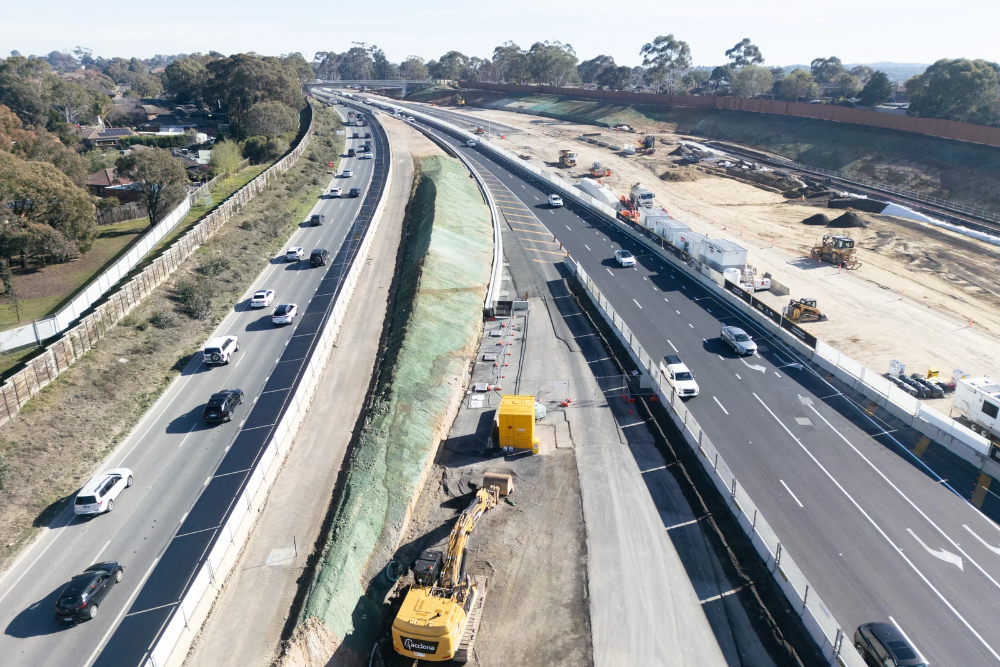
In Central Texas, where renovation schedules compress and trades stack up across Austin, Round Rock, and the I-35 corridor, a single core hole in the wrong spot can shut a project down. GPR concrete scanning is a field-verification step that helps contractors check what may be buried inside a concrete slab before cutting, coring, or drilling begins. It can help reduce the risk of striking embedded reinforcement, post-tensioning, conduit, plumbing, or communications lines, but only when the scope, interpretation, and work plan are aligned before anyone picks up a drill.
This article lays out a practical sequence: what can go wrong, what may be hidden inside the slab, how scanning fits into the process, where its limits matter, and how to build a repeatable pre-drill verification workflow crews can use on the next job.
Why a Small Penetration Can Become a Big Problem for Core Drilling and Concrete Work
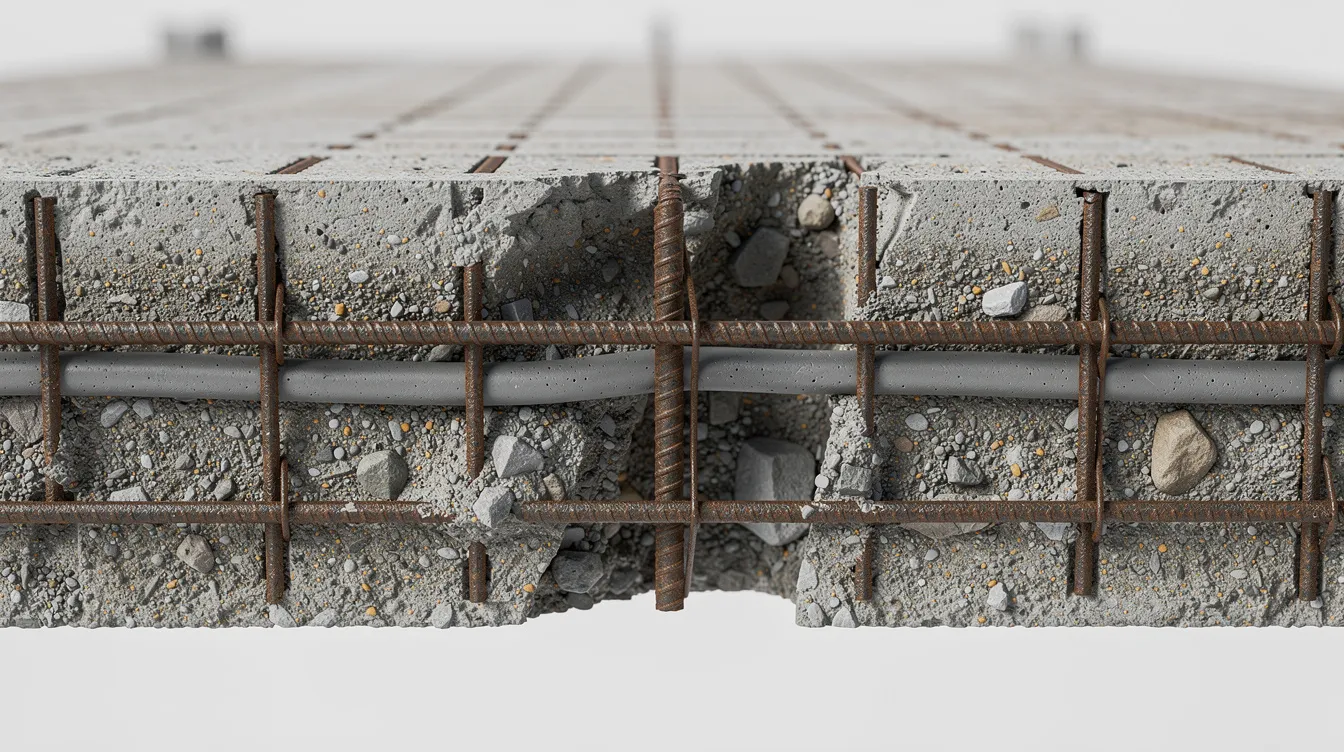
Core drilling into an existing concrete slab sounds routine until the bit finds something it should not. As Construction Executive has reported, rebar, post-tension cables, electrical conduit, plumbing, and communications lines are often embedded in concrete, and striking them can cause injuries, structural concerns, damaged building systems, repair work, shutdowns, and delays that affect multiple trades.
Post-tensioned slabs deserve special caution. If a tendon is damaged during cutting or drilling, it can create an immediate safety hazard and a serious structural issue that requires engineering review.
Renovation and occupied-building work, common across Greater Austin and along the I-35 corridor, can amplify the risk. Tenant improvements, undocumented modifications, and overlapping trades create conditions where the slab in the field may not match the record set. Schedule pressure can make it tempting to treat a penetration as routine. That is often where the exposure grows.
What Can Be Hidden Inside a Concrete Slab
A concrete slab is not a uniform block of material. It may contain:
- Rebar in one or more reinforcement layers
- Post-tension cables or tendons
- Electrical conduits
- Plumbing
- Communications lines
- Wire mesh reinforcement
- Voids or deterioration within or beneath the slab in some conditions
GPR can help identify changes and targets within concrete, including reinforcement and some embedded systems. Depending on slab conditions and signal clarity, it may also help reveal anomalies that deserve closer review. But scanning aids decision-making, not a guarantee that every embedded feature will be detected or interpreted with certainty.
One important gap remains: public utility locating does not clear everything inside a building or slab-on-grade area. Contractors still need independent verification for private or undocumented lines and for embedded conditions that are not covered by outside utility marking.
Start With Drawings, But Do Not Stop There
Always review structural, MEP, and as-built drawings before field work starts. These documents may show slab thickness, reinforcement layout, post-tensioning patterns, and conduit routing.
But drawings are not the final clearance. Renovations, tenant improvements, and previous repairs often create conditions that differ from the record set. Routing changes, undocumented plumbing work, and added communications lines may never appear on updated plans. That is why field verification matters.
A drawing review is your starting point. It is not permission to drill.
Ground Penetrating Radar (GPR) Concrete Scanning: How It Works
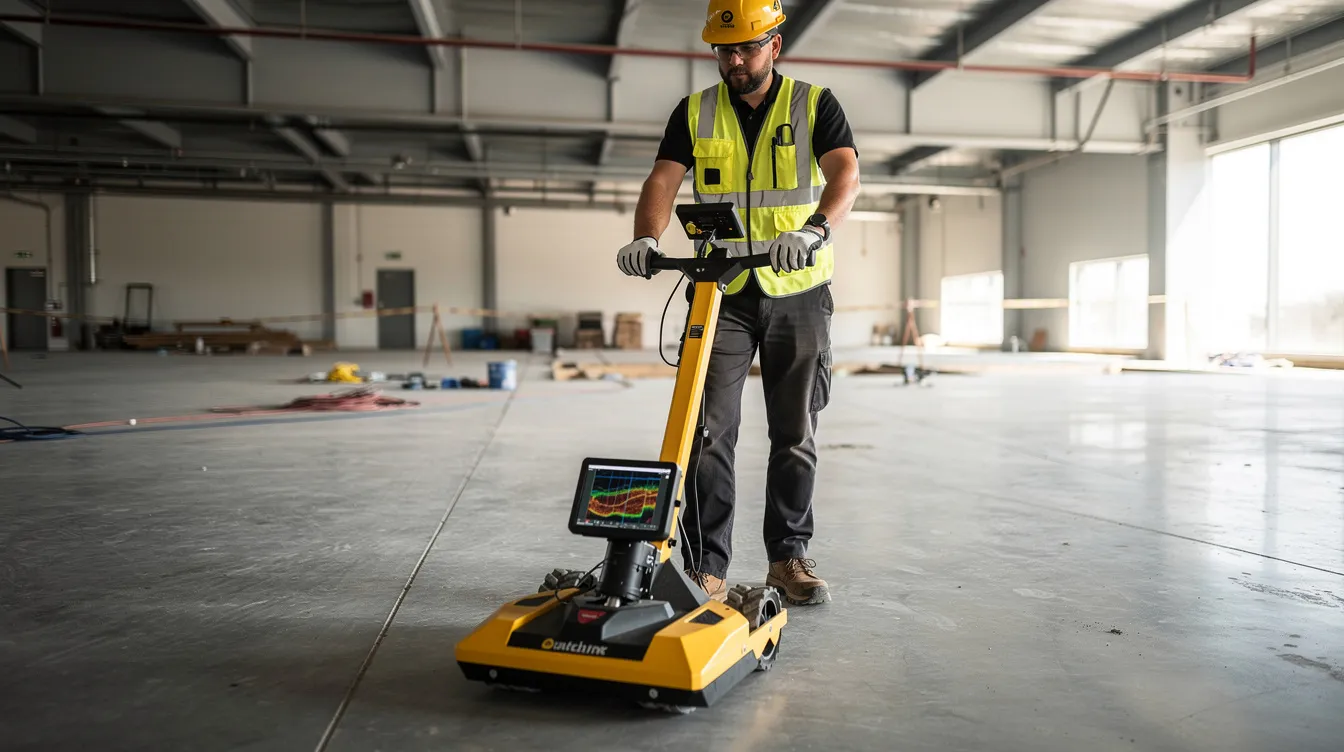
Ground-penetrating radar uses electromagnetic pulses to scan concrete. When those pulses encounter a boundary between materials with different properties, part of the signal reflects back to the antenna. The equipment records that response and helps the operator estimate position and relative depth.
Depth interpretation depends on slab conditions and calibration. Moisture, density, reinforcement, and dielectric properties can all affect results. Using a known reference point can substantially improve depth interpretation, which is one reason scanning should be part of a controlled field process rather than a quick standalone check.
GPR can be useful because it is non-destructive and can provide field results during scanning. In many cases, it also requires access to only one side of the element.
B-Scan and Radargram Interpretation
A B-scan is a two-dimensional cross-sectional image created as the antenna moves along a line on the surface. Embedded objects such as rebar or conduit may appear as curved signatures in the radargram, which the operator interprets to estimate location and depth.
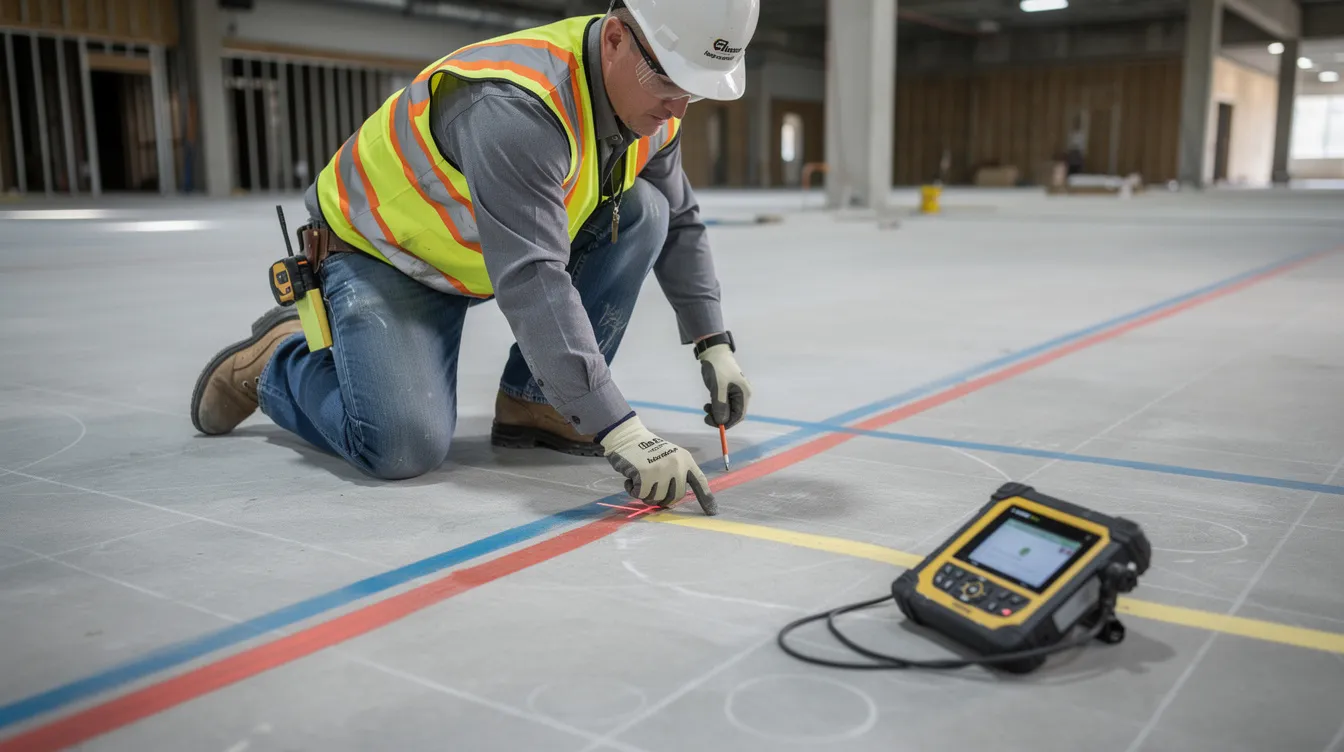
Best practice is to scan each proposed penetration area in two perpendicular directions. That helps the operator better understand target orientation and reduces the chance of relying on a single incomplete pass. Just as important, document field markings with the associated scan records so you can review the decision later if conditions change or questions arise.
B-Scan Best Practices for Pre-Drill Work
- Use a known reference point when possible to improve depth interpretation.
- Save scan files and field notes, including scan direction, date, operator, and observed slab conditions.
- Match the scan area to the actual proposed penetration area, not a nearby approximate location.
What GPR Can and Cannot Detect
GPR is widely used because it can help locate reinforcement, conduit, and other embedded features in concrete without destructive investigation. It can also help assess slab thickness under appropriate conditions and may support broader mapping when the signal is clear and interpretation is careful.
However, GPR does not guarantee detection of every object present in concrete. Interpretation can become less reliable when conditions limit signal quality or obscure deeper targets.
| Condition | Effect on GPR Results |
|---|---|
| Dense reinforcement or multiple layers | Can obscure deeper features and complicate interpretation |
| Metal deck or similar backing | Can block or distort readings below the deck |
| Wet or saturated concrete | Can reduce signal clarity and confidence |
| Rough or uneven surfaces | Can reduce coupling and data quality |
| Complex slab composition | Can increase attenuation or make interpretation less certain |
When scan confidence is low, the safest response is not to force certainty out of unclear data. Reassess the location, adjust the work plan, or consider a complementary method where appropriate.
Line Scans, Area Scans, and Scope Control
Scanning can be performed as a focused line check or as a broader mapped area, depending on the work. A single penetration may call for a targeted review of one location in perpendicular directions. A larger layout, repeated anchors, or a slab with multiple planned penetrations may justify a broader mapped area.
The key isn’t which label you use. The key is whether the scan scope matches the actual task. A scan performed beside the intended hole, or across too small an area, may leave the crew with false confidence.
Treat Post-Tensioned Slabs as Higher Risk
Post-tensioned slabs require greater caution because damaging a tendon can create immediate danger and trigger structural concerns well beyond the local penetration point.
If drawings and scanning do not provide enough confidence to identify a safe penetration path, move the penetration or have the engineer of record review it before work proceeds. Do not treat uncertainty in a post-tensioned slab as a minor field issue.
OSHA has publicly discussed hazards associated with post-tensioning and with drilling or cutting after post-tensioning operations. That reinforces the broader point for contractors: plan intrusive work in these slabs conservatively and review it carefully.
Concrete Coring, Core Drilling, and Concrete Cutting: Pre-Drill Controls
Before concrete coring begins:
- Define the exact penetration point, including diameter and required depth.
- Require GPR concrete scanning that covers the actual penetration area and surrounding clearance needed for the work.
- Assign a responsible reviewer to confirm the field location, scan findings, and clearance before drilling starts.
GPR supports better planning and documentation only when the scan matches the actual work location and is integrated into the pre-task process. Never treat it as automatic clearance on its own.
Pre-Drill Verification Workflow (Step-by-Step)
- Identify the exact penetration location, diameter, and depth on drawings and in the field.
- Review structural, MEP, and as-built drawings and note any missing or conflicting information.
- Schedule GPR concrete scanning for the defined area, with coverage that matches the actual work.
- Perform scans in two perpendicular directions, using a known reference point when available.
- Mark findings on the slab using a documented company marking standard and photograph the markings.
- Document the results in a field report, including location, scan images or files if available, operator, date, equipment used, observed conditions, and any unresolved ambiguity.
- Obtain sign-off from the designated decision-maker before proceeding with core drilling.
Pre-Drill Verification Checklist (Central Texas Contractor Template)
| Action | Completed |
|---|---|
| Confirm penetration coordinates on floor plan | ☐ |
| Confirm intended bit diameter and required clearance | ☐ |
| Request same-area GPR concrete scanning that matches the actual work location | ☐ |
| Use a known reference point when available to support depth interpretation | ☐ |
| Mark slab findings and photograph all markings | ☐ |
| Record signatory name, title, and timestamp | ☐ |
| File the field report with project records | ☐ |
If the Penetration Location Moves After Scanning
Stop work. The previous scan does not automatically clear the new location.
Even a small field change can alter the risk profile, especially in slabs with reinforcement, conduit, or post-tensioning. Repeat the scan and documentation process for the revised location before coring resumes.
GPR vs. Concrete X-Ray for High-Risk Slabs
Both methods can play a role, but they are not interchangeable.
| Factor | GPR | X-Ray |
|---|---|---|
| Access needed | Often requires access to one side only | Typically requires more restrictive setup and access conditions |
| Field disruption | Can often be performed with less disruption | Usually requires tighter controls and work-area restrictions |
| Best use | Routine field verification and many pre-drill checks | Cases where GPR confidence is low or conditions are difficult to resolve |
Where dense reinforcement, metal deck, or other conditions limit GPR confidence, a complementary method may be necessary. The right choice depends on the slab, the access conditions, and the level of risk.
Integrate Scanning With Jobsite Safety, Communication, and Hidden Utility Controls
Before any core drill crew mobilizes, hold a pre-task briefing that covers:
- Scan findings and slab markings for each planned penetration
- Known or suspected conduit, utilities, and post-tensioning paths near the work area
- Which conditions remain uncertain and what stop-work trigger applies if field conditions change
- Required PPE for drilling, coring, or cutting tasks
- Who has authority to pause the work if the field location, scope, or conditions change
Use consistent marking and communication standards so every worker can understand what has been cleared, what has not, and what remains uncertain. Integrate these controls into your broader construction safety management playbook. For crews that need formal training on hazard recognition and OSHA compliance, ABC Central Texas offers education and safety training resources that support stronger field decision-making.
Central Texas Considerations for Contractors
Greater Austin, Round Rock, San Marcos, and Waco share a common pattern: active renovation work, multi-tenant buildings with layers of prior modification, and schedules that reward speed. That combination makes pre-drill verification more important, not less.
Many renovation and tenant improvement projects in the region involve existing slabs that may have been altered over time. Undocumented conduit runs, relocated plumbing, and added communications lines are common enough to justify caution. The pressure to keep work moving along the I-35 corridor does not change what is inside the concrete.
Formalizing a pre-drill verification process, training field leaders to understand scan limits, and building scanning into project planning can help protect workers, schedules, and client relationships. For contractors that want to strengthen craft knowledge and field discipline over time, ABC Central Texas’s registered apprenticeship programs support workforce development in trades including Concrete and Electrical.
Conclusion: What to Do Before the Drill Starts
Every core hole starts with a decision. The real question is not whether the work can be done. It is whether the team has verified the exact location, understood the limits of the available information, and documented who cleared the work before the bit touches concrete.
Adopt the pre-drill verification checklist above. Train crews to treat GPR concrete scanning as one part of a controlled field-verification process, not a shortcut around judgment. And when conditions remain unclear, stop, recheck, and escalate before the drill starts.
To strengthen these controls on your jobsites, connect with ABC Central Texas for safety training, education, and workforce development resources that support stronger field execution.