When Central Texas temperatures push past triple digits, and schedules compress on every active construction project from Austin to Waco, the quality of decisions made by foremen, superintendents, and crews becomes the difference between a safe day and a serious incident. This article breaks down why decision-making capacity is now a core safety control, what safety culture in construction actually looks like in the field, and how contractors across the I-35 corridor can build stronger judgment into their operations before the next heat wave hits.
Key Takeaways
Safety culture in construction is not a poster on a trailer wall. In Central Texas, where summer heat stretches from May through September and major projects line the I-35 corridor through Austin, Round Rock, San Marcos, and Waco, fast, sound jobsite decisions are now a frontline safety control. A culture that prioritizes safety often correlates with fewer project delays and improved quality, and a positive safety culture is integral to project success because it improves performance while reducing injuries and fatalities. Effective safety cultures reduce the likelihood of accidents and enhance productivity across every trade on site.
OSHA’s current emphasis on heat exposure in the construction industry means that heat management decisions are treated as required health and safety management, not optional best practice. Poor judgment under heat and schedule pressure is a leading indicator for incidents, rework, and turnover. Strengthening supervisor decision-making capacity through regular safety training, clear escalation rules, and pre-task planning gives construction companies a measurable way to improve safety, maintain productivity, and protect margins. ABC Central Texas offers regional resources, including its Safety Programs hub, OSHA training, and a heat illness prevention plan, to help firms turn these principles into daily field action.
Why Decision-Making Capacity Is Now a Safety Issue in Central Texas
Central Texas construction operates under conditions that attack judgment from every direction. Long hot seasons routinely deliver heat indexes above 105°F at open commercial construction sites. Multi-year projects along I-35, rapid population growth (Austin surpassed one million residents in 2025), and a roughly 6.5% year-over-year increase in construction employment are stacking schedule pressure on every contractor in the region.
Construction is one of the most accident-prone industries worldwide, and the numbers in Texas reinforce that reality. From 2011 to 2023, Texas recorded 25 heat-related worker fatalities in construction, the highest rate among measured states. In 2023 alone, 51 severe construction injuries in Texas were attributed to environmental heat. Nationally, employers pay nearly $1 billion weekly for workers’ compensation costs, and OSHA violations can incur penalties over $136,000 per willful violation. These are not abstract figures for contractors bidding on data center, hospital, or infrastructure work along the I-35 corridor.
“Decision-making capacity” means the ability of foremen, superintendents, and crews to recognize changing safety risks (heat index spikes, storm cells, understaffed tasks) and make timely calls about pacing, task sequencing, and stop-work without waiting for an offsite executive. When that capacity is strong, companies experience less rework, fewer unplanned shutdowns, and fewer OSHA citations. When it is weak, small exceptions (skipping a water break, pushing through a pour window) accumulate into serious incidents.
What Construction Safety Culture Looks Like When It Works
Safety culture in the construction industry refers to shared values, beliefs, and behaviors regarding safety, creating a positive safety culture in practice. In practice, it is what crews expect will really happen when safety and production collide, and how leaders actually respond on a live construction site. Open communication encourages workers to report near misses and unsafe conditions without blame, and that transparency is the foundation of every effective safety program, especially when crews expect leaders to enforce safety rules consistently.
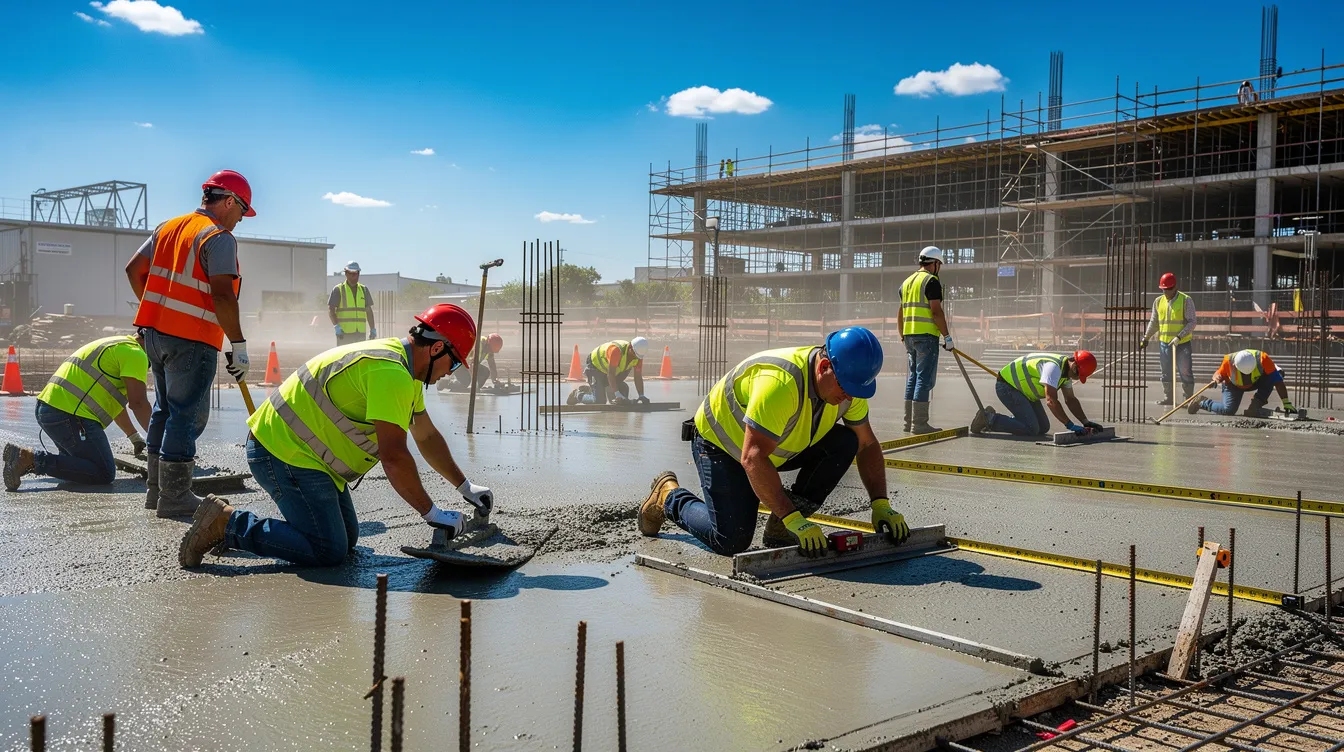
A working safety culture shows up in specific jobsite behaviors. Workers stop to re-rig a lift without fear of backlash. Supervisors move pour times to cooler hours. Project managers support slowdowns when the heat index spikes instead of pushing to “just finish this section.” Clear decision rights (who can stop what, and when) are communicated during pre-task planning, orientation, and toolbox talks so new hires and apprentices understand safety processes from day one. Effective safety programs increase worker productivity and efficiency because crews spend less time recovering from preventable mistakes.
Shared responsibility matters: field leaders, subcontractors, and general contractors agree on basic control measures for fall protection, heat illness, and traffic control, even when they come from different company cultures. A strong safety culture is visible in leading indicators such as high near-miss reporting, consistent use of personal protective equipment (PPE) in extreme heat, engaged participation in regular safety training, and low tolerance for “just this once” exceptions.
Where Judgment Breaks Down on Summer Jobsites
Judgment failures rarely start with a dramatic event. They start small: skipping a water break to keep a concrete placement on schedule, sending a short-handed crew into a tight trench, or ignoring early signs of heat exhaustion to avoid re-sequencing tasks. Research shows that for each 1°C increase in ambient temperature, construction productivity drops by approximately 0.57%, and errors trend upward.
Typical Central Texas pressure points include afternoon heat indexes above triple digits at open commercial construction sites, night or weekend work windows on I-35 infrastructure projects, overlapping trades on dense urban infill around downtown Austin, and new workers not yet acclimatized to the climate. Construction accounted for nearly half of all fatal slips, trips, and falls in 2022, underscoring the increased risk when time pressure, fatigue, and heat converge.
Different roles feel different pressures. Foremen are caught between daily production targets and crew complaints. Superintendents balance multiple subcontractors and inspections. Project managers try to protect milestone dates under liquidated damages provisions. Poor decisions often become normalized when they “work out” a few times, turning exceptions into the new standard unless company leadership intervenes and realigns expectations.
Using incident reporting and near-miss debriefs to identify where decision processes broke down, not just who made a mistake, turns each event into a learning opportunity that strengthens safety culture in construction over time.
The Field Playbook for Better Jobsite Decisions
A decision playbook for field leaders should fit on one or two pages and be reviewed in weekly supervisor meetings and daily huddles. It is not a policy manual. Empowering workers with stop-work authority is essential for preventing unsafe conditions, and the playbook codifies exactly when and how that authority applies in a way that protects workers from preventable injuries.
Concrete elements to include:
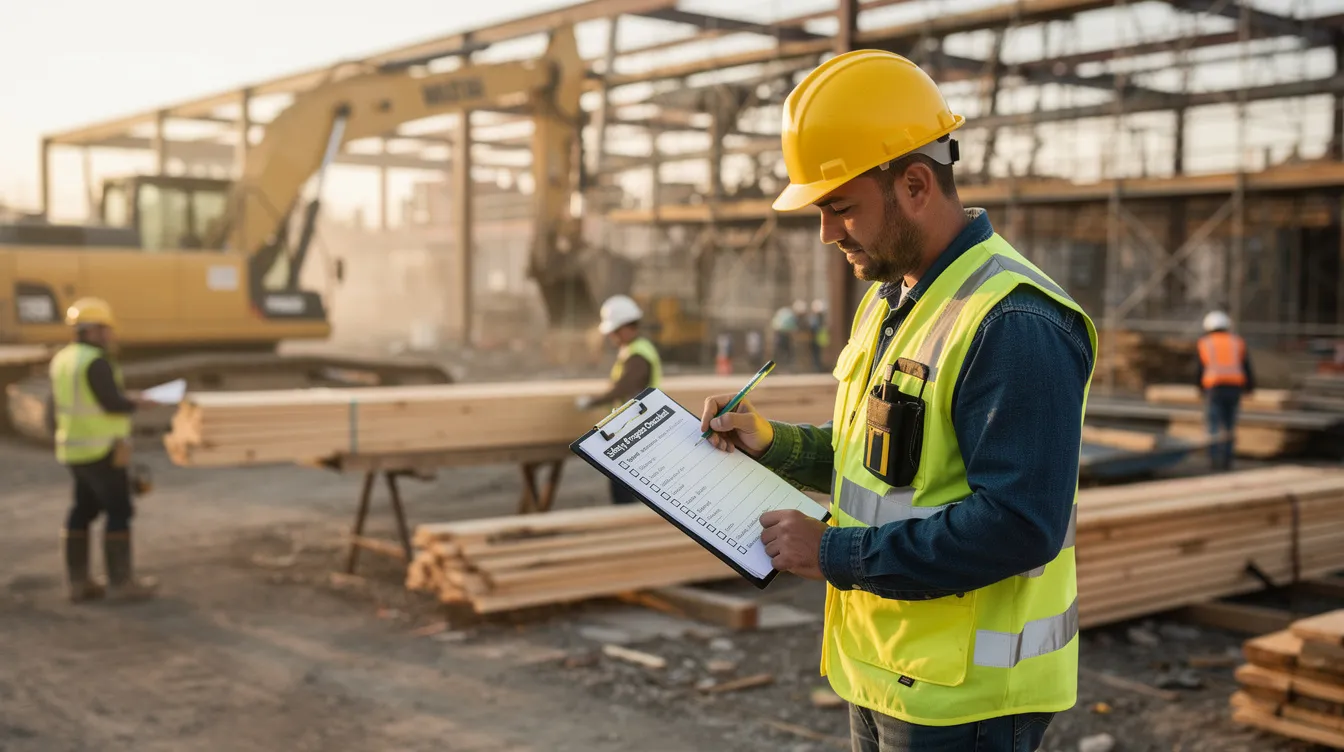
- Pre-task planning checklists that integrate heat index, staffing levels, and equipment condition with traditional hazard analysis as an integral part of each construction site task review
- Acclimatization plans for new and returning field workers, covering the first 7 to 14 days of exposure
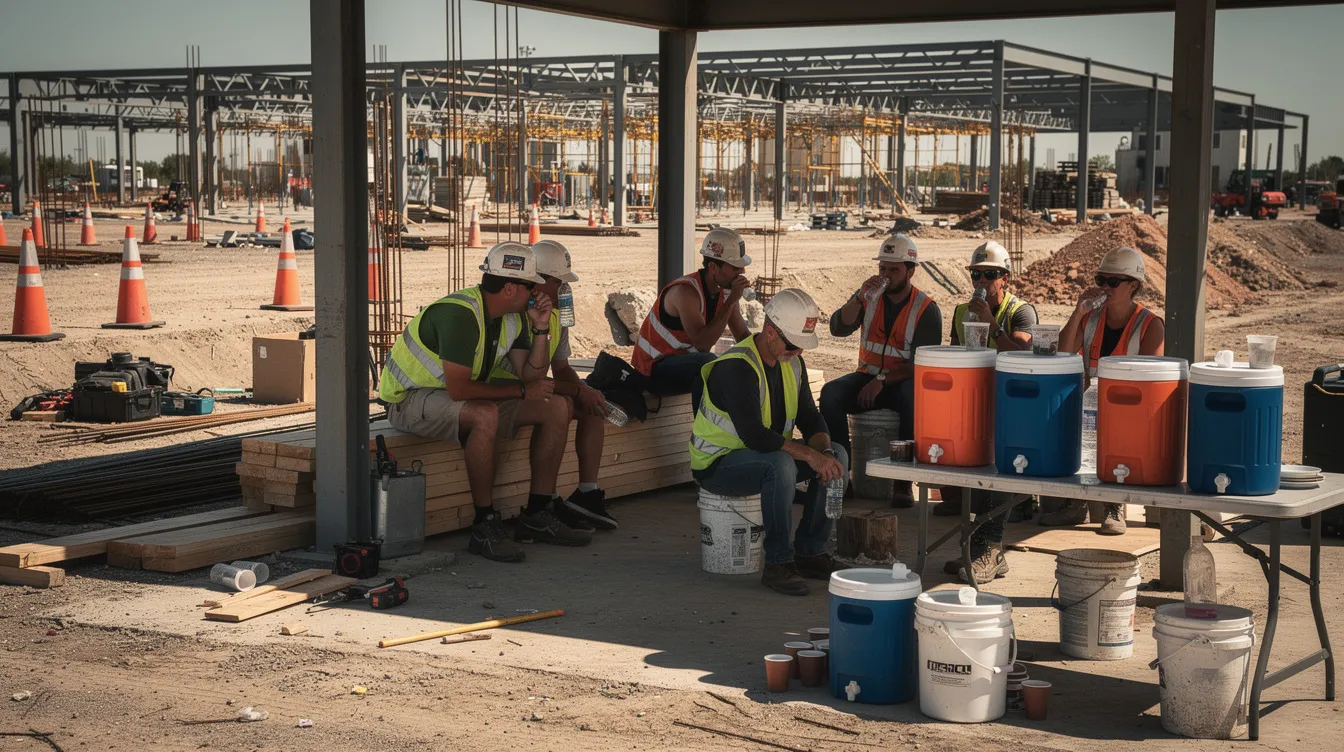
- Hydration, rest, and shade cycles at set heat index thresholds, with clear guidance for adjusting work hours around peak heat in Central Texas summers
- Escalation thresholds specifying when wind, lightning, crane alarms, unexpected traffic, or worker symptoms trigger immediate stop-work authority and when superintendents must call the project manager or safety director before resuming
- Emergency response plans for heat stroke, falls, and severe weather events
Regular training and practical demonstrations are necessary to build an effective safety culture. Test the playbook in real conditions, update it based on worker feedback and near-miss data, and link it to company-wide safety measures so field decisions are consistent across projects. Specify personal protective equipment such as cooling vests, wide-brim hard hats, and moisture-wicking clothing by task and temperature range.
Aligning Supervisors, Crews, and Management Around Safety Decisions
Leadership commitment is crucial for establishing a strong safety culture, and that commitment to health and safety must be visible, not theoretical. Transformational leadership enhances safety culture by inspiring workers to own their role in risk management. Leaders must model safety behaviors to set a positive example, and effective safety programs require strong management commitment.
Psychological safety allows workers to stop work or report hazards without fear of retaliation. Company leaders should explicitly grant and communicate stop-work authority for safety to foremen and superintendents, then reinforce it by showing they expect teams to prioritize safety when schedule or budget pressure conflicts with safe decisions. Engaging frontline workers in safety planning and safety discussions drives measurable improvements.
Regular safety training is essential to maintaining a safety culture, and it should cover both technical topics (heat illness, fall protection, traffic control, preventing falls) and decision-making skills such as risk prioritization, effective communication under pressure, and when to escalate. Regular safety training reduces workplace accidents in construction, and effective safety training improves worker productivity and morale.
Build formal communication loops:
- Short daily coordination calls between site managers and superintendents
- Weekly safety reviews including near misses, hazard reporting, and heat-related events
- Quarterly leadership check-ins on safety performance metrics
Consistent accountability ensures that safety expectations are integrated into performance evaluations and corrective actions. Recognizing and rewarding safe behaviors can strengthen safety culture on construction sites. A strong safety culture leads to fewer misunderstandings and better communication between every level of the organization.
How to Measure and Continuously Improve Safety Culture in Construction
Central Texas construction firms should treat safety culture as measurable, not impressionistic. Utilizing leading indicators helps organizations identify weaknesses before injuries occur, while lagging indicators like total recordable incident rate and lost workdays confirm trends after the fact.
Specific metrics worth tracking:
| Indicator Type | Examples |
|---|---|
| Leading | Near-miss report frequency, adherence to heat protocols, toolbox talks attendance, PPE compliance during peak heat |
| Lagging | TRIR, DART rate, heat-related injury cases, OSHA citations, worker fatalities |
| Culture | Supervisor empowerment surveys, crew feedback on safety concerns, participation in safety initiatives |
Continuous learning and adaptation enhance safety culture by treating incidents as learning opportunities rather than occasions for blame. Safety training should be continuous, not just at induction. In 2019, Sweden opened a safety park for construction training, showing that hands-on, immersive learning environments accelerate skill development in ways classroom instruction alone cannot match.
Safety committees should include diverse workers to improve safety practices across trades and experience levels. Implementing technology can improve safety reporting and observations on construction sites, from digital near-miss reporting apps to real-time data from wearable heat sensors. Quarterly safety culture check-ins should include both numbers and narrative: focus groups with foremen and apprentices, short anonymous surveys, and structured debriefs after complex pours, shutdowns, or weather events. Continuous improvement aligns with merit shop values, where construction companies compete by delivering safer, more efficient projects.
Heat, Mental Health, and Decision Quality on Central Texas Jobsites
Heat stress, lack of sleep, and chronic pressure from schedule and cost targets directly affect cognitive performance, increasing the chance that workers and supervisors will miss potential hazards or choose unsafe shortcuts. Research confirms that physical fatigue combined with heat exposure impairs attention, decision-making, and mental workload far more than either condition alone. Construction workers face high rates of anxiety and depression, compounding these risks.
Realistic scenarios play out daily across Central Texas: long commutes along the I-35 corridor followed by early-morning starts, overtime during peak summer months, and field workers splitting time between multiple construction sites, creating fatigue and distraction. These conditions degrade the decision quality that safety culture depends on.
Contractors should integrate mental health into safety conversations to prioritize safety:
- Normalize discussions about stress, focus, and burnout in toolbox talks
- Train supervisors to identify hazards related to fatigue or mood changes that signal elevated safety risk
- Link heat illness protocols with broader wellness efforts covering hydration, nutrition, sleep, and mental health resources
ABC Central Texas resources, including its mental health in construction safety guidance, can help companies structure programs that support better decision-making and reduce incidents driven by stress and distraction.
Practical Steps and Regular Safety Training Central Texas Contractors Can Take This Month
Construction safety reduces incidents and enhances a company’s reputation, but only when leaders take action. Here is a prioritized checklist for industry professionals in Austin, Round Rock, San Marcos, Waco, and the broader I-35 corridor to implement within 30 days:
- Review and update heat illness protocols using ABC Central Texas’s heat illness prevention plan. Confirm that safety guidelines match current OSHA heat exposure guidance and reflect actual conditions on your construction sites.
- Run a focused supervisor workshop on stop-work authority, escalation thresholds, and heat-related risk assessments. Cover how to identify hazards, mitigate risks, and prevent injuries through better pacing and crew rotation.
- Conduct a cross-project audit of how water, rest, and shade safety rules are applied in practice. Compare what the written rules say to what actually happens at 2 p.m. on a 102°F day.
- Pilot a concise “field decision card” for foremen summarizing when to adjust pace, rotate crews, or pause high-risk tasks based on weather, staffing, and equipment conditions.
- Engage crews directly. Ask where production pressure makes it hardest to follow safety measures, then visibly adjust tasks or schedules on at least one live project to help build a positive safety culture and signal that management prioritizes safety over speed.
- Document before-and-after metrics from these changes. Track reduced rework, fewer minor injuries, incident reporting improvements, and worker retention through the summer months to demonstrate business impact.
Heavy machinery operations, work at heights, and tasks requiring sustained concentration in direct sun deserve the earliest attention in any audit.
How ABC Central Texas Supports Stronger Safety Culture and Decision-Making
ABC Central Texas is the regional merit shop association serving commercial contractors in Greater Austin, the I-35 corridor, Waco, and Central Texas. The merit shop philosophy promotes ethical practices and competitive bidding in construction, and the chapter’s safety and training resources reflect that commitment to open competition and workforce excellence.
Through its Safety Programs hub, members access OSHA-focused education, STEP safety management resources, and guidance to strengthen company-wide safety processes. The chapter’s heat safety for construction workers and heat illness prevention plan resources provide practical templates and checklists that construction firms can adapt into site-specific decision playbooks for supervisors. Regulatory agencies continue to raise enforcement expectations, and these tools help firms stay ahead of legal compliance requirements.
ABC Central Texas apprenticeship and ongoing training programs, including OSHA courses through a UT Arlington partnership, build a pipeline of field leaders whose technical skills are matched with strong judgment and safety-first habits on every construction site. These programs protect workers and prevent accidents by embedding occupational safety knowledge from the start of a career.
Connect with ABC Central Texas today for membership, safety training, or help launching a formal safety culture initiative tied to your upcoming projects along I-35 and across the region.
FAQ
These questions address common follow-up concerns Central Texas construction leaders raise about safety culture and jobsite decision-making.
How is safety culture in construction different from safety compliance?
Compliance focuses on meeting minimum legal and OSHA requirements, including regulations around health administration standards, personal protective equipment, and hazard reporting. Safety culture describes everyday beliefs and behaviors: how quickly workers speak up about potential hazards, whether supervisors support or ignore those safety concerns, and whether the workplace rewards or punishes safe calls that slow production. Compliance is the floor. Culture determines what happens between inspections.
What is one simple way to test whether my supervisors feel empowered to use stop-work authority?
Ask supervisors privately whether they have halted or significantly slowed construction work for safety in the last 90 days. Explore what happened afterward. If few examples exist, or if supervisors feared backlash for the decision, empowerment and culture likely need attention. A strong commitment to backing those calls from management is what separates real authority from a written policy.
How often should we update our heat and weather protocols for Central Texas jobsites?
Review safety protocols before each summer season, then revisit after major heat waves, storms, or near-miss events. Incorporate lessons learned, new OSHA guidance, and feedback from field crews and site managers. Weather tools and industry standards evolve, and your protocols should keep pace.
Do smaller construction firms in Central Texas really need a formal decision-making playbook?
Smaller firms are often more exposed when a single bad decision leads to an accident or delay. Consider that 75% of fatal falls occurred in companies with fewer than 20 employees. A brief, practical playbook can scale to any company size, giving supervisors who wear multiple hats clarity and the tools to prevent accidents without waiting for an executive who may be on another jobsite.
How can ABC Central Texas help if we are just starting to build a stronger safety culture?
ABC Central Texas can connect firms with safety training, peer contractors, and structured programs like STEP. The chapter helps leaders map out a phased approach starting with immediate high-impact steps: heat safety, supervisor training, basic safety process improvements, and better communication between field and management. Whether you are a 10-person crew or a 500-person operation, the resources scale to your current size.