

Key Takeaways
The defining construction safety theme of 2027 is adaptability. On fast-changing Central Texas job sites, where layouts shift weekly and crews rotate by phase, jobsite safety technology supports safer operations, but leadership and daily discipline drive it.
- Dynamic safety plans, improved emergency wayfinding, clearer multi-language communication, tighter subcontractor coordination, and broader emergency preparedness are the five core trends shaping 2027 jobsites.
- Heat illness prevention, fall protection, and emergency response must be built into daily huddles, task planning, and risk management, not treated as one-time safety training events.
- General contractors along the I-35 corridor need to integrate wearables, sensors, and digital tools with clear roles, daily visual checks, and disciplined field leadership.
- ABC Central Texas resources, including the Safety Programs hub, registered apprenticeship pathways, and the Construction Summit, offer practical next steps for contractors preparing now.
Why 2027 Jobsite Safety Will Be Defined by Adaptability
Across Greater Austin, Round Rock, San Marcos, and Waco, project turnover is accelerating. Crews change by phase, layouts can look entirely different within days, and hazards compound as multiple trades stack into the same footprint. That pace exposes a fundamental weakness in how most construction firms manage safety: plans written at project kickoff rarely match the site workers walk onto six weeks later, and that gap can hurt the company’s business as projects scale or staffing shifts.
A November 2026 Construction Executive article on 2027 jobsite safety trends identifies adaptability as the defining theme for the year ahead. The reasoning is straightforward. When access routes, crane paths, or excavation zones move, safety practices anchored to a static plan fail to protect anyone. Risk management, safety training, and emergency response all must evolve alongside the physical site, helping teams also control safety-related costs.
Job site safety technology has shifted from reactive measures to proactive prevention. Tools such as wearables, connected sensors, and digital maps help field leaders update safety controls as the construction site changes. But technology is the enabler, not the main story. The real trend is a discipline of continuous improvement: updating plans, revalidating controls, and reinforcing communication every time conditions shift.
This article is a practical framework for contractors and subcontractors preparing now for 2027 conditions, not a product review.

Central Texas Market Reality: Faster Schedules, Hotter Sites, More Overlap
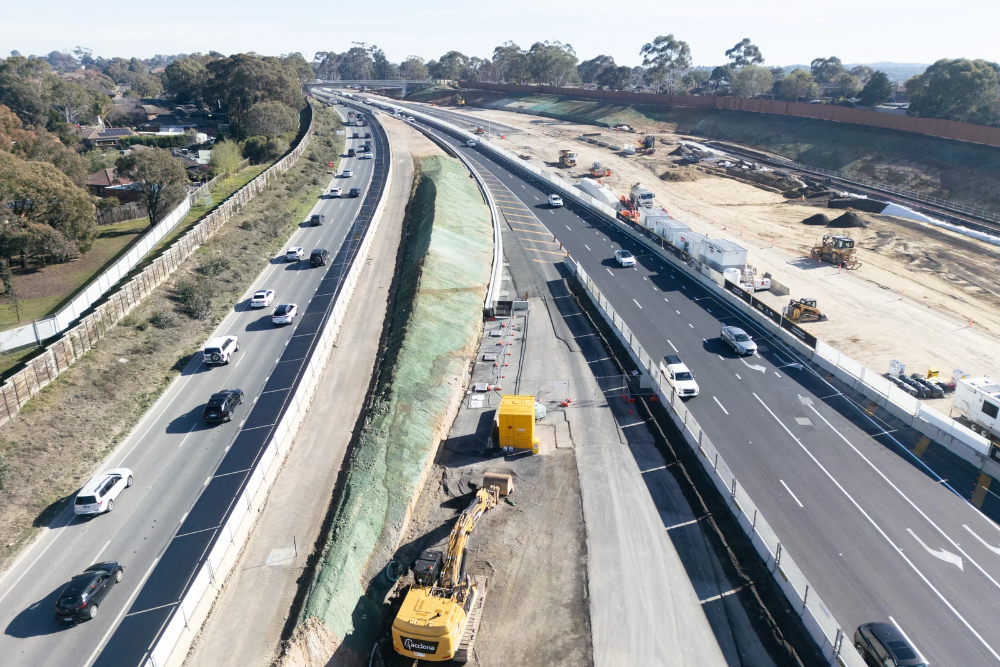
Central Texas growth creates multi-employer job sites that evolve rapidly. Tech campuses in North Austin, industrial work along I-35, and mixed-use infill downtown all produce environments where stair towers come online and go offline, temporary power reroutes weekly, and excavation and concrete trades move through the same footprint within days.
Heat amplifies every risk. Heat index values often exceed 100°F from June through September across the corridor. OSHA updated its National Emphasis Program on outdoor and indoor heat hazards, effective April 10, 2026, targeting inspections and outreach in 55 high-risk industries, construction included. OSHA conducted approximately 7,000 heat-related inspections from 2022 to 2024, and its proposed heat procedures begin at a 90°F heat index. Even with 95% of inspected employers having water and shade available on sites, heat illness remains a serious hazard when work schedules and rest breaks do not adapt to changing environmental conditions. Texas law requires employers to provide heat illness prevention training by June 2026 in a language workers understand, adding regulatory urgency.
These pressures raise the stakes for risk assessment, daily huddles, and clear lines of authority. Small safety misses on a fast-moving site can cascade into serious incidents, rework, and costly delays.
A Practical Risk Management Framework for the Adaptive Jobsite
Managing unmanaged risk on a site that changes daily requires a repeatable loop, not a binder on a shelf. A simple four-step process keeps construction risk management aligned with field operations as conditions evolve:
- Identify changing risks. Identify risks through brainstorming and reviewing historical data. Use morning site walks, pre-task planning, and near-miss logs to spot new hazards. Predictive analytics forecast where accidents are likely to happen using historical data, giving project leaders an early signal.
- Assess impact and likelihood. Assess risks by determining their likelihood and potential impact. Create a risk matrix to prioritize significant dangers so supervisors focus resources on the exposures most likely to cause harm; for example, it helps them rank changing site exposures before crews mobilize.
- Mitigate with controls and technology. Mitigate risks by avoiding, transferring, reducing, or accepting them. Reassign tasks, adjust scheduling, update guardrail placement, or deploy sensors to close a gap. Hazard recognition and mitigation are key components of an adaptive safety process.
- Monitor and adjust daily. Monitor risks continuously throughout the project’s life cycle. After mitigation, use sensor data, inspection returns, and crew feedback to verify whether the risk is actually reduced. Adapt the plan before the next shift if it is not.
Central Texas examples: re-evaluate crane swing zones when a neighboring structure tops out; reassess heat illness risk before afternoon pours; revisit fall protection when deck edges move. Jobsite safety technology (geo-tagged observations, mobile checklists, sensor alerts) should feed this loop instead of running as a parallel program disconnected from field decision-making.
Dynamic Safety Plans: Keeping Up With a Site That Changes Overnight
Emergency plans must adapt to changing construction site conditions. A fire evacuation route mapped during sitework is often wrong by the time the building is enclosed. Central Texas contractors operating on vertical or phased projects need scheduled rechecks whenever formwork moves, walls go up, temporary barriers shift, or stored materials block a route.
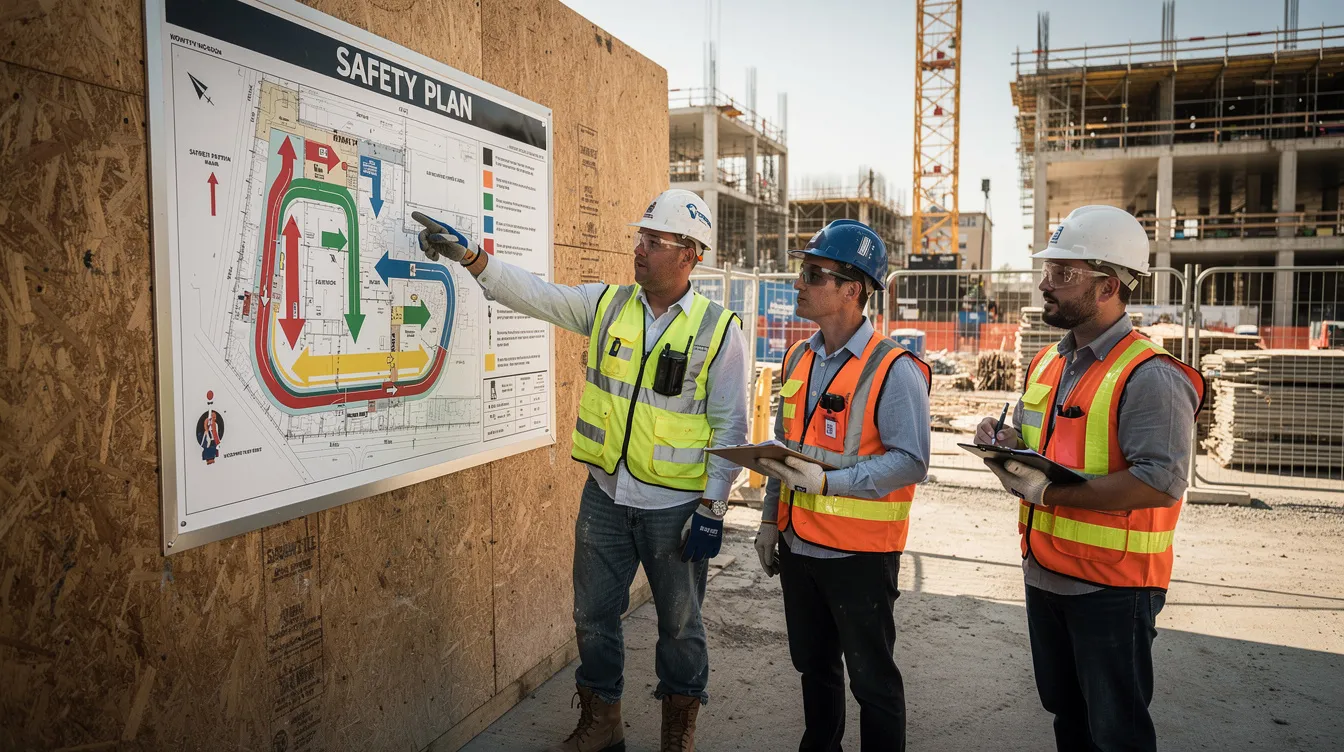
Jobsite safety technology supports this. Digital floor plans, QR-coded map boards, and mobile apps let superintendents push current layouts to every crew before work begins. Digital twins help identify potential fall hazards during the planning stages of construction, catching access problems before they become field surprises.
The simplest path forward: fold plan updates into existing routines. Weekly look-ahead meetings, pre-task planning sessions, and daily huddles should each review at least one “what changed on site” safety item. ABC Central Texas’s Safety Programs hub is a practical place to strengthen written safety planning skills and keep those routines sharp.
Emergency Wayfinding: When Seconds Matter in a Moving Maze
Picture a worker collapse or severe weather alert hitting a partially enclosed tower in downtown Austin where stairwells have changed status since yesterday. Static exit signs posted during mobilization do not help anyone navigate a route that no longer exists.
Emergency wayfinding systems improve navigation during jobsite emergencies by providing real-time route guidance. Clear, visual wayfinding supports emergency response: color-coded routes, floor-specific muster maps, and simple multilingual symbols that construction workers can interpret under stress.
Concrete aids include site-wide PA systems, digital signage, wearable devices that buzz or light up when employees must move to specific muster zones, and apps displaying real-time safe routes. A practical first step: verify during onboarding and task-specific orientation that every new worker can explain how they would exit from their current work area. If they cannot, the wayfinding system is not working.
Safety Communication Across Languages, Experience Levels, and Trades
Central Texas job sites bring together multiple languages, varying literacy levels, and a mix of apprentices, experienced hands, and temporary workers. Communication breakdowns are a root cause of workplace injuries that no amount of equipment can fix.
Effective occupational safety communication on these sites requires icon-based signage, color coding, and short, repeated messages in daily huddles. Multilingual safety materials and digital learning tools help reinforce those messages across languages and literacy levels. Virtual reality can enhance safety training by simulating high-risk scenarios for crews who learn better through experience than through written procedures. Apps that push alerts in the worker’s preferred language, visual micro-learning modules, and QR codes linking to short safety clips all simplify the process.
Training standards set the floor:
- OSHA 10-Hour training is the minimum requirement for construction workers.
- OSHA mandates safety training for specific construction hazards, including falls, electrical, and trenching.
- Competency-based training validates safe performance of specific tasks and goes beyond general awareness.
- Craft-specific certifications are essential for higher-risk construction tasks like crane operation or steel erection.
- OSHA 30-Hour training for supervisors is strongly recommended on complex or high-risk projects.
General contractors should set a standard that any safety instruction on critical risks (falls, extreme heat, confined spaces, emergency response) must be understandable within seconds by a first-day worker. If it is not, the communication method needs to change.
Subcontractor Coordination as a Core Safety Practice, Not Just Scheduling
Subcontractor coordination impacts safety on construction sites far more than most project schedules reflect. In 2027, subcontractor coordination will be viewed as a safety issue, not merely a productivity or scheduling concern.
Concrete multi-employer risks include overlapping lifts, stacked scaffolds, shared temporary power, and trade stacking that puts multiple companies in the same small footprint. Confusion can arise when subcontractors run disconnected safety programs, and each brings its own procedures, terminology, and emergency roles. Effective subcontractor coordination requires a common understanding of safety, starting in preconstruction meetings and reinforced daily on site.
General contractors can use daily huddles, coordination meetings, and shared digital platforms to align hazard controls, emergency response roles, and heat illness prevention steps across all trades. Shared inspection logs, common permit-to-work tools, and geo-tagged near-miss reports visible to all subcontractor supervisors keep everyone operating from the same information. Set clear expectations in subcontracts and preconstruction meetings so that coordination responsibilities are explicit and enforceable before crews mobilize.
Expanding Emergency Preparedness Beyond “Typical” Jobsite Accidents
Falls remain the leading cause of death in the construction industry. In 2024, OSHA reported 389 fatal falls, a lower level than the 1,034 construction fatalities nationally. But emergency preparedness in 2027 must cover a wider range of scenarios: heat illness, severe storms, active fire events, utility failures, and hazardous material releases.
Real-time monitoring of environmental conditions helps manage workplace hazards before they become emergencies. Connected-jobsite systems monitor environmental conditions in real time and feed dashboards supervisors can act on. Acclimatization typically takes 7 to 14 days for workers in heat, meaning new employees and returning crews need adjusted task assignments during their first two weeks on a hot site.
A practical approach for Central Texas contractors:
- Identify realistic emergency scenarios for each project phase
- Map triggers for action (temperature thresholds, weather alerts, structural changes)
- Assign simple roles: who calls, who leads, who guides, who treats
- Run drills as normal project work, with after-action reviews feeding lessons learned directly back into risk management and training improvements
Using Jobsite Safety Technology Wisely: Tools That Support, Not Replace, Leadership
Many Central Texas construction firms already use connected safety tools. The focus here is principles, not gadgets: technology must provide clear, timely information to supervisors, integrate with existing safety training, and be simple enough for all trades to use under pressure.
What modern systems deliver:
- AI-powered cameras analyze job site footage to identify safety violations, and AI tools flag potential safety risks on construction sites before they escalate.
- AI systems can provide real-time alerts on worker safety issues based on continuous monitoring.
- Smart wearables can monitor worker fatigue and vitals and provide proximity alerts, while other wearable devices can track broader worker health and safety conditions.
- Proximity detection systems use various sensors to prevent collisions between workers and machinery.
- Drones can inspect hard-to-reach areas, reducing worker exposure to risks. Drones also monitor jobsite safety risks across large sites.
- Robots can perform hazardous tasks to minimize human exposure to danger in demolition, material handling, and hazardous environments.
- Connected safety systems create data ecosystems to improve job site monitoring and communication across trades and employers.
- Modern systems use predictive data analytics and IoT sensors to spot unsafe behaviors before incidents occur.
- Automated compliance tracking ensures that workers adhere to safety gear regulations without relying solely on manual checks.
Common pitfalls to avoid: collecting data no one reviews, deploying tools without training, or assuming technology eliminates the need for supervisor presence and worker engagement. ABC Central Texas’s article on proactive safety technology offers a deeper dive into specific tool categories for readers who want more detail.
Building a Culture of Daily Adaptability: From Safety Training to Daily Huddles
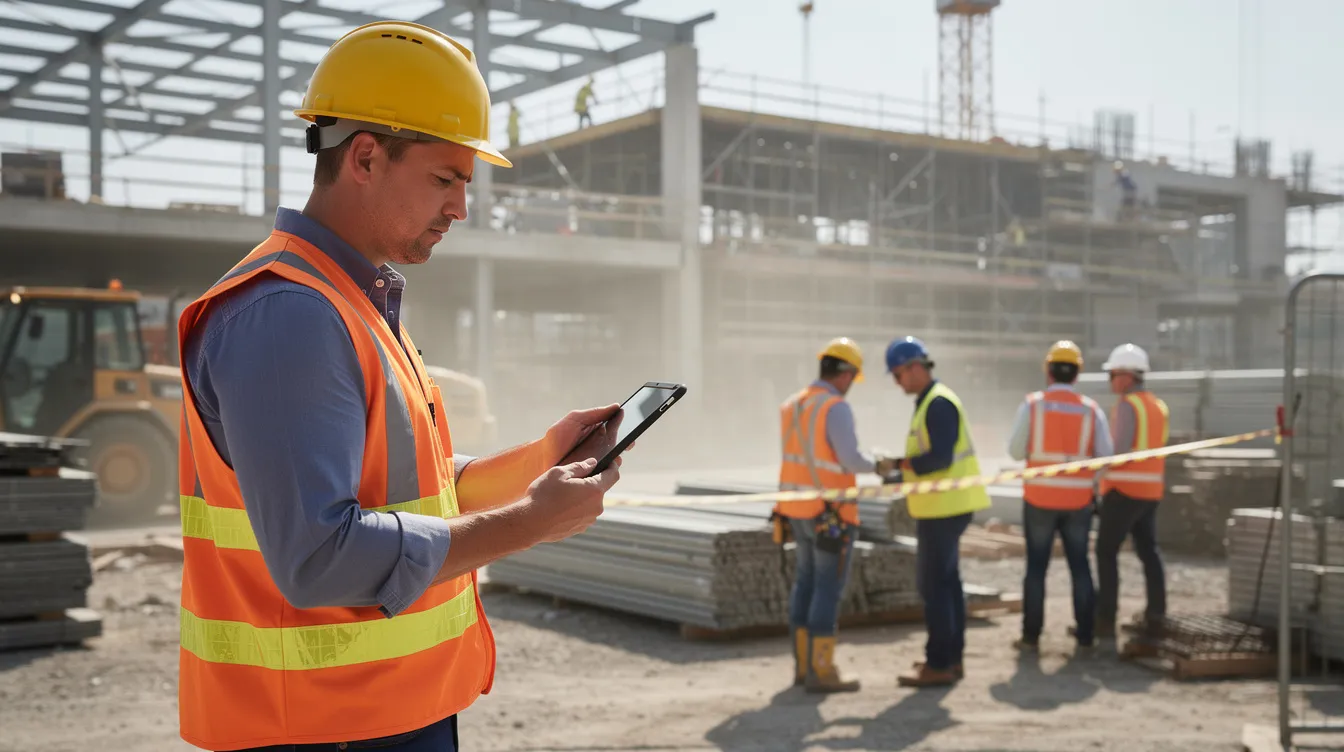
Formal safety training (OSHA 10/30, heat illness prevention, fall protection) sets the foundation. But adaptability shows up in daily routines: pre-task planning, toolbox talks, and daily huddles where supervisors review what changed since yesterday, update task-specific controls, and reinforce emergency wayfinding. Hazard recognition and mitigation are key components of that process, and toolbox talks and daily huddles reinforce those habits.
Visual tools make these routines stick: color-coded task boards, marked-up maps, and simple checklists, plus concise visual training materials crews can see at a glance. The goal is making safe work practices visible and current, not buried in a safety manual no one opens after orientation.
ABC Central Texas resources, including the Safety Programs hub and registered apprenticeship pathways, help build the field leadership skills required for this level of day-to-day adaptability. Contractors should evaluate whether their current safety practices and company culture reward workers and employees for speaking up when the site has changed and existing plans no longer match reality. That feedback loop is essential to progress.
What Central Texas Contractors Should Do Now to Be Ready for 2027
The 2027 safety trends are not predictions. They describe conditions already forming on Central Texas projects. Here are concrete steps to take before work plans are locked in:
- Review every active emergency action plan for adaptability. If it has not been updated since mobilization, it is wrong.
- Audit site wayfinding on at least one project this quarter. Walk the routes; confirm they match what crews are told.
- Stress-test subcontractor coordination by asking each trade’s supervisor to describe their emergency responsibilities. If answers differ, the process needs work.
- Map where jobsite safety technology can close current gaps. Start with the highest-risk exposure, whether that is heat, falls, or confined space.
- Schedule a structured review of heat illness prevention controls, fall protection procedures, and emergency response drills with a specific focus on how they function when layouts, access, or crews change quickly.
- Invest in field leadership skills. Supervisors need authority and training to stop work, update plans, and respond when conditions shift in ways that protect workers and support long-term business growth.
- Connect with ABC Central Texas for support: the Safety Programs hub for training, the Construction Summit for peer learning, and registered apprenticeship pathways for building long-term workforce capability that can reduce hiring, turnover, and incident-related costs over time.
Adaptability in construction safety is both a moral obligation and a competitive advantage in the Central Texas construction industry. Contractors who build it into daily field activities now will carry a measurable edge into 2027 and beyond.
Frequently Asked Questions About 2027 Jobsite Safety Technology and Adaptive Planning
These questions address practical concerns Central Texas contractors may have about implementing adaptive safety systems and jobsite safety technology.
How can smaller Central Texas contractors afford jobsite safety technology before 2027?
Start with budget-conscious options: free or low-cost apps for inspections and heat index tracking, printed QR codes for emergency maps, and piloting wearables on high-risk crews first. Many safety platforms offer tiered pricing, so starting small can still support the business while keeping adoption costs manageable. Pairing even a small tech investment with targeted safety training creates measurable risk management benefits over time without requiring a large capital outlay.
What is the quickest way to improve emergency wayfinding on an existing project?
Run a one-day blitz as an example of a quick emergency-wayfinding improvement process. Walk the site to identify current routes, mark primary and secondary evacuation paths, post floor-specific maps at key entry points, and review them in the next daily huddle. Add simple visual cues (colors, arrows, symbols) that match any digital or printed instructions, and update them whenever stairwells, elevators, or hoists change status.
How should we integrate heat illness prevention into adaptive safety planning?
Heat controls must be dynamic. Adjust work-rest schedules based on the daily heat index, relocate shade and cool-down areas as work zones move, and update crews at each pre-task meeting. A written heat illness prevention plan is strongly recommended when crews face sustained hot conditions and shifting work zones. Jobsite safety technology such as heat apps and automated alerts can signal when additional hydration breaks, shade, or task rotation are required.
What role do daily huddles play in multi-employer emergency response readiness?
Daily huddles are the primary forum where general contractors can align all subcontractors on that day’s hazards, access changes, muster points, and emergency responsibilities. Set a standard agenda item for “what changed since yesterday” along with a quick recap of how to respond to at least one type of emergency relevant to current field operations.
How can ABC Central Texas help our team prepare for these 2027 trends?
ABC Central Texas offers safety training, OSHA courses, and field leadership education through its Safety Programs hub, helping members turn adaptive safety concepts into daily practice. Contractors can also use registered apprenticeship pathways and events like the Construction Summit to build long-term safety leadership capacity and share best practices with peers across the industry.