
Lumber prices don’t tell the whole wood-cost story in late 2026. National framing lumber benchmarks have looked relatively steady compared with the swings many contractors remember, while plywood pricing has continued to rise. For Central Texas contractors, that difference matters on bid day. If an estimate treats framing lumber, plywood, and other panel products as one combined risk, it can miss the category still pressuring commercial margins across Greater Austin, the I-35 corridor, and Waco.
Key Takeaways
- Framing lumber and plywood are not moving the same way. NAHB reported framing lumber at $500.36 per 1,000 board feet on October 9, 2026, down 4.6% from a month earlier and down 4.3% year over year.
- Plywood continued to rise in the latest federal index data. The BLS plywood Producer Price Index reached 303.660 in September 2026, up from 298.353 in August 2026.
- That split matters for Central Texas bids. Projects with significant sheathing, roof decking, subflooring, or concrete formwork may feel more plywood exposure than a headline about “steady lumber” suggests.
- Estimators should separate assumptions for framing lumber, plywood, and specialty panels instead of carrying one blended wood allowance.
- The broader input-cost backdrop is still active. ABC reported construction input prices were up 11.2% year over year in September 2026, so wood products are not the only pressure point in a commercial estimate.
Why Lumber Prices Can Look Calm While Plywood Still Changes the Math
The approved source topic from Construction Executive points to a practical distinction contractors should not ignore: framing lumber can look steadier even while plywood continues to climb.
Recent national data supports that split. NAHB reported that framing lumber was $500.36 per 1,000 board feet on October 9, 2026. That was down 4.6% from a month earlier and down 4.3% from the same point a year earlier. By contrast, the federal plywood PPI rose from 298.353 in August 2026 to 303.660 in September 2026.
For Central Texas contractors, a reassuring lumber headline does not automatically mean a stable total wood package. A bid may carry manageable framing-lumber exposure and still be vulnerable on plywood, sheathing, or formwork panels.
Framing Lumber and Plywood Create Different Estimating Risks
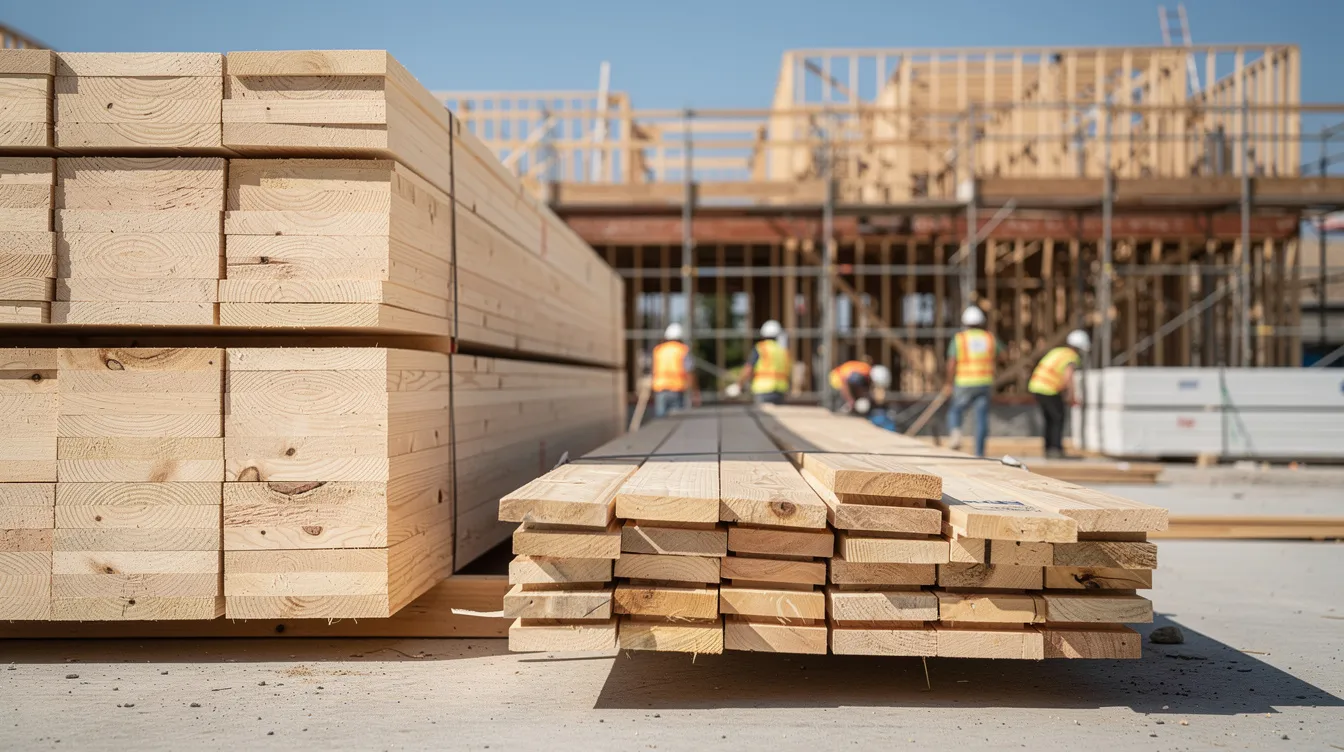
On a commercial project, framing lumber often covers studs, joists, rafters, blocking, and other dimensional members. Plywood and related panel products show up in wall sheathing, roof decks, subfloors, temporary protection, and concrete formwork. Those categories don’t always move together, and they don’t always hit the budget the same way.
That distinction matters because panel products are often tied to:
- grade and thickness requirements
- exposure or performance ratings
- reuse assumptions for formwork
- delivered availability and quote timing
A contractor who watches only a framing-lumber benchmark may miss cost movement in the part of the wood package that is actually more exposed. That is the real message behind the current lumber prices conversation.
What This Means for Central Texas Bids
Across Austin, Round Rock, San Marcos, and Waco, the practical question is not whether wood costs are “up” or “down” in a generic sense. It is which wood products still deserve a fresh look before you submit a number.
Projects likely to feel plywood pressure first include:
- mid-rise wood-frame multifamily work with large sheathing and subfloor packages
- hospitality projects with extensive exterior wall sheathing
- education and light commercial buildings with meaningful roof-deck or wall-panel quantities
- jobs with substantial concrete formwork where panel reuse assumptions can make or break the budget
Even projects built primarily in steel or concrete may still carry notable panel exposure through temporary works, deck elements, hoarding, or form-facing material. That is why a “steady lumber prices” headline can be misleading at the estimate level.
How To Separate Wood Assumptions in Your Next Estimate
The most useful correction many teams can make is simple: stop carrying one blended wood line when categories diverge.
- Price framing lumber and plywood separately. Do not assume a calm framing-lumber benchmark covers panel movement.
- Date every quote. If your plywood number is older than the rest of the bid, flag it for review before submission.
- Review quantity and waste assumptions. Panel exposure can grow quickly when takeoffs, layout conditions, or formwork reuse assumptions are too optimistic.
- Check supplier terms closely. Clarify what is actually held, what is subject to market movement, and how long the quote remains valid.
- Document the split in bid notes. Owners, CMs, and internal leaders should be able to see that framing lumber and plywood were not treated as one interchangeable cost bucket.
What About Canadian Lumber Duties?
Trade policy still matters, but it should be explained carefully. NAHB reported in September 2026 that the preliminary antidumping rate on Canadian softwood lumber fell from 20.6% to 10.7% and the countervailing duty rate fell from 14.6% to 14.2%, bringing the combined rate down from 35.2% to 25.9%. NAHB also noted that the 10% Section 232 tariff remained in effect, which would bring the total rate on affected Canadian imports to 35.9%.
For estimators, the practical takeaway is not to force every wood product into one tariff narrative. Instead, verify what a supplier quote already includes and avoid assuming framing lumber trade pressure and plywood pricing will move in lockstep.
Pre-Bid Checklist for Wood-Heavy Scopes
Before submitting a commercial bid with significant wood content, run through this short review:
- Confirm the latest framing lumber benchmark you are using and make sure its date is clear.
- Recheck plywood quotes if the panel package is meaningful to the job.
- Separate framing lumber, plywood, and specialty panels in the estimate instead of using one blended allowance.
- Review supplier language for quote-expiration or market-adjustment language.
- Cross-check panel quantities and reuse assumptions against actual sequencing, site logistics, and field conditions.
- Look at the wider cost picture because rising fuel or other material inputs can affect delivered cost even when one wood benchmark looks stable.
Managing Exposure After Award
The risk does not end when the bid is accepted. Projects with phased buyout schedules or delayed wood procurement can stay exposed after award, especially when panel-heavy scopes are not yet locked in.
Project managers and procurement teams should review awarded work where plywood, sheathing, or formwork panels remain open. Prioritize the scopes where quantity is large, quote validity is short, or sequencing makes a late price surprise harder to absorb. On some jobs, the smartest move is not a broad panic buy. It is a targeted review of the packages most likely to move.
Why This Topic Fits the Merit Shop Decision Lens
For merit shop contractors competing across Central Texas, better cost separation is not just an accounting detail. It is part of disciplined, ethical competition. When firms understand which inputs are steadier and which still require caution, they are better positioned to bid responsibly, protect margin, and avoid surprises that lead to unnecessary conflict later.
ABC Central Texas exists to help members win work and deliver that work safely, ethically, and profitably across the region. In a market where one wood category can look steadier while another keeps rising, that kind of operating discipline is part of the competitive advantage.
Next Step for Central Texas Estimators
Before your next wood-heavy bid goes out, pull one live estimate and check whether framing lumber, plywood, and specialty panels are still grouped together. If they are, break them apart and review the panel numbers first. That small change is one of the clearest ways to respond to the latest lumber prices data without overreacting to the wrong benchmark.
For broader context on current cost movement, review ABC Central Texas coverage of construction material costs. If your team wants more market-intelligence context and peer learning around estimating discipline, ABC Central Texas membership and chapter programming are natural next steps.
Frequently Asked Questions
Below are answers to common questions about this topic.
How often should contractors update lumber prices and plywood assumptions?
During calmer periods, many teams can refresh benchmark assumptions monthly or quarterly. But when plywood is moving differently from framing lumber, it makes more sense to review panel pricing separately instead of relying on one general wood update.
Why does plywood matter so much if framing lumber looks steadier?
Because many commercial scopes use plywood or other panels in ways that can materially affect the estimate, especially in sheathing, decking, subflooring, and formwork. If those products move while framing lumber is flatter, the total wood package can still change in ways the headline misses.
Should every contractor add escalation language for wood products?
Not automatically. The better first step is to identify where the real exposure sits. On some jobs, clarified assumptions and current supplier quotes may matter more than aggressive contract language. On others, especially longer-duration or delayed-buyout work, specific allowance or escalation language may still be appropriate.
Do Canadian lumber duties answer the plywood problem?
No. They may affect parts of the broader wood market, but they do not eliminate the need to price and review plywood separately. The current lesson is not that one policy explains everything. It is that different wood categories can move differently at the same time.
What is the simplest improvement an estimating team can make this week?
Break apart any blended wood line item that still combines framing lumber, plywood, and specialty panels. That will give your team a clearer view of which numbers are stable and which still deserve extra attention.