
Key Takeaways
- Multiskilled construction crews use craft professionals with a primary trade plus verified adjacent skills to reduce handoff delays, waiting time, and schedule friction on the jobsite.
- ABC-backed 2026 research on multiskilling found that qualified multiskilled crews spent 39% more time on direct construction work and 68% less time idle or waiting than comparable single-trade crews.
- For Central Texas contractors, the best fit is handoff-heavy, repeatable work where small delays between trades add up across the schedule.
- Multiskilling is not a license to blur trade boundaries. It depends on documented competencies, supervision, and clear limits around licensing, code, manufacturer instructions, and safety.
- A practical next step is a small pilot on one repeatable scope, supported by ABC Central Texas registered apprenticeship programs and documented task authorization.
Why Multiskilled Crews Construction Matters to Central Texas Contractors
Central Texas contractors are still building in a market where schedules are tight, specialist labor is hard to replace quickly, and repeated trade handoffs can quietly drain productivity. For firms working across Austin, Round Rock, San Marcos, Waco, and the I-35 corridor, the practical question is not whether multiskilling sounds flexible. It is whether multiskilled crews in construction can help the right scopes move faster without creating quality, safety, or compliance problems.
That question has become more concrete because ABC has published new 2026 research on multiskilling, and Construction Executive has reported on those findings. The central takeaway is operational, not theoretical: when qualified workers can perform selected adjacent tasks within clear guardrails, crews spend more time advancing the work and less time waiting on the next handoff.
This article is a decision guide for Central Texas merit shop contractors. It focuses on where multiskilled crews are most useful, where they are a poor fit, and how to test the model in a disciplined way that supports productivity instead of confusion.
What Multiskilled Construction Workers Actually Do
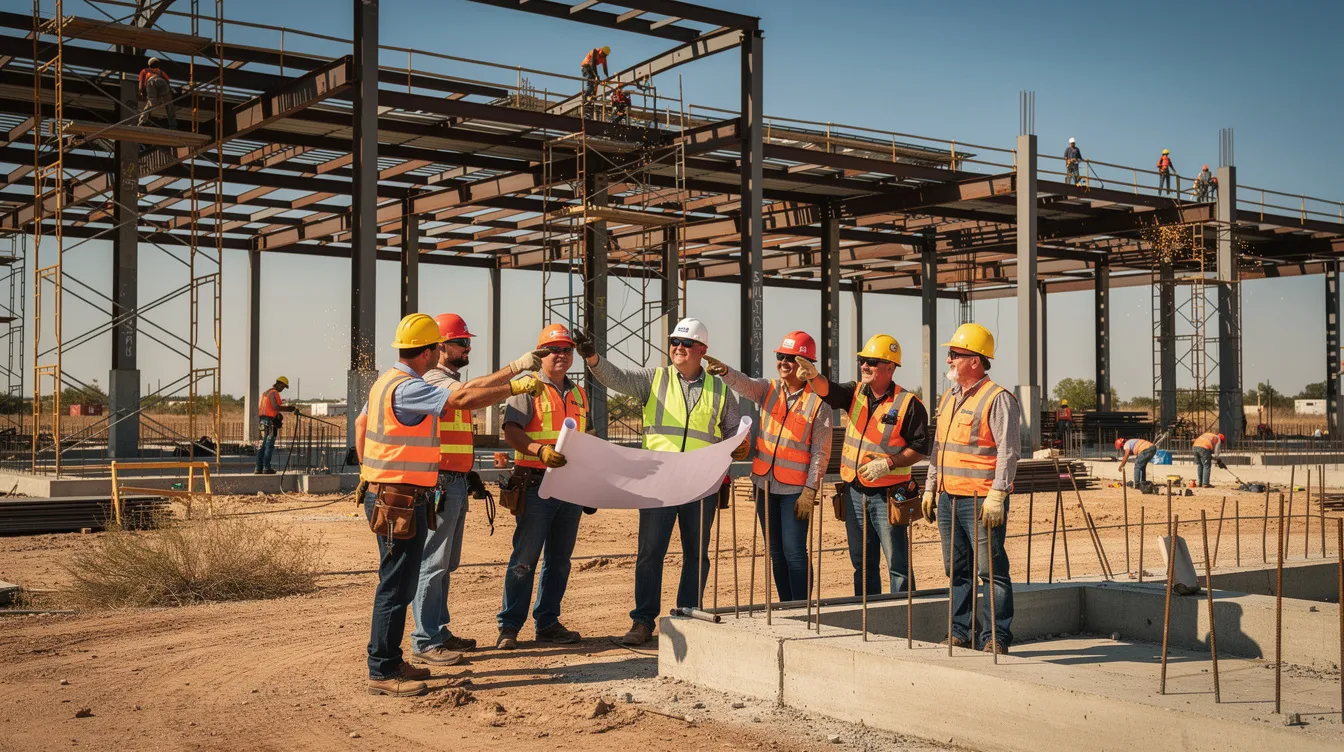
A multiskilled construction worker is not a generalist who does whatever task is nearby. In a sound multiskilled model, the worker has a primary trade and documented capability for selected adjacent tasks that the employer has determined are appropriate, safe, and compliant for that role.
What matters is the workflow. On many jobs, work slows down not because each trade is performing poorly, but because the sequence between trades keeps stopping. A crew finishes one step, another crew has to mobilize, and small waits multiply across the day. Multiskilled crews can reduce that friction when the work package includes repeatable adjacent tasks and clear task boundaries.
Examples should stay conservative. A contractor might authorize a worker to handle certain support, layout, prep, or material-handling tasks that connect closely to the crew’s primary scope. The model should not be treated as permission for unlicensed workers to perform licensed electrical, mechanical, plumbing, or life-safety work outside their lawful and company-approved limits.
What the 2026 Multiskilling Research Shows
ABC’s 2026 multiskilling research found that qualified multiskilled crews spent 39% more time on direct construction work than comparable single-trade crews. ABC also reported that multiskilling reduced idle and waiting time by 68%.
In a separate ABC release on tightly sequenced scopes, the organization reported that multiskilled crews could reduce completion time by about 30% and increase production by 37% to 50% where frequent trade-to-trade handoffs are part of the work sequence.
The most important limit is just as useful as the upside. These findings do not mean every project should be reorganized around multiskilling. They point to a specific advantage in scopes where repeated handoffs slow progress. In other words, the value comes from workflow continuity, not from assuming every trade boundary should disappear.
Why This Matters in Central Texas
That distinction matters in Central Texas because many contractors are pursuing work in growth corridors where schedule reliability is a competitive advantage. Along the Austin-to-Waco stretch of I-35, firms often face fast-track delivery expectations, thin specialist availability, and strong pressure to keep work moving once a sequence starts.
ABC Central Texas has also highlighted that very low construction layoffs nationally do not mean skilled labor is suddenly easy to find. For contractors here, the more practical reading is that employers are still holding on to experienced workers, which makes labor utilization and crew design more important on the jobs already in hand.
That is why multiskilled crews in construction are worth evaluating now. It is not a substitute for hiring, apprenticeship, supervision, or planning. It is a way to get more direct progress from paid labor hours on the right scopes when handoffs are the real bottleneck.
Where Multiskilled Crews Deliver the Biggest Gains
The best candidates are scopes with frequent, predictable transitions between adjacent tasks. These are the kinds of work packages where one small wait tends to trigger the next.
In Central Texas, strong candidates often include:
- Interior buildouts with repeated room or corridor sequences: Work repeats enough times for workflow continuity to matter.
- MEP-adjacent rough-in sequences: Especially where support tasks, prep work, and tightly related adjacent activities can be planned clearly.
- Closeout and punch-heavy phases: When multiple small follow-on tasks would otherwise require repeated remobilization.
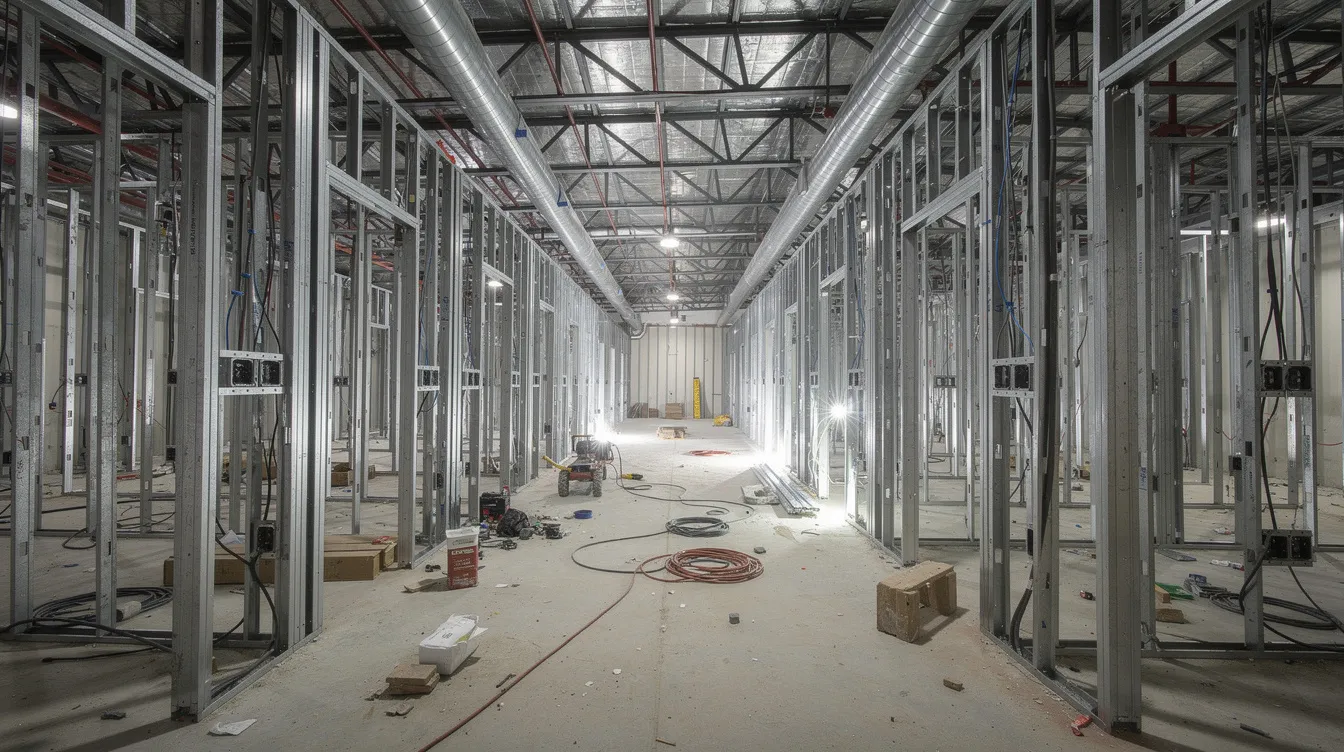
- Light industrial or warehouse scopes with repetitive field conditions: Where similar task groupings appear over and over.
The common thread is not project type alone. It is handoff density. If the schedule keeps losing time between narrowly spaced steps, a qualified, multiskilled crew may keep the work moving with fewer interruptions.
Where Multiskilled Crews Are a Poor Fit
Multiskilling is a poor fit when the work depends on deep specialization, strict trade ownership, or licensing and inspection boundaries that leave little room for adjacent-task flexibility.
That usually includes:
- Highly specialized equipment or system installations
- Complex life-safety systems
- Work governed by strict licensing, certification, or manufacturer-specific requirements
- Scopes with unstable design, frequent late changes, or poorly defined sequence logic
Those limits are not a weakness in the model. They are part of using it responsibly. When the work is highly regulated or technically unforgiving, preserving clear trade ownership is often more valuable than trying to save a few handoff minutes.
Guardrails That Make Multiskilling Work
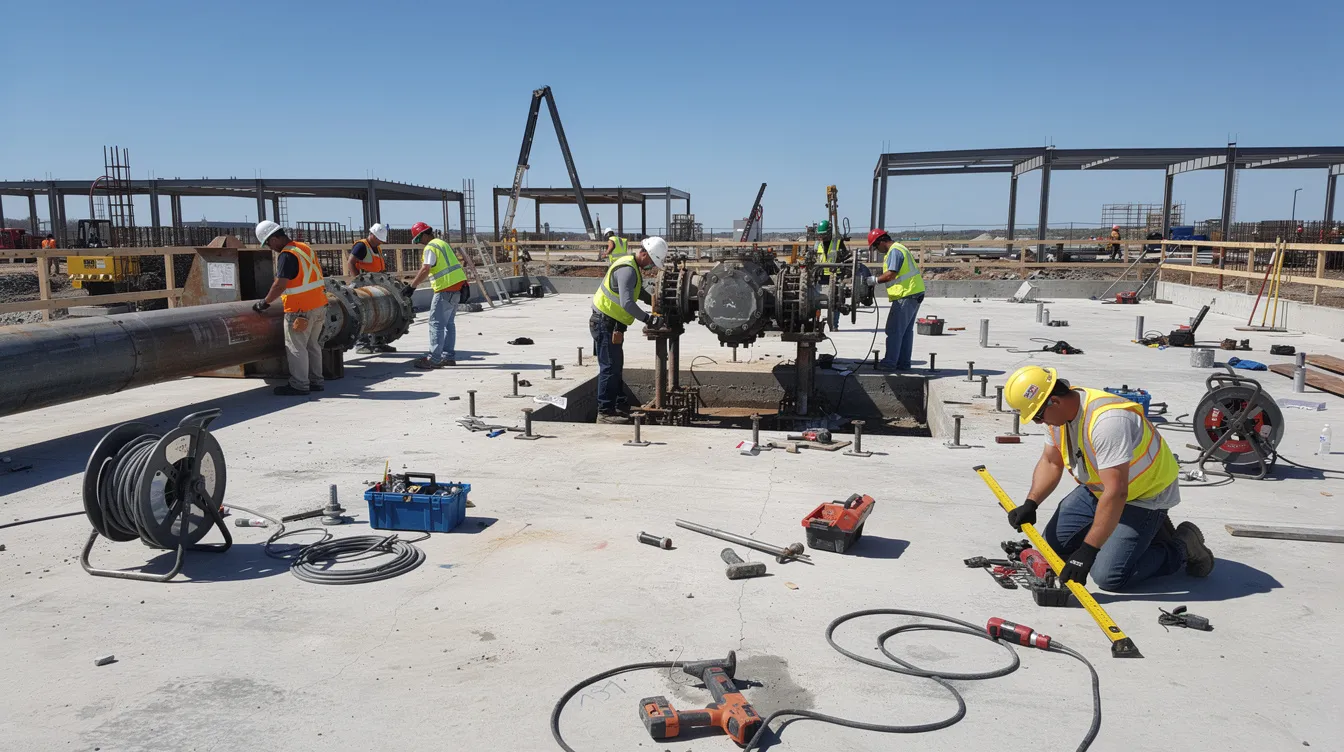
The guardrails matter as much as the staffing model. A contractor should be able to answer four questions before expanding a worker’s role beyond a primary trade.
- What tasks are allowed? Use a written task matrix, not informal assumptions.
- How was competency verified? Rely on documented training, assessment, and field validation.
- Who is supervising the work? Foremen and superintendents need clear visibility into who is authorized for which tasks.
- What remains off-limits? Licensing, code, inspection, manufacturer instructions, and company policy still control the boundary.
This article is intentionally narrower than ABC Central Texas’ existing piece on construction safety training for multiskilled crews. That article goes deeper on safety systems. Here, the main point is that multiskilling only improves productivity when safety, quality, and compliance are already built into the plan.
How Apprenticeship Supports Multiskilled Capacity
Long-term multiskilled capacity is easier to build when workers first develop strong core trade competency. That is why apprenticeship belongs in this conversation.
ABC Central Texas operates registered apprenticeship programs in Carpentry, Concrete, Electrical, HVAC, Pipefitting, Plumbing, and Sheet Metal. The chapter describes the model as paid, earn-while-you-learn training paired with classroom instruction and on-the-job experience.
For contractors, that matters because apprenticeship creates a documented skills foundation. Instead of relying on informal judgments about who can “probably handle” an adjacent task, firms can connect task authorization to training progression, field performance, and supervision. That makes multiskilling more defensible and more repeatable.
A Practical Pilot Plan for Central Texas Contractors
The smartest way to test multiskilled crews in construction is not a companywide rollout. It is one controlled pilot on a scope where handoff delays are already visible.
- Choose one repeatable scope. Pick a work package with frequent adjacent handoffs, not your most complex specialty installation.
- Map the current sequence. Identify where crews typically wait, remobilize, or lose momentum.
- Define a narrow task matrix. Limit the pilot to a small set of adjacent tasks with clear boundaries.
- Select the right crew and foreman. Start with experienced leadership and workers whose competencies you can document.
- Measure the right outcomes. Track direct work time, waiting time, avoided remobilizations, quality issues, and safety observations.
- Debrief before expanding. Use the pilot to decide whether the model belongs on similar scopes, not everywhere.
This narrower decision-guide angle helps differentiate the article from existing safety-focused multiskilling coverage on the ABC Central Texas site. The emphasis here is on workflow fit, pilot design, and contractor decision-making.
How to Judge Whether a Scope Is a Good Candidate
Before launching a pilot, ask these practical questions:
- Does this scope involve repeated trade handoffs that regularly create waiting time?
- Are the adjacent tasks predictable enough to define clearly in advance?
- Can the work be assigned without crossing licensing, code, or manufacturer limits?
- Do we have a foreman who can supervise the model closely?
- Can we measure whether the new structure actually improved throughput?
If most answers are yes, the scope may be worth testing. If the work is highly specialized, unstable, or hard to supervise, a traditional single-trade structure may still be the better choice.
Business Impact for Owners and Operations Leaders
For executives and operations leaders, the business case is straightforward. If a crew can spend more paid time moving the work forward and less time waiting on the next transition, the company may improve schedule performance and make better use of limited craft capacity.
That does not guarantee lower costs on every project. But on handoff-heavy scopes, fewer delays, fewer remobilizations, and steadier workflow can strengthen predictability. In a market as active as Central Texas, that can become a meaningful competitive advantage, especially for contractors chasing schedule-sensitive commercial and industrial work.
From an ABC Central Texas perspective, that fits the merit shop emphasis on performance, workforce development, and open competition. The advantage comes from building a stronger, more flexible workforce within clear guardrails, not from cutting corners.
Next Steps With ABC Central Texas
The most practical next step is to identify one 2027 scope where handoffs are already slowing progress and test whether a carefully structured multiskilled pilot could improve the sequence.
Then connect that pilot to documented training and workforce development. ABC Central Texas registered apprenticeship programs can help contractors build the underlying trade competency that responsible multiskilling requires. For firms also reviewing safety systems, the chapter’s article on construction safety training for multiskilled crews is the most relevant supporting resource.
For Central Texas contractors, the message is not that every crew should become multiskilled. It is that the right crews on the right scopes can reduce workflow friction, use limited labor better, and help projects move with fewer unnecessary stops.
Frequently Asked Questions
Below are answers to common questions about this topic.
How is multiskilling different from simply asking workers to help another trade?
True multiskilling is documented and planned. Workers have a primary trade, defined adjacent-task authorization, and supervision tied to specific competencies. Informal helping across trade lines is not the same thing and can create safety, quality, or compliance problems.
Does multiskilling mean one worker replaces multiple licensed trades?
No. The model should never be treated as permission to bypass licensing rules, code requirements, inspections, or manufacturer instructions. It is about selected adjacent tasks within clear boundaries, not unlimited role expansion.
What kinds of projects benefit most from multiskilled crews?
The strongest candidates are handoff-heavy scopes with repeatable adjacent tasks, such as interior buildouts, some rough-in sequences, and closeout phases where remobilization and waiting time create avoidable delay.
What is the safest way for a contractor to start?
Start with one small pilot. Use a written task matrix, conservative scope selection, documented competency, and close foreman oversight. Then measure whether the pilot actually improved workflow before expanding the model.
How can ABC Central Texas help?
ABC Central Texas can help contractors strengthen the workforce side of the equation through registered apprenticeship, training, and related workforce-development resources that support more disciplined skill progression and task authorization.