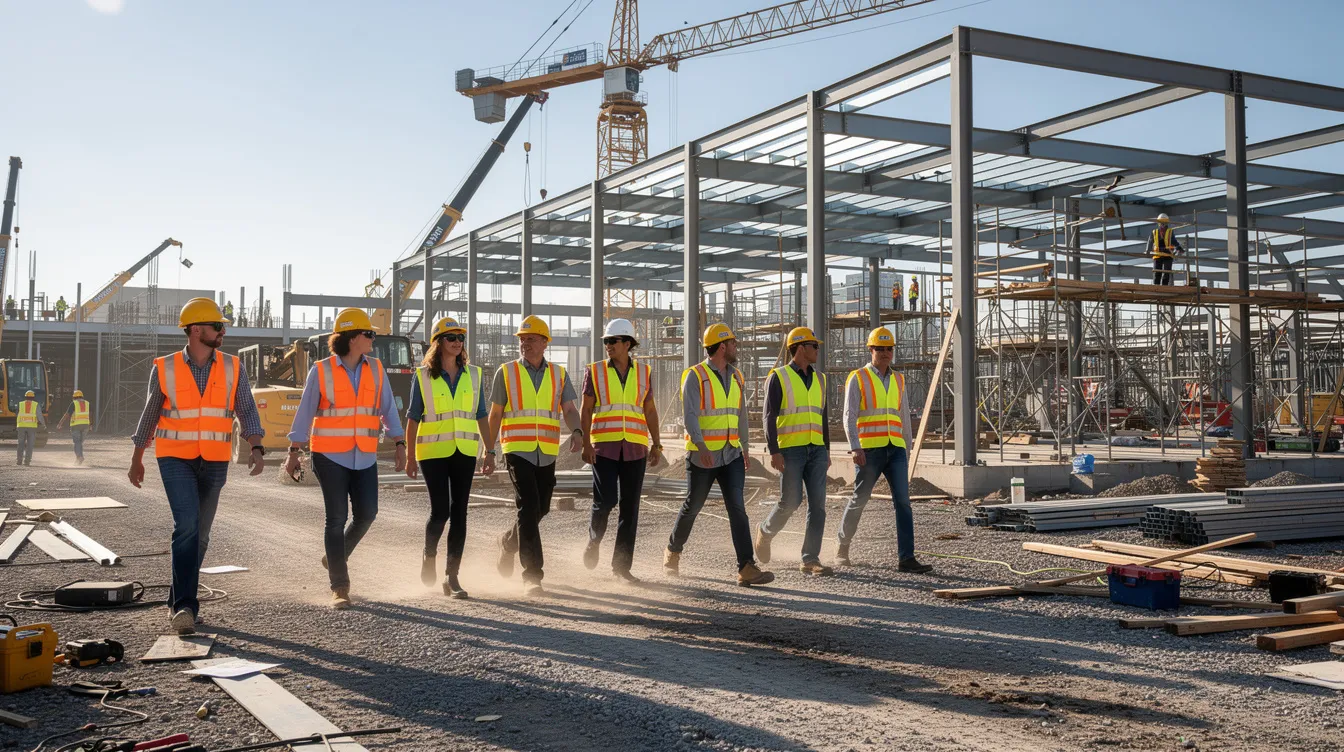

Winning the work is only part of what determines whether a construction project runs well. A recent Construction Executive article on a new industry report argues that owner behavior directly influences project success because owners set the culture, expectations, and operating environment for the full team. For Central Texas contractors, that is not an abstract leadership point. It affects which jobs are worth pursuing, how risk should be priced, and how much friction a team is likely to face after award.
Key Takeaways
- Construction Executive reports that a new industry report links project success to five owner behaviors: creating a clear mission, remaining visible and engaged, actively managing collaboration, helping project partners succeed, and thinking beyond a single project.
- The report’s core message is not that contractors matter less. It is that even qualified teams perform within an environment the owner helps create.
- For Central Texas contractors, these five behaviors can become a practical owner-readiness screen before pursuit, at award, and during kickoff.
- Delivery methods such as Design-Build can support collaboration, but they do not overcome weak owner engagement on their own.
- ABC Central Texas members can use this framework, along with related resources on project communication, planning, and operations, to strengthen bid discipline and project execution.
Why Owner Behavior Now Deserves More Attention
The Construction Executive coverage centers on a simple but important point: owners do more than approve budgets and sign contracts. According to the article, the underlying report argues that the owner’s role in setting mission, expectations, visibility, and team conditions is often underestimated, even though it can materially shape project performance.
That framing matters in Central Texas, where commercial contractors across Austin, Round Rock, San Marcos, Waco, and the I-35 corridor often work under tight schedules, demanding stakeholders, and competitive labor conditions. Even a capable contractor can face avoidable drag when owner priorities are unclear, decisions stall, or collaboration is left to chance.
At the same time, many firms are being more selective about what they pursue. ABC National reported that its Construction Backlog Indicator fell to 8.0 months in July 2026, down 0.8 months from both the prior month and the prior year. That national context is not the main subject here, but it helps explain why contractors may look harder at owner quality before committing estimating time, key staff, and margin to a new opportunity. In that environment, owner behavior and project outcomes become part of preconstruction risk review, not just a lesson learned after closeout.
The Five Owner Behaviors Highlighted by Construction Executive
Construction Executive says the report identifies five owner behaviors that distinguish stronger project environments from weaker ones. Those five behaviors are:
- Create and reinforce a clear mission
- Remain visible and engaged throughout the project
- Actively manage collaboration
- Help project partners succeed
- Think beyond a single project toward long-term program improvement
The report’s value isn’t that it offers a generic leadership list. Its actual message is that owners can become better project partners by deliberately shaping the conditions in which contractors, designers, and trade partners work. Construction Executive summarizes that point directly: better owner behavior can improve collaboration, reduce risk, attract strong builders, and lead to better projects.
Below is a Central Texas application of those five behaviors for contractors evaluating owners and for owners trying to improve how their teams perform.
Behavior 1: Create a Clear Mission and Keep It Alive
A project mission is more useful when it goes beyond “on time and on budget.” The stronger version explains what the owner is trying to protect when trade-offs appear. On a Central Texas healthcare expansion, that might include continuity of operations. On a campus or industrial build, it might include a certain occupancy date, utility coordination, or minimal disruption to surrounding operations.
The report, as covered by Construction Executive, emphasizes that strong owners do not state a mission once and move on. They keep reinforcing it. For contractors, that means asking whether the owner’s priorities stay consistent from pre-bid through design review, buyout, and field execution.
Useful questions to ask:
- Can the owner explain the project mission in plain language?
- Are priority trade-offs clear when schedule, budget, and operational concerns conflict?
- Does the owner repeat those priorities at key milestones, or do they fade after kickoff?
- Can field leaders understand what matters most without escalating every issue back to the office?
When the mission stays visible, teams usually have a better basis for decision-making. When it shifts constantly or remains vague, contractors should expect more ambiguity and more time spent reconciling competing instructions.
Behavior 2: Stay Visible and Engaged
The second behavior is owner visibility. Construction Executive’s summary does not suggest owners should micromanage the work. The point is that they stay engaged enough to make timely decisions, show up at meaningful moments, and keep authority clear.
For contractors, this often becomes obvious early. Is there a real decision-maker in the room? Do meetings resolve issues, or do they only report status? When a major RFI, shutdown, or sequencing conflict appears, does the owner respond at the speed the job requires?
That question matters in Central Texas because project velocity is often unforgiving. On busy Austin sites or along the I-35 corridor, delayed decisions can quickly affect trade stacking, procurement, and schedule confidence.
Before award, contractors should clarify:
- Who represents the owner day-to-day?
- What authority does that person actually have?
- Which decisions must move through boards, investors, or off-site executives?
- How will urgent issues be handled outside the regular meeting cycle?
These questions complement broader project planning in construction work. A strong plan is easier to execute when the owner’s role in decision flow is defined upfront.
Behavior 3: Manage Collaboration on Purpose
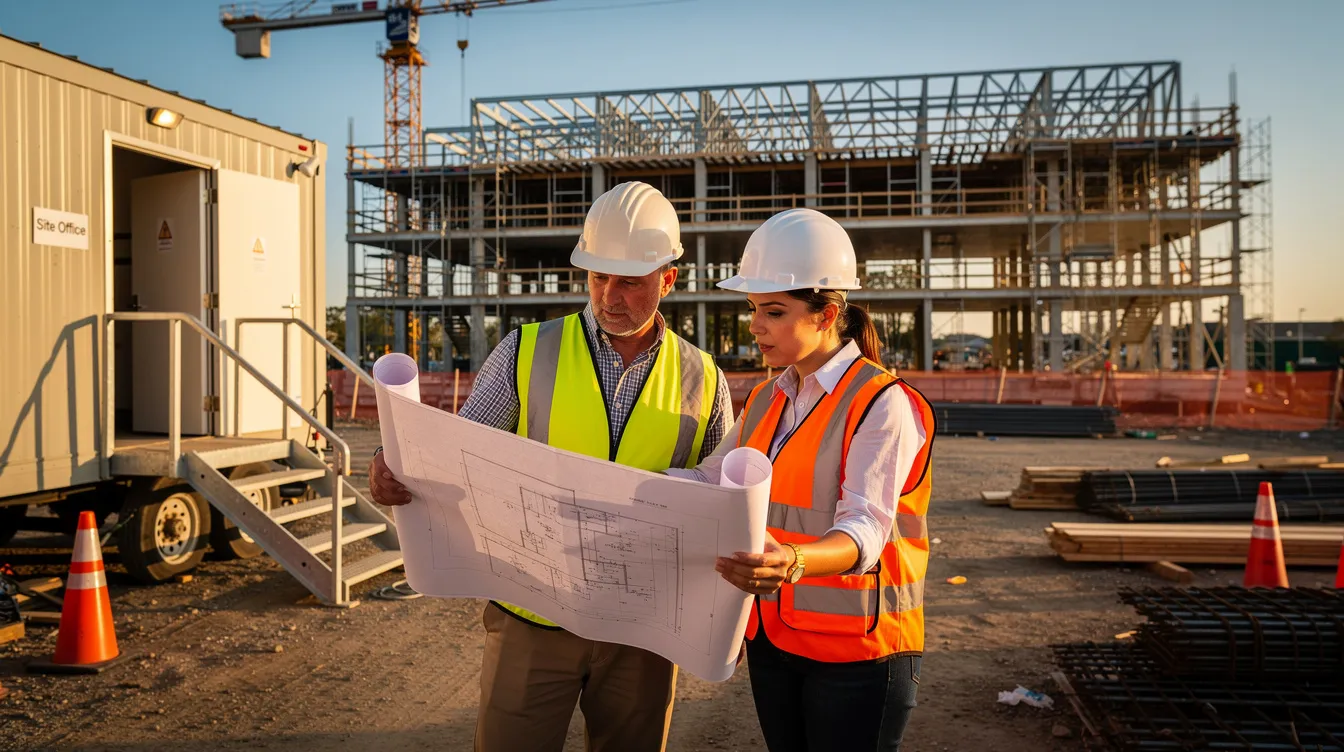
One of the more useful points in the source article is that collaboration is not automatic. Even when a project uses a collaborative delivery structure, the owner still has to help shape how the team works together.
That is especially relevant because contractors sometimes hear “Design-Build” or another integrated model and assume that the delivery method alone will solve relationship problems. The report’s message, as relayed by Construction Executive, is more disciplined than that. Process matters, but owner behavior still matters inside the process.
Central Texas contractors can look for signs that an owner intends to manage collaboration deliberately:
- Clear expectations for issue escalation and decision timing
- Early working sessions that include the contractor, design team, and critical trades
- Alignment within the owner’s own internal team before field instructions are issued
- Willingness to address emerging tension before it turns into formal dispute behavior
None of that guarantees a friction-free project. It does, however, indicate whether the owner sees collaboration as an active responsibility rather than a side effect of the contract form.
Behavior 4: Help Project Partners Succeed
Construction Executive also highlights the report’s point that strong owners do not treat project partners as interchangeable vendors who are expected to absorb every inconsistency. They create conditions that help the team perform.
In practice, contractors may see this in areas such as:
- Realistic sequencing expectations
- Timely review of submittals and change requests
- Early decisions on long-lead items
- Honest discussion about scope, budget pressure, and timing constraints
This is where owner behavior and project outcomes become especially practical. A contractor doesn’t need a published case study to know a project is easier to manage when responses are timely, assumptions are surfaced early, and the owner isn’t forcing the team to execute against unresolved contradictions.
That does not mean good owner behavior eliminates all risk. It means the owner is less likely to add avoidable risk to an already complex job.
For local firms, this issue connects naturally to construction operations management. Tight bids leave less room for unforced owner-side friction, which is why many contractors review owner conduct as part of operational readiness, not just relationship management.
Behavior 5: Think Beyond One Project
The fifth behavior in the report is long-term program thinking. The strongest owners do not treat each job as a disconnected event. They capture lessons, improve governance, and build institutional memory that carries into future work.
For Central Texas contractors, this can be tested with a few practical questions:
- Does the owner conduct real closeout debriefs?
- Do they apply lessons from one project to the next?
- Is there a repeatable governance approach, or does every job start from scratch?
- Can they point to a prior adjustment they made because a past project exposed a weakness?
Owners with this mindset are often easier to work with over time because they are trying to improve the system, not just finish the current building. Contractors may still need to manage normal job pressures, but they usually have a stronger foundation for repeat work and better alignment.
A Central Texas Lens on Owner Readiness and Risk
The regional application here is straightforward: in a market shaped by population growth, large commercial activity, infrastructure work, and continued competition for labor, owner quality can affect whether a project becomes a productive relationship or an expensive distraction.
That does not mean every Central Texas contractor should reject any owner who scores imperfectly. It does mean firms should evaluate owner behavior with the same discipline they apply to scope review, delivery method, and contract terms.
Examples of how the five behaviors may show up locally:
- Austin tech or campus work: mission clarity and decision speed often matter because occupancy dates and operational coordination can be unforgiving.
- Waco institutional or public-facing work: owner engagement can affect approvals, coordination, and response time when unexpected issues arise.
- I-35 corridor industrial and logistics projects: collaboration structure and partner support may matter most when sequencing, procurement, and multiple trades need to stay aligned.
The point is not that one delivery method or region guarantees success. It is that the owner’s conduct still shapes the working environment in each of these settings.
An Owner-Behavior Checklist Contractors Can Use Before Pursuit or Kickoff
Use this checklist in go/no-go meetings, owner interviews, or early preconstruction discussions.
1. Mission
- Can the owner clearly explain the project’s purpose?
- Are key priorities and trade-offs defined?
- Do those priorities stay consistent as the job develops?
2. Visibility
- Is there a named decision-maker with real authority?
- Will that person be engaged at the right points in the project?
- Is the owner’s escalation path clear?
3. Collaboration
- Does the owner have a process for issue resolution?
- Will key parties be brought together early?
- Is the owner aligned internally before directing the field team?
4. Partner Support
- Are schedule assumptions realistic?
- Will submittals, RFIs, and change issues receive timely attention?
- Does the owner appear interested in helping the team succeed, not just enforcing the contract?
5. Program Thinking
- Does the owner learn from prior projects?
- Do they invite useful feedback at closeout?
- Is there evidence of a repeatable approach to governance and improvement?
How to use the results: If multiple categories raise concerns, that does not automatically make the project a no-bid. It does mean the contractor should document the risks, discuss them openly, and decide whether pricing, staffing, schedule assumptions, or executive oversight need to change.
A Simple Worked Example for Go/No-Go Discussion
Consider a clearly hypothetical Central Texas pursuit. A contractor is evaluating a fast-moving commercial project near Austin with a demanding turnover date. The drawings are workable, the location fits the firm, and the schedule is aggressive but not impossible. The bigger question is the owner.
During pre-bid conversations, the owner can describe the occupancy deadline but gives mixed answers about whether budget, speed, or operational continuity matters most if trade-offs appear. The day-to-day representative attends meetings, but final approvals still depend on an off-site executive group. Early coordination meetings include the architect and contractor, but key trade input is deferred.
Using the five-behavior screen, the contractor might record:
- Mission: partial clarity
- Visibility: moderate concern because decision authority is layered
- Collaboration: mixed, with some structure but limited early trade engagement
- Partner support: still unproven
- Program thinking: unclear
That result does not automatically mean walk away. It may mean the firm bids with tighter clarifications, adds contingency for decision lag, assigns stronger executive oversight, or decides the opportunity is only worth pursuing if kickoff governance improves. That is the most practical use of this framework: not to label an owner as “good” or “bad,” but to make pursuit decisions with open eyes.
What Contractors and Owners Should Do Next
The most useful takeaway from the source article is not simply that owners matter. It is that you can evaluate, discuss, and improve owner behavior in specific ways.
For contractors, the next step is to build these five behaviors into pursuit strategy and kickoff planning. Add them to your pre-bid review, owner interview questions, and handoff conversations so the team is not surprised by preventable owner-side friction later.
For owners, the next step is a self-audit. Ask whether your team provides a clear mission, stays visible, manages collaboration intentionally, supports partner performance, and carries lessons from one project to the next. If not, the report highlighted by Construction Executive suggests that improvement is possible and worthwhile.
How ABC Central Texas Can Help
ABC Central Texas serves merit shop commercial construction across Greater Austin, the I-35 corridor, Waco, and surrounding communities. For members trying to improve how projects are pursued and delivered, chapter resources can support the practical side of this conversation.
- ConstructionU and other education offerings can help project managers and field leaders strengthen planning and communication discipline.
- Peer networking and committees give contractors a place to compare how they screen owner risk and manage project relationships.
- Workforce and safety programs support the operational side of project execution when owner expectations and contractor performance need to stay aligned.
If your team wants to sharpen bid discipline and project readiness, use this framework in your next internal planning meeting and connect with ABC Central Texas for training, peer learning, and member resources.
Frequently Asked Questions About Owner Behavior and Project Outcomes
Below are answers to common questions about this topic.
Why is owner behavior getting more attention in construction?
Because the source report covered by Construction Executive argues that project success depends partly on the environment the owner creates. That includes mission clarity, engagement, collaboration, and the conditions the project team is given.
Does this mean contractor performance matters less?
No. The point is not to replace contractor accountability. It recognizes that qualified teams still perform within an owner-defined environment that can support or complicate execution.
Can a collaborative delivery method fix weak owner behavior?
Not by itself. A delivery method can support collaboration, but the owner still needs to stay engaged, make decisions, and help manage team conditions.
How should smaller contractors use this framework?
Smaller firms can simplify it. Start with three questions: Is the owner’s mission clear? Is there an accessible decision-maker? Does the owner seem likely to help the team work through issues rather than disappear or escalate conflict?
What is the best first step for a Central Texas contractor?
Add an owner-behavior review to your next go/no-go discussion. Even a short conversation about mission clarity, decision authority, collaboration, and owner support can improve pursuit choices and project preparation.