
Construction risk management in Central Texas is changing. Contractors winning work and protecting crews along the I-35 corridor are no longer waiting for an incident to show where their system broke down. They track leading indicators, read early signals, and intervene before someone gets hurt.
Key Takeaways
- Construction risk management involves identifying, evaluating, and mitigating risks across every phase of a project. In Central Texas, the safety focus is shifting from reactive incident reporting to predictive practices built on leading indicators such as near misses, heat and fall protection planning, and field observations. Leading indicators help teams spot hazards before incidents occur.
- OSHA defines leading indicators as proactive, preventive measures that show whether safety activities are working to help prevent incidents. Lagging indicators like recordable injuries only describe what already happened.
- Construction managers in Austin, Round Rock, San Marcos, Waco, and along the I-35 corridor can launch predictive safety using simple data from inspections, pre-task plans, and coaching sessions. Expensive AI-powered tools are not required to get started.
- Strong safety culture and reliable data quality can give leaders earlier visibility into jobsite risk, support better heat-hazard planning, and strengthen operational discipline on major commercial and infrastructure projects.
- ABC Central Texas and its Safety Programs hub, STEP participation, and local training give members a concrete path to build a safer tomorrow using predictive construction safety practices.
Why Predictive Construction Risk Management Matters Now in Central Texas
Greater Austin’s construction pipeline keeps expanding. Tech campuses, multifamily towers, infrastructure upgrades along I-35, and commercial build-outs in Round Rock and San Marcos are stacking up. Tight labor markets stretch crews, thin supervision ratios, and constant schedule pressure. Safety risks include jobsite injuries and compliance obligations, and those risks intensify when the construction process moves fast and the workforce is less experienced.
In this article, construction risk management means the operational discipline of controlling safety risk on active job sites: how work is planned, supervised, and executed so hazards are caught and corrected during construction, not after a loss. It does not refer to contract language, bonds, or insurance. Employers must protect workers on active job sites and meet applicable OSHA requirements. Central Texas contractors face additional pressure from extreme summer temperatures, multi-story concrete and steel work, and congested urban sites where equipment and traffic interact daily. Construction safety protocols must adapt to project risks shaped by these conditions.
Predictive safety is the shift from counting incidents after the fact to monitoring leading indicators that warn of problems early. OSHA describes leading indicators as proactive, preventive measures that can reveal potential issues in a safety and health program before an incident occurs. For construction companies operating in Central Texas, that early warning can mean the difference between a near miss logged on a checklist and a crew member in an ambulance. ABC Central Texas supports this forward-looking approach through its Safety Programs hub and STEP safety management resources.
Leading vs. Lagging Indicators: The Foundation of Predictive Safety
Lagging indicators measure what has already happened: recordable injuries, lost-time cases, property damage, and incident rates reported at the end of a quarter or year. They remain important for benchmarking safety performance and meeting regulatory obligations. But they cannot tell a superintendent what is about to go wrong on tomorrow’s pour.
OSHA states that a good safety and health program uses leading indicators to drive change and lagging indicators to measure effectiveness. Leading indicators are proactive measures that can help strengthen safety culture by showing whether current controls are actually working. Risk identification includes historical data and input from project teams, and leading indicators turn that information into forward-looking signals. Risk analysis evaluates the probability and severity of each risk’s impact, and leading indicators provide the live feedback that makes that analysis more actionable.
Concrete examples relevant to Central Texas jobsites:
- Percentage of completed daily pre-task plans across all crews
- Number of reported near misses per 10,000 work hours
- Completion rate and timeliness of corrective actions after inspections
- Frequency of supervisor safety coaching conversations
- Adherence to heat illness prevention protocols on high-heat days
When near-miss reporting drops suddenly, or inspections start getting skipped, those signals may indicate weakening safety culture, stretched supervision, or schedule pressure overriding safety procedures. A balanced executive dashboard should combine a small set of leading indicators with core lagging indicators. This article focuses on the leading side, because that is where the predictive opportunity lives.
The Most Actionable Leading Indicators for Central Texas Construction Projects
Not every metric belongs on a dashboard. The list below is tailored to hazards and enforcement priorities common across Austin, Round Rock, San Marcos, and Waco.
Fall protection indicators:
- Documented tie-off verification at leading edges, tracked as a percentage per week
- Guardrail and hole cover inspection completion, including toe boards where applicable
- Ladder setup observations and scaffold stability checks
- Corrective action closure rate for any fall protection finding
Heat illness indicators:
OSHA requires employers to protect workers from recognized heat hazards under existing authorities and provides planning and control guidance for heat illness prevention. Central Texas summers routinely push the heat index beyond comfortable working conditions. Track these:
- Percentage of crews operating under a written heat plan for the day
- Hydration checks completed by foremen at defined intervals
- Documented work and rest cycles on days when the heat index exceeds company-defined thresholds
- Availability of shade or cooling provisions
Equipment interaction indicators:
- Number of proximity-related near misses involving heavy equipment or vehicles
- Operator pre-use inspection completion rates
- Spotter usage on congested sites and traffic control observations
Safety culture proxies:
- Toolbox talk participation rates
- Near-miss reporting levels normalized per crew or per 10,000 hours
- Employee safety observations and suggestions submitted
- Overdue refresher training counts
Gather these indicators in simple formats first, such as checklist apps, observation cards, or paper forms. They can later feed into more advanced analytics when the organization is ready.
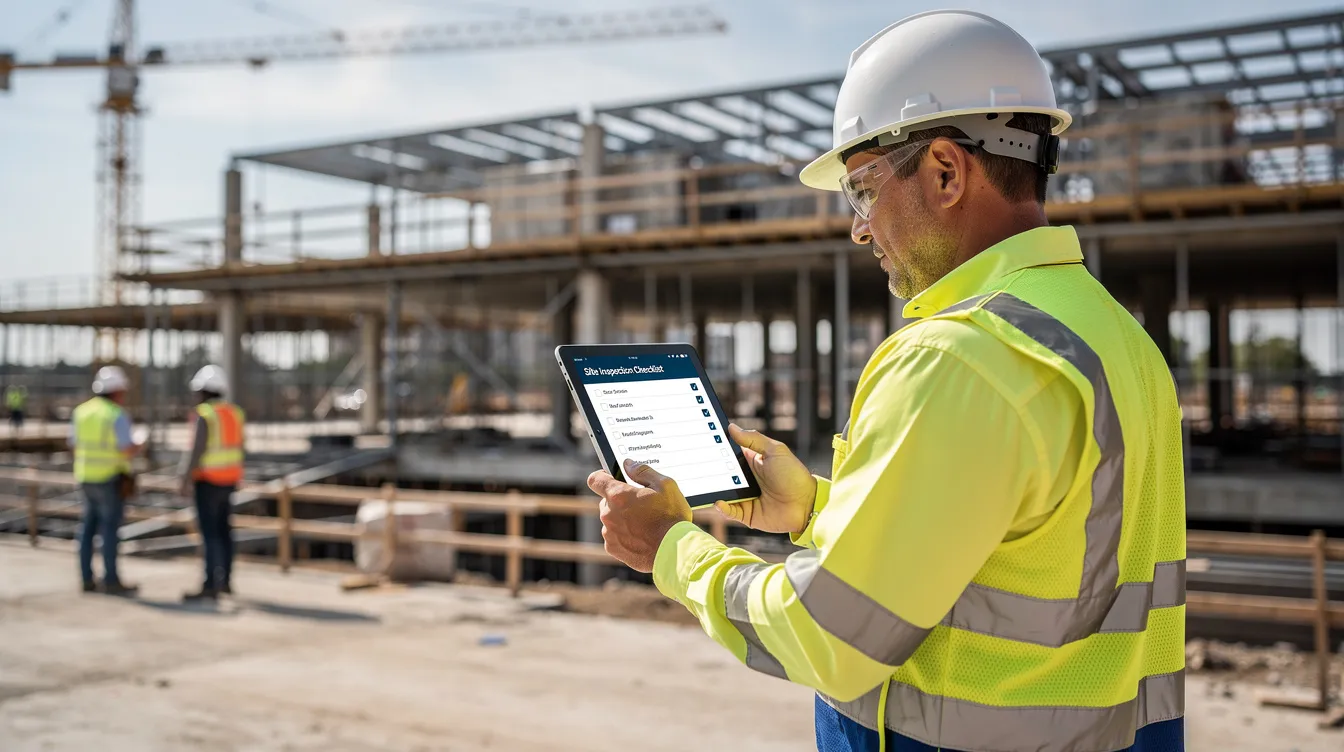
Data Quality: Making Sure Your Safety Indicators Tell the Truth
Predictive construction risk management is only as strong as the data behind it. Rushed or incomplete entries can mislead leaders about where risk is building.
Common data quality problems in construction work include:
- Inspections completed with a quick checkmark and no real observation
- Inconsistent definitions of what counts as a near miss across projects
- Duplicate entries across paper and digital systems
- Observations recorded days after the event, losing context
To fix these issues, establish standard definitions for near misses and observations, use consistent forms across all projects, provide short training for foremen on how to record hazards accurately, and have safety managers conduct periodic spot checks. Reliable leading indicators help project executives make better decisions about staffing, schedule, and logistics before exposure becomes a workplace incident. Over time, better data may support more advanced tools, but Central Texas contractors should focus first on clean, simple indicators they can sustain on every construction project.
Who Owns Predictive Safety Culture? Roles for Executives, Safety Directors, and Supervisors
Predictive safety is a team effort within construction risk management. Executives, safety professionals, and frontline supervisors each carry defined responsibilities. Good risk management practices improve decision-making and collaboration when every level of the organization knows its role.
Executives should select three to five core leading indicators for the company, set expectations for review cadence at the project and portfolio level, and tie safety performance to business decisions such as bid qualification or subcontractor selection.
Safety directors design and maintain the indicator system, train supervisors to capture and interpret data, and lead monthly or quarterly trend-analysis sessions that turn signals into corrective actions.
Superintendents and foremen complete daily or weekly observations, lead pre-task planning and toolbox talks, and respond quickly when indicators like near misses or skipped fall protection checks spike. Effective safety training improves worker competency in hazardous tasks, making supervisors the critical link between data and field behavior.
OSHA’s heat planning guidance illustrates this ownership clearly: a trained person such as a foreman, jobsite supervisor, plant manager, or safety director should oversee the site’s heat illness prevention plan and monitor related indicators. Supervisors who understand how decision-making strengthens safety culture in construction and combine judgment with data create the strongest predictive safety systems.
Turning Leading Indicators into Action: Review Cadence and Field Coaching
Consider a commercial project in North Austin where near misses around a leading edge increase over two weeks. Without a review cadence, that trend stays buried in a stack of observation cards. With one, a superintendent catches the pattern at the weekly review and triggers a focused inspection and crew coaching session before anyone falls.
A simple three-level review rhythm works for most Central Texas contractors:
- Daily: Foremen and superintendents review observations, confirm inspections are complete, and address immediate hazards in work areas
- Weekly: Project managers review key indicators, compare trends, and flag any signals crossing defined thresholds
- Monthly: Company leadership reviews indicators across the portfolio, assesses whether corrective actions closed effectively, and adjusts resources or operations as needed
Continuous monitoring tracks existing and emerging risks throughout the project. When an indicator crosses a threshold, such as repeated fall protection deviations or missed confined space permits, the response should be structured: immediate field correction, short-term coaching or a targeted toolbox talk, and, if the issue repeats, root cause analysis before any process change.
Worked example: During the hottest weeks in August in Austin, a superintendent notices hydration checks aren’t being logged consistently. Rather than waiting for a heat illness case, the team adjusts start times to 6:00 AM, adds shaded rest areas, documents company break expectations at heat index thresholds, and increases supervisor presence during midday hours, all in line with OSHA’s emphasis on engineering and work-practice controls to reduce the hazard. The following week’s data shows improved compliance with the company’s heat controls.
Every red signal should have a documented action, owner, and due date. The next review should confirm whether the action was effective. Data without follow-through is just paperwork. Digital dashboards and AI tools can help visualize trends, but even a spreadsheet or whiteboard supports strong predictive safety if leaders use it consistently.
Technology and AI: Tools That Can Support Predictive Construction Risk Management
Predictive safety does not require sophisticated AI from day one. But many construction companies are beginning to layer analytics onto existing safety data to sharpen trend visibility and speed up field response.
Practical technologies contractors may evaluate include:
- Mobile inspection apps that standardize observations across projects and teams
- Simple dashboards that visualize leading and lagging indicators by project, trade, or time period
- Cameras or other monitoring tools that some firms use to review PPE compliance or traffic patterns
- Wearable devices that some employers may pilot for heat-stress monitoring or location awareness
- Analytics tools that organize historical safety data, weather conditions, task types, manpower, and near misses to highlight higher-risk windows for supervisor review
- Model-based coordination tools that may help teams compare planned conditions with field conditions on complex projects
Limitations matter. Protect worker privacy when deploying wearables or cameras. Avoid overreliance on algorithms. Keep safety professionals at the center of every decision. Smaller firms along the I-35 corridor should pilot low-cost or vendor-provided tools on a single project first, focusing on a few hazards like falls and heat, then expand use after confirming that the tool actually supports better corrective action.
Building Predictive Safety into Overall Construction Risk Management Systems
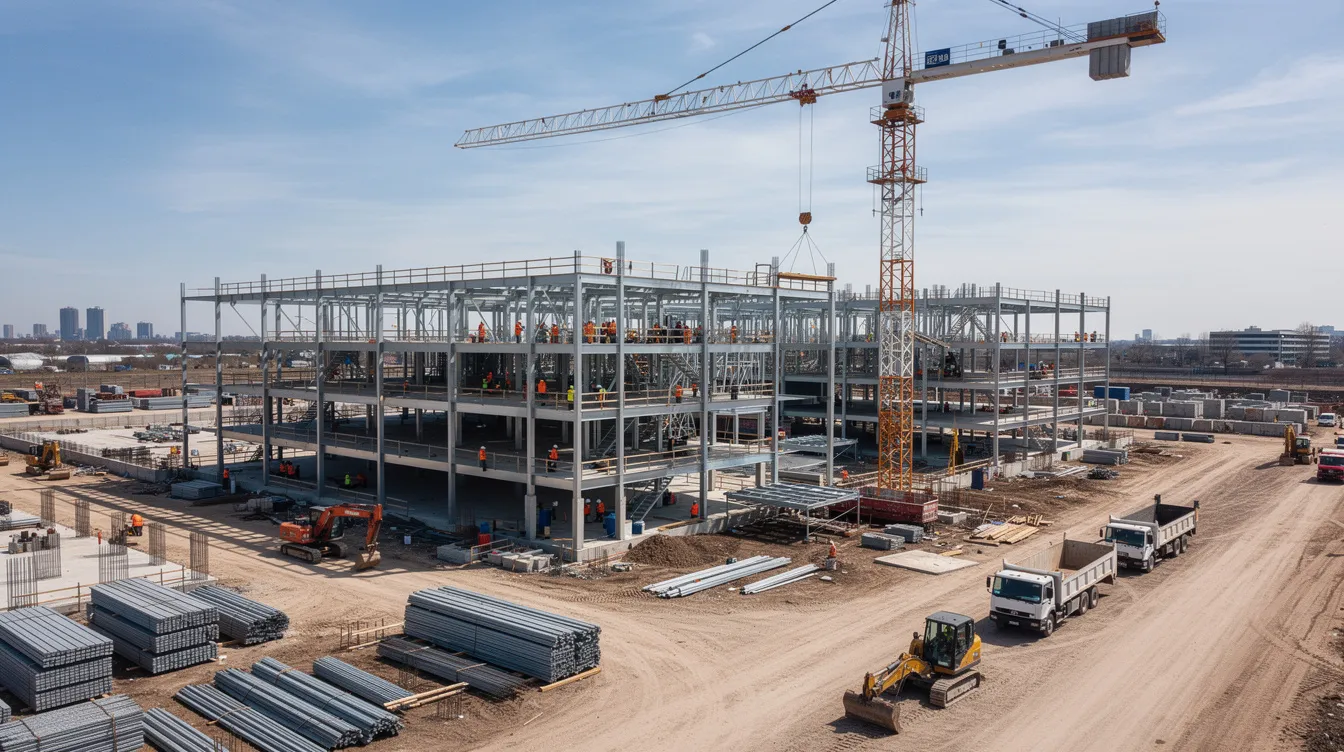
Leading indicators should live inside the same framework that manages safety programs, training, quality control, and project management, not in a separate safety-only silo. Construction risk management spans multiple risk categories, and predictive safety is one operational layer within that system.
- Include leading indicators in project start-up meetings, risk registers, and monthly operations reviews.
- Align predictive safety with quality control processes. Rework or defect trends can signal rushed work or fatigue that also raises safety risk.
- Embedding compliance checks into the same operating system can reduce duplication and make field follow-through easier.
- Recognize that construction risk management extends beyond occupational safety. Financial, legal, and operational risks still require their own mitigation strategies, ownership, and documentation.
ABC’s national STEP framework offers a structured way to measure and benchmark health and safety performance using leading indicators. ABC describes STEP as a no-cost framework for measuring safety data and benchmarking against industry peers. The chapter’s construction safety management field playbook provides a deeper resource on building the full safety management system. This article adds the predictive, indicator-focused layer on top.
A 30-Day Starter Plan for Predictive Safety on a Central Texas Jobsite
In 30 days, a project team can pilot a basic predictive safety approach on one active job, whether it is a commercial build in North Austin or an infrastructure project near San Marcos. Robust project planning is critical for effective risk mitigation, and this plan provides a structured starting point.
Week 1: Select three to five leading indicators tied to key hazards such as heat illness, fall protection, equipment movement, and near misses. Define clear measurement rules and assign owners for data entry and review. Train supervisors on what good data looks like.
Week 2: Roll out the chosen indicators to crews. Put simple tools in place: daily checklists, observation cards, or mobile forms. Capture data during normal construction work without creating a separate bureaucratic process.
Week 3: Conduct the first structured review. Identify any red or yellow trends. Implement at least one targeted intervention, such as adjusting start times to beat afternoon heat or adding an extra daily walk focused on ladder and scaffold safety.
Week 4: Refine the process, address data quality issues discovered during the pilot, and prepare a short debrief for company leadership. Document what was learned and recommend which indicators should be kept, changed, or added going forward.
Connect this plan to ABC Central Texas offerings: the Safety Programs hub for STEP participation and OSHA training partnerships, and construction safety management systems support for suicide prevention as a related resource that can strengthen crew readiness and jobsite communication.
How Predictive Safety Can Improve Competitiveness for Merit Shop Contractors
Predictive construction risk management is a business advantage for merit shop contractors in Central Texas, not just a compliance exercise. Preventing avoidable disruptions helps protect schedule reliability, crew confidence, and management bandwidth.
- Better leading indicators can support stronger prequalification packages and more credible proposals for public and private work along the I-35 corridor
- A documented, proactive safety process can help show owners, partners, and insurers that the company is managing risk deliberately rather than reacting after incidents
- A strong safety culture backed by consistent field data can help attract and retain skilled employees in a tight labor market
- Owners and insurers may look for evidence of proactive safety systems, including near-miss tracking, documented coaching, and STEP recognition
- Investments in predictive safety practices, supervisor training, and ABC Central Texas membership can support an overall strategy for winning and delivering more complex construction projects with better operational discipline
Next Steps with ABC Central Texas
Predictive safety, built on practical leading indicators and disciplined follow-through, is now a core element of modern construction risk management in Central Texas.
- Select one active construction project to pilot a 30-day predictive safety plan this quarter
- Convene a short leadership meeting to choose core indicators and assign ownership
- Schedule supervisor training on field observations, coaching, and how to respond when indicators trend in the wrong direction
Explore the chapter’s Safety Programs hub for STEP participation, OSHA courses, and safety culture resources that can anchor your predictive safety system. The construction safety management playbook offers a companion resource for building the broader management system around these indicators.
Contractors, safety directors, and project leaders in Greater Austin, Waco, and the I-35 corridor should contact ABC Central Texas about membership, safety training, and committee involvement to turn predictive insights into safer, more disciplined job sites.
Frequently Asked Questions about Predictive Construction Risk Management
These questions address practical concerns Central Texas leaders often raise when considering predictive safety and leading indicators for their organization.
How is predictive safety different from our current safety program that focuses on OSHA recordables?
Most traditional programs center on lagging indicators like OSHA recordables and lost-time cases, which describe what has already gone wrong. Predictive safety adds a structured system of leading indicators, including near misses, incomplete inspections, and unsafe behaviors, to identify where controls are weakening before someone is hurt. The goal is not to replace existing reporting, but to give project managers earlier visibility into emerging risks across construction projects.
Do we need advanced AI tools to start using leading indicators effectively?
No. Contractors can begin with simple tools like checklists, spreadsheets, and basic dashboards, as long as definitions and responsibilities are consistent across the team. Add AI and predictive analytics platforms later to process larger volumes of data or combine factors such as weather, crew mix, and task type. Smaller firms should pilot low-cost options on a single site before committing to larger technology investments.
What quick-win leading indicators can we adopt on an active job tomorrow?
Start with daily verification of fall protection setup at leading edges, tracking completion of pre-task plans for higher-risk tasks, counting near misses and safety observations by crew, and logging heat illness prevention measures on hot days. Pick no more than three to five indicators at first, focusing on the highest-risk activities on your current projects. Define a simple threshold for action: any repeated missed control or a sudden change in near-miss trends should trigger a focused inspection or toolbox talk.
How often should our leadership team review predictive safety data?
Frontline supervisors should review indicators daily or several times per week. Project teams should review trends weekly during regular project meetings. Company leadership should conduct at least a monthly review across the portfolio. The right cadence depends on project size and risk profile, but long gaps between reviews make it harder to act before an incident occurs. Consistent, scheduled reviews signal to the entire organization that leading indicators matter.
Where can we get help designing a predictive safety and leading indicator program for our company?
Central Texas contractors should contact ABC Central Texas for guidance on building or refining their safety systems, including support through the Safety Programs hub and STEP safety management framework. The chapter’s training, apprenticeship programs, and committees connect members with peers in the construction industry who are already working to strengthen leading-indicator and predictive safety practices. Pair internal expertise with these local resources to create an approach that fits your company’s size, trades, and project mix in the Austin and I-35 region.