


Central Texas contractors spend real money on prescription safety glasses for their crews, and too often those glasses never leave the glove box. The gap between buying personal protective equipment and getting it worn on active construction sites is one of the industry’s most persistent execution failures. This article is a field brief for superintendents, foremen, and safety managers who need to close that gap on jobsites across Greater Austin, Waco, San Marcos, and the I-35 corridor.
Key Takeaways
Prescription safety glasses in construction only protect workers when crews actually wear them. Here is what Central Texas contractors need to act on now:
- OSHA’s construction eye and face protection standard, 29 CFR 1926.102, requires workers exposed to eye hazards to use appropriate protection. Workers who wear prescription lenses must use protective eyewear that incorporates the prescription or fits over their corrective lenses without disturbing proper position.
- Ordinary street prescription glasses are not, by themselves, protective eye PPE for hazardous construction tasks. Contractors should issue and verify eyewear that is appropriate for the hazard and marked to the applicable ANSI Z87.1 standard.
- The most common reasons prescription safety glasses stay in the truck are poor fit under hard hats, fogging in Central Texas heat and humidity, scratched lenses that reduce optical clarity, and weak supervisory follow-through.
- Contractors should standardize eyewear selection, issuance, tracking, and replacement the same way they manage fall protection harnesses: by name, by condition, and by documented process.
- ABC Central Texas Safety Programs, STEP participation, and a construction safety management playbook can help contractors formalize these controls and turn purchased PPE into actual field compliance.
Why Paid-For Prescription Safety Glasses Stay in the Truck
Picture a tilt-wall crew on an I-35 corridor project near Round Rock: overhead fasteners dropping debris, dust swirling off the slab, and half the workers wearing their regular glasses instead of the prescription safety eyewear the company bought them three months ago. The employer-paid pairs are sitting in personal trucks parked down a long access road.
The problem is not procurement. It is execution. Getting construction crews to actually wear prescription safety glasses takes more than a purchase order. It requires fit, comfort, supervisory enforcement, and a system that makes compliance easier than non-compliance.
The business stakes are concrete. Flying particles can scratch or penetrate the eye, causing injuries that range from temporary treatment cases to permanent vision damage. On top of that, eye and face protection violations under OSHA’s construction rules remain a recurring enforcement issue. Each citation carries financial penalties, potential project delays, and a visible crack in your safety culture that workers notice.
Construction Executive has covered this issue as a national concern. This article keeps that same subject central and turns it into a Central Texas field playbook.

OSHA Requirements for Eye Protection and Prescription Lenses
Under 29 CFR 1926.102, OSHA requires employers to ensure that workers exposed to eye or face hazards use appropriate protection. The standard covers hazards such as flying particles, molten metal, liquid chemicals, acids or caustic liquids, chemical gases or vapors, and potentially injurious light radiation.
OSHA is also explicit about prescription lenses. Workers who wear them must either use protective eyewear that incorporates the prescription or wear eye protection that can be worn over prescription lenses without disturbing the proper position of either. In practical terms, everyday glasses are not enough for hazardous construction work just because they correct vision.
Protective devices used for these tasks should meet the applicable American National Standards Institute performance requirements. OSHA’s PPE assessment guidance specifically includes prescription spectacles with side shields and protective lenses meeting ANSI Z87.1 among the available eye and face protection options. That means contractors should confirm the eyewear they issue is appropriate to the hazard, properly marked, and suitable for the task.
Compliance requires matching protection to the work. Grinding, drilling, cutting rebar, concrete sawing, chemical handling, and welding support activities do not create the same hazards, so the right solution may be safety glasses, goggles, face shields used with primary eye protection, or task-specific specialty eyewear.
When Prescription Safety Glasses Are the Practical Choice
OSHA allows over-the-glasses eye protection in many situations, but in day-to-day construction work, prescription safety eyewear is often the option workers are most likely to wear consistently over a full shift. Over-the-glasses models can work, but they may reduce field of view, conflict with other PPE, and fog quickly when crews move between air-conditioned trailers and hot, humid work areas.
Consider the scenarios common across Central Texas construction:
- Carpenters doing continuous overhead framing on apartments in Austin, where dust and falling debris are constant concerns
- Electricians pulling wire in dusty mechanical rooms in Waco while moving between cooled interiors and hotter work zones
- Concrete finishers on hot slabs in San Marcos who need clear sightlines and all-day wearability
In each case, properly selected prescription safety glasses can satisfy OSHA’s requirement for appropriate protection while improving the odds that the worker actually keeps the eyewear on. Companies should document in their PPE hazard assessments when prescription eyewear is the preferred option, both for compliance clarity and for purchasing consistency.
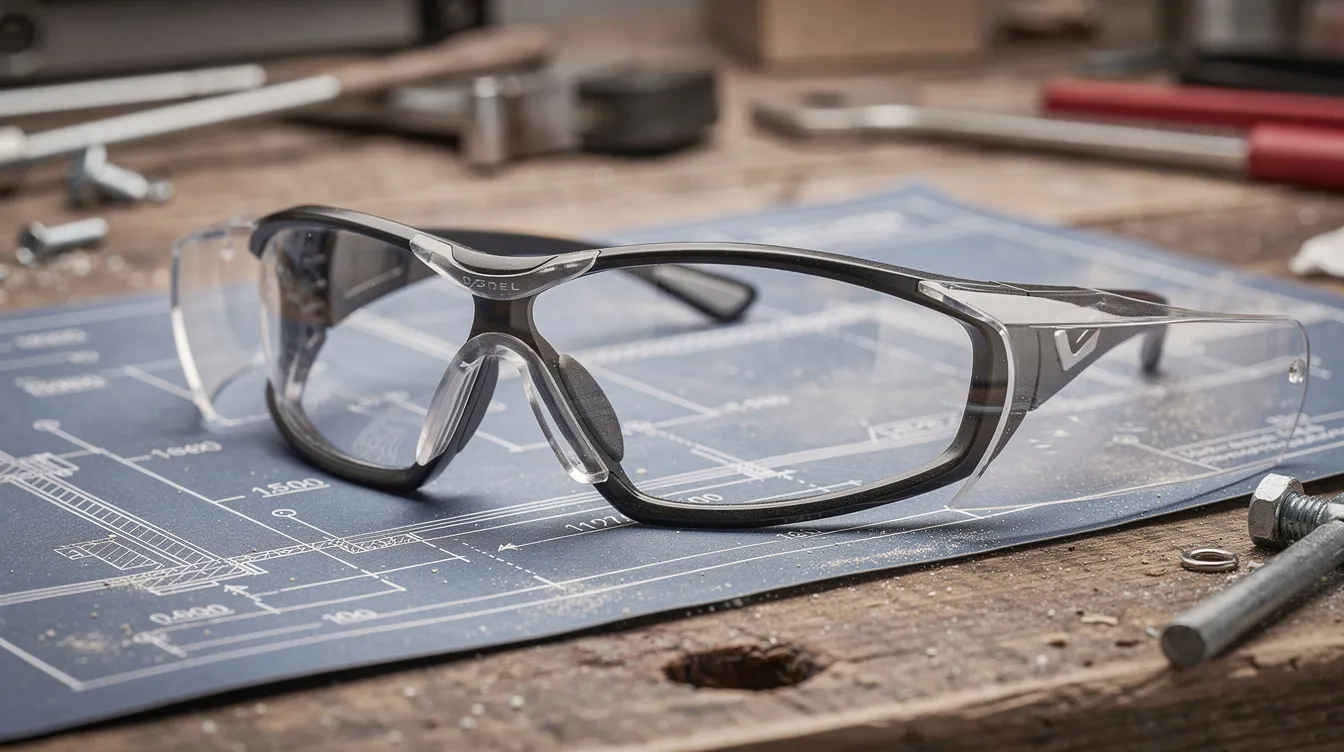
Why Workers Leave Prescription Safety Glasses in the Truck
Non-use is usually about friction and culture, not about workers rejecting safety outright. When prescription safety glasses are awkward, unavailable, or unenforced, workers default to whatever is easiest.
Comfort and usability barriers:
- Tight temples that dig into the head under a hard hat
- Frames that slide when sweating in Central Texas heat
- Lenses that fog when moving between air-conditioned interiors and humid exteriors
- Incompatibility with respirators or hearing protection that creates pressure points
Behavioral and logistical reasons:
- Workers parking down a long access road and rushing to make morning production targets
- Forgetting glasses in a personal vehicle
- Owning only one scratched, outdated pair that they avoid using because it impairs their vision
- Belief that regular prescription glasses are “good enough” for a short task
Perception problems:
- Not recognizing eye hazards during tasks like banding lumber, using powder-actuated tools, or working near welding operations
- Seeing supervisors walk past non-compliance without correction, which signals that the rule is not taken seriously
One superintendent on a Central Texas commercial project discovered, weeks after distributing new prescription safety glasses, that most pairs were still in personal trucks. His crew had never been fitted properly, so the frames pinched under their hard hats. The glasses stayed where they were comfortable: in the glove box.
Design and Feature Choices That Make Eye Protection Actually Worn
Design details determine whether prescription safety eyewear becomes a daily habit or a glove-box decoration. The right combination of lenses, frames, and coatings separates workplace compliance from expensive shelf inventory.
Lens choices:
- Impact-rated lens materials and designs suitable for the hazard are essential. Contractors should confirm the eyewear meets the applicable ANSI Z87.1 marking and performance requirements rather than assuming any prescription lens is acceptable.
- Anti-scratch and anti-fog coatings can help maintain clarity in challenging environments. For crews moving between temperature zones, fog resistance can make a major difference in actual wear time.
- UV protection may add value for outdoor work, but it does not replace impact protection or hazard-specific eye protection selection.
Frame considerations:
- Wraparound styles can improve side coverage and reduce dust intrusion without the heat buildup of sealed goggles in some applications.
- Side protection matters. Depending on the hazard, that may mean integrated side protection, side shields, or moving to goggles or other protection better matched to the exposure.
- Adjustable nose pads and flexible temples help frames fit properly under common hard hat models without creating pressure points.
Compatibility with other PPE:
- Ensure prescription frames do not interfere with face shields, respirators, or hearing protection. Low-profile frames can help.
- Chemical splash hazards may require goggles rather than standard safety glasses.
- Specialty light-radiation hazards, such as welding or laser-related tasks, require task-specific eye protection beyond standard impact-rated glasses.
Workers who prefer contact lenses still need protective eyewear. Contact lenses correct vision, but they do not provide impact or splash protection. In dusty or chemical-exposure environments, sealed goggles may be a better option than open safety glasses depending on the task and hazard assessment.
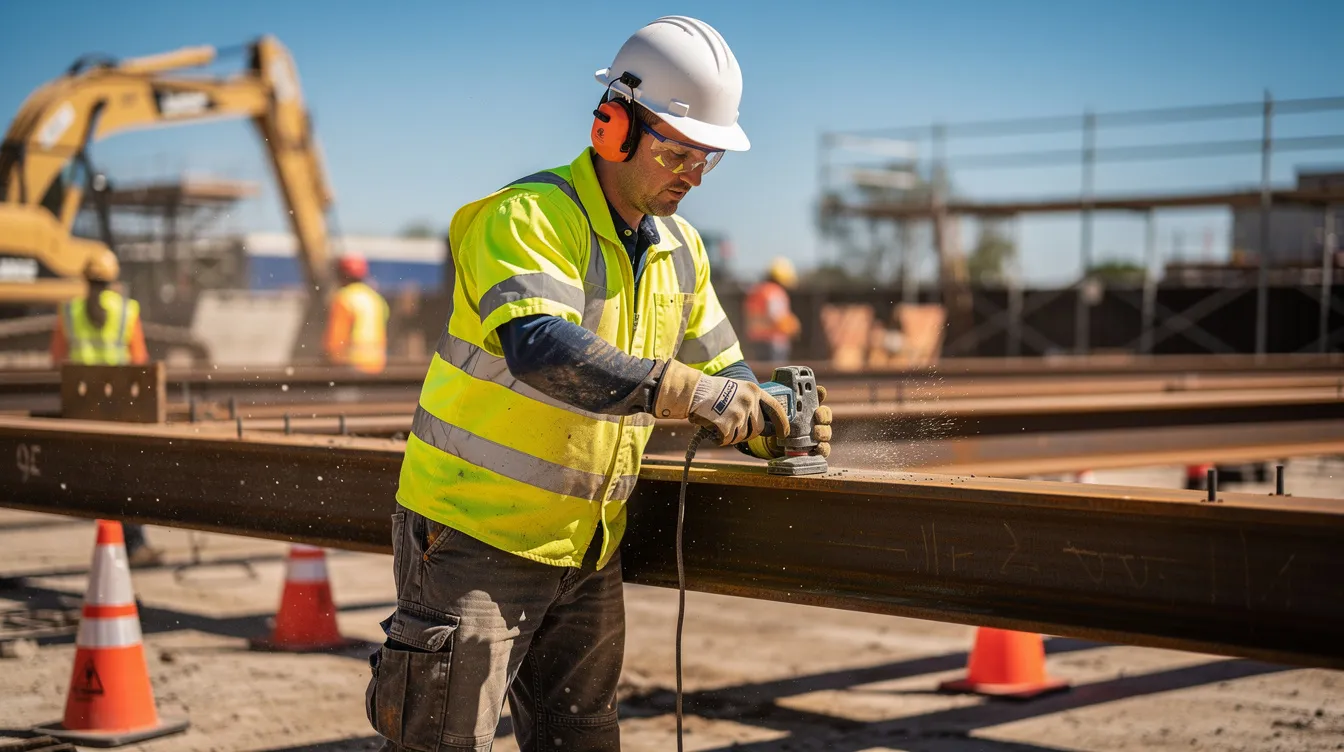
Standardizing Selection, Fit, and Issuance for Your Crews
Central Texas contractors should treat prescription safety eyewear like any other critical tool: standardized, tracked, and issued through a repeatable process. Informal distribution kills compliance.
Standard operating procedure for new hires and transfers:
- Document whether the worker uses prescription lenses during onboarding
- Confirm whether the worker already has compliant protective eyewear appropriate to the task or needs a new pair
- Select hazard-appropriate, ANSI-marked frames through an approved vendor before the worker reports to a high-hazard area
- Do not substitute generic readers or mismatched prescriptions for task-critical work
On-site fit sessions:
- Supervisors or safety staff should physically verify that frames fit securely, provide appropriate coverage, and work under the worker’s hard hat without shifting
- Check compatibility with hearing protection, respirators, and other required PPE
- Make adjustments or reorder before sending anyone to the field with eyewear they are unlikely to wear
Tracking issuance:
- Assign each pair to a named employee and record date issued, frame model, and lens type
- Track eyewear just like fall protection harnesses: by person, by condition, and by replacement schedule
- Confirm compliance markings and condition at issuance and during periodic checks
How a contractor handles cost can vary, but the process should still ensure that every worker who needs corrective lenses has a functional, compliant option before starting work in an eye-hazard area.
Replacement, Damage, and Lost-Glasses Policies
Scratched, cracked, or chemically damaged lenses may no longer provide adequate visibility or protection. Safety eyewear only helps when it remains serviceable and available.
Replacement trigger list:
- Visible scratches or pitting that affect vision
- Cracked or warped frames
- Loss of side protection
- Any eyewear involved in a significant impact event
- A prescription change that affects task clarity
Handling lost or forgotten glasses:
- Set a written replacement policy that balances accountability with the need to keep workers from hiding problems or working unprotected
- Maintain a supply of backup over-the-glasses eye protection or goggles so workers who forget their primary pair do not enter a hazard area unprotected
Accountability:
- Document repeated issues with lost eyewear as a coaching topic during performance reviews or safety talks
- Address patterns early before they become normalized non-compliance
Field Controls: Huddles, Walks, and Leading Indicators
Tie eye protection use to visible field controls that superintendents and foremen apply daily, from downtown Austin high-rises to highway expansions along I-35.
Daily pre-task huddles:
- Call out specific tasks with eye hazards for that shift, such as grinding, cutting, drilling, or concrete sawing
- Verify that every prescription-lens wearer has appropriate eye protection on hand, not in a truck
- Remind crews when goggles, face shields used with primary eye protection, or other task-specific protection are required
Supervisory safety walks:
- Incorporate a quick eye protection check at high-hazard locations such as cutting stations, rebar fabrication areas, and mechanical rooms
- Correct non-compliance immediately, consistently, and respectfully
- Treat each observation as data, not just enforcement
Leading indicators:
- Track the percentage of observed workers wearing proper eye protection in eye-hazard zones
- Log near-miss reports involving eye exposures
- Integrate these observations into predictive construction risk management systems
ABC’s 2026 Health and Safety Performance Report says STEP participants achieved incident rates 686% lower than the U.S. Bureau of Labor Statistics construction industry average. That does not guarantee the same result for every contractor, but it does reinforce the value of structured measurement, documented systems, and consistent field follow-through.
Building a Safety Culture Where Eye Protection Is Non-Negotiable
Rules alone do not keep glasses on faces. Crews respond to what leaders consistently model, reward, and correct.
Visible leadership: Project managers and superintendents should wear appropriate eye and face protection when entering hazard areas, even for short visits or walkthroughs. If leadership skips it, crews will too.
Positive reinforcement: Recognize crews with strong eye protection compliance in weekly meetings or safety stand-downs. Share practical examples of how proper eyewear prevented a more serious outcome when appropriate.
Multi-employer sites: General contractors should set clear project-wide expectations for eye and face protection, including prescription-lens issues, and communicate those requirements during preconstruction meetings and subcontractor orientations.
Review your eye and face protection program periodically using tools that help you measure culture and safety, aligning behaviors around a shared commitment to sending everyone home with their vision intact.

How ABC Central Texas Can Support Stronger Eye Protection Programs
ABC Central Texas partners with regional contractors who want to move from buying protective equipment to seeing it worn consistently, especially in fast-growing markets like Austin, Round Rock, and Waco.
The chapter’s safety resources can help members design, implement, and refine practical controls for issues like prescription safety eyewear compliance. Those resources connect to a broader construction safety management playbook that addresses field-level enforcement, supervisor training, and documentation.
Members can use ABC resources on predictive construction risk management to treat eye protection compliance as a measurable leading indicator within a broader safety system. Engaging with STEP and related tools can help make eyewear compliance, huddle quality, and field inspections part of how you benchmark and improve safety performance over time.
For contractors looking to strengthen their approach to safety training for contractors across all PPE categories, ABC Central Texas offers practical, right-sized programs that align with how merit shop contractors operate in the field.
Next Steps for Central Texas Construction Leaders
Prescription safety glasses only protect workers when they are worn. Leaders must close the gap between purchasing PPE and using it daily.
Three-step action plan:
- Audit current eye and face protection practices on one active project within the next 30 days
- Standardize prescription eyewear issuance and replacement procedures using the framework in this article
- Add eye protection checks to daily huddles and supervisory safety walks starting this week
Visit the safety resources linked above to align your eyewear practices with broader safety training and management support. Then make prescription eye protection a dedicated agenda item at your next leadership meeting and use this article as a field briefing guide.
In a high-growth, high-pressure construction market like Central Texas, protecting workers’ eyesight with effective, worn prescription safety glasses is both a moral obligation and an operational advantage.
Frequently Asked Questions About Prescription Safety Glasses in Construction
These FAQs address practical questions that often come up as contractors tighten their eye protection programs.
Are employers required to pay for prescription safety glasses on construction sites?
OSHA’s PPE payment rules are nuanced. Employers generally must pay for required PPE, but OSHA also has exceptions that can apply to certain non-specialty prescription safety eyewear, especially when workers can wear it off the job. Contractors should review OSHA’s PPE payment rule and related guidance carefully before setting policy. The practical takeaway is to build a clear written policy that keeps workers protected and avoids confusion about who is responsible for obtaining compliant eyewear.
How often should construction workers replace their prescription safety glasses?
OSHA does not set a fixed replacement schedule for prescription safety glasses. Replace them when lenses are scratched enough to affect vision, frames or side protection are damaged, or the worker’s prescription no longer supports safe task performance. An annual condition review is a reasonable management practice, with additional checks whenever the worker reports fit or visibility problems.
Can workers wear contact lenses instead of prescription safety glasses?
Contact lenses correct vision but do not protect the eyes. Workers who wear contacts still need hazard-appropriate protective eyewear when exposed to eye hazards. Depending on the work, that may mean safety glasses, goggles, or other task-specific protection.
How can small contractors manage prescription safety eyewear without a large safety department?
Smaller firms can standardize on one vendor, keep a basic issuance log in a spreadsheet, and fold eyewear checks into daily huddles led by working foremen. This does not require a large safety department. It requires a repeatable process and consistent supervision.
What should a supervisor do if a worker shows up without their prescription safety glasses?
Do not allow the worker to perform eye-hazard tasks without appropriate protection. The immediate response may be to back up with over-the-glasses protection, goggles, reassignment to work outside the hazard area, or sending the worker to retrieve compliant eyewear, depending on the task. Handle repeated forgetfulness as a coaching and accountability issue in line with the company’s safety policies.