
For Central Texas contractors, risk management and construction often come down to one practical question: if an owner, insurer, or OSHA asks what happened on a specific jobsite day, can your team quickly produce the right records?
This guide focuses on that question. It is not a broad overview of construction risk, and it is not another article about inspection history alone. This is a shorter field-ready tool for non-inspection documentation ownership and retrieval across active projects in Austin, Round Rock, San Marcos, Waco, and the broader I-35 corridor.
Key Takeaways
- Documentation is central to risk management and construction operations because it shows what work was planned, what hazards were communicated, what was checked, and what was corrected on a given day.
- The highest-value records usually extend beyond inspections to include pre-task plans, toolbox talk sign-ins, incident and near-miss reports, training files, and corrective-action closure records.
- OSHA announced an updated heat National Emphasis Program in April 2026, and fall hazards remain a major construction safety priority. That makes day-specific jobsite records especially important on outdoor and higher-hazard work.
- Many documentation failures start with unclear ownership, inconsistent completion, or slow retrieval, not with a total lack of forms.
- ABC Central Texas offers Safety Programs that can help contractors strengthen documentation habits across active projects.
The Record Retrieval Test
Many firms already have templates. The harder question is whether those records would hold up under pressure. If a superintendent is out, a phone is replaced, or a file is buried in email, a company may still have done the right work in the field but struggle to prove it later.
That is why this article focuses on record ownership and retrieval. For a deeper look at inspection history, photo evidence, and closure tracking, see ABC Central Texas guidance on the inspection trail. Here, the question is broader: what non-inspection records would you need tomorrow after an incident, owner review, or OSHA visit?
The Five Record Categories to Check First
- Pre-task planning records
JSAs or pre-task plans tied to the actual work area, crew, and hazards for that day. - Communication records
Toolbox talk sign-ins showing the date, topic, project, and attendance. - Condition and verification records
Daily observations, access-system checks, and any tool or equipment checks your process requires. - Incident and near-miss records
Factual notes on what happened, immediate response, and assigned follow-up actions. - Training and corrective-action records
Files showing who was trained, what was found, who was assigned, and when issues were actually closed.
Together, these records help answer the questions that usually follow a problem: What was the task? Who was there? What hazards were identified? What controls were communicated? What did supervision check? What changed after an issue was found?
A Simple Record Ownership Map
If ownership is vague, documentation quality usually slips. Use this map as a quick review tool.
| Record Type | Primary Owner | What Good Looks Like |
|---|---|---|
| JSA or pre-task plan | Foreman or superintendent | Dated, task-specific, exact location, current crew, updated when conditions change |
| Toolbox talk sign-in | Supervisor leading the talk | Specific topic, full attendance, project name, supervisor identified |
| Daily condition or verification log | Superintendent, safety lead, or designated competent person | Finding tied to a location, responsible party named, closure documented |
| Incident or near-miss report | Supervisor with safety manager review | Prompt factual report, immediate response noted, follow-up assigned |
| Training file | Safety manager or office administrator | Current, complete, and quickly retrievable by worker and topic |
If your team cannot identify who owns each of these records on every project, that is already a documentation weakness.
Where Heat and Fall Records Need Closer Attention
Some records deserve extra attention because they relate to recurring construction hazards. OSHA updated its heat National Emphasis Program in April 2026, and fall hazards remain a major construction safety priority. For Central Texas contractors working through long, hot periods, elevated work, and changing crews, broad policy language alone is not enough.
For heat, useful records may include training attendance, supervisor checklists, notes showing access to water and shade or cooling, acclimatization procedures for new or returning workers, and job-specific notes showing schedule adjustments or added breaks when conditions warrant them.
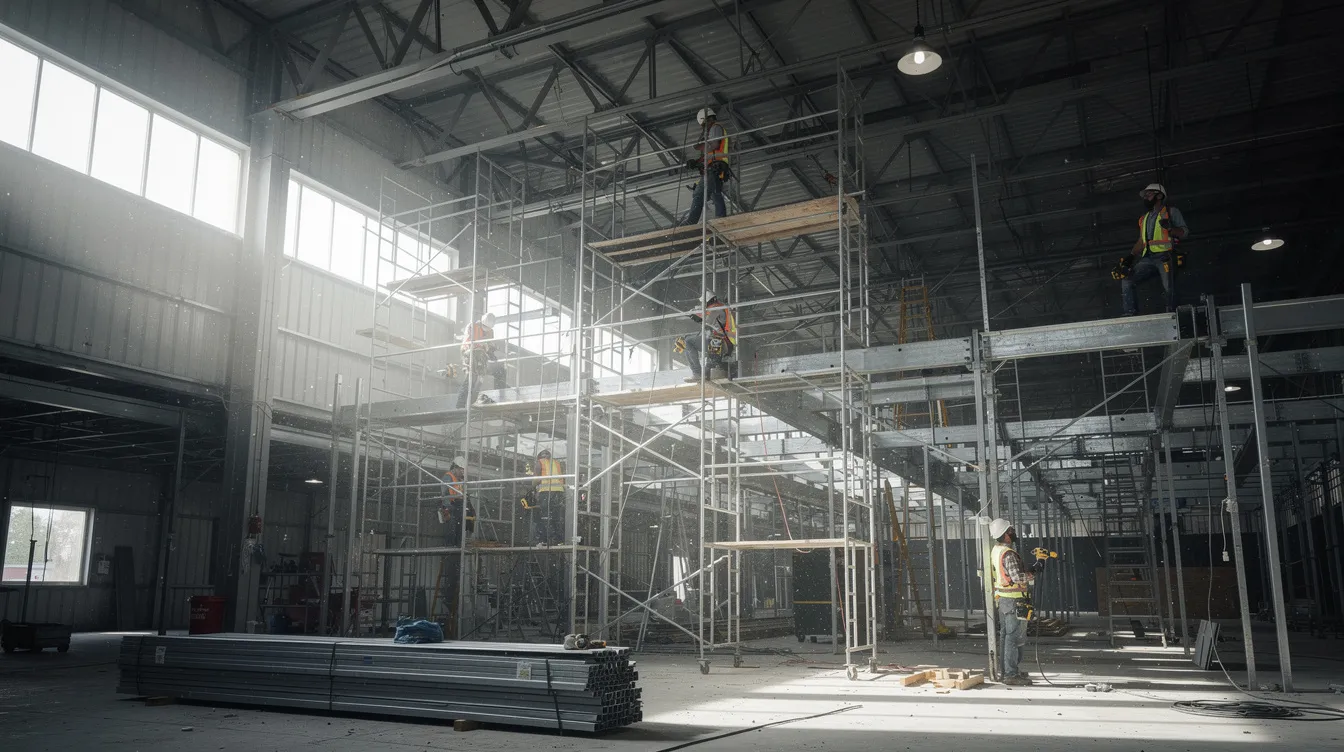
For fall hazards, stronger records are usually tied to the specific day of work: pre-use equipment checks, scaffold or lift inspections, guardrail or cover verification, retraining when needed, and records showing defective equipment was removed from service and corrected.
These examples are practical documentation methods, not a claim that every item is a standalone legal requirement in every situation. The point is simpler: day-of-work proof is usually more useful than a policy statement alone.
OSHA Forms and Internal Records Are Not the Same Thing
Covered employers should be able to produce OSHA recordkeeping forms where required, including the OSHA 300 Log, OSHA 301 Incident Report or equivalent, and the OSHA 300A Annual Summary.
But internal documentation serves a different purpose. A near miss, dropped object, or heat-symptom report may not be OSHA recordable and can still reveal a control problem that needs follow-up. If the OSHA log and the internal incident file tell different stories, credibility can drop quickly.
Strong contractors keep two questions separate:
- What must be maintained for OSHA recordkeeping purposes?
- What should be documented internally so the company can learn, respond, and show what actions it took?
A 7-Point Project File Check
Use this on two or three active projects. Sample a recent set of records and mark each item yes or no.
- Can you locate a current JSA or pre-task plan for the higher-risk work you sampled?
- Do toolbox talks show the date, topic, attendance, and supervisor name?
- Do documented findings show both assignment and closure?
- Can you retrieve training records for sampled workers without relying on one person’s phone or inbox?
- On hot outdoor days, do records show what heat controls were communicated or checked?
- For fall-exposure tasks, do you have day-specific verification rather than only a general training file?
- Could someone outside the project team find these records quickly?
If several answers are no, the problem is probably not paperwork volume. It is ownership, consistency, or retrieval.
What to Fix First
- Toolbox talks were held but never signed.
- Pre-task plans were completed once and not updated when the task changed.
- A hazard was documented, but the file never shows closure.
- Training records exist, but no one can retrieve them quickly.
- Heat or fall controls may have been in place, but there is little day-specific proof.
- Near misses were discussed informally and never documented.
Those are usually the first gaps to fix because they affect both field learning and the company’s ability to support its actions later.
Next Step With ABC Central Texas
If your company wants one useful next step this quarter, pull a small sample of records from active jobs in Austin, Round Rock, San Marcos, Waco, or elsewhere along the I-35 corridor and run the 7-point check above. Identify the weakest record category, then standardize ownership and review habits around that item first.
ABC Central Texas supports contractors working on that discipline through its Safety Programs. For firms also tracking the broader operating pressure shaping project conditions across the region, the chapter’s Texas construction outlook offers additional Central Texas context.