
Key Takeaways
- Steel sequencing construction aligns fabrication release, trucking order, and erection sequence so structural steel can be erected safely, without rehandling or idle crane time.
- Before the first shipment leaves the fabricator, confirm: finalized erection sequence, anchor bolt verification, laydown areas, crane setup locations, road access for trailers, and permanent bracing on early loads.
- Central Texas jobsites in Austin, Round Rock, San Marcos, Waco, and along the I-35 corridor face tight staging, corridor congestion, and compressed schedules, making pre-delivery coordination a schedule requirement rather than a courtesy.
- OSHA 29 CFR 1926 Subpart R and AISC standards expect pre-planning of site layout, road access, and overhead hoisting paths before erection begins.
- A structured pre-delivery meeting between the GC, erector, and fabricator prevents the most common sequencing failures and protects both schedule and safety.
Why Steel Arrival Readiness Matters on Central Texas Jobsites
Steel sequencing in construction is the difference between a structural frame that goes up on schedule and one that stalls before the first braced bay is complete. On busy Central Texas commercial and industrial projects, when structural steel arrives before access, laydown, and erection order are confirmed, the project can lose days or weeks while crews sort, rehandle, and improvise around mismatched deliveries.
Steel erection typically moves 30 to 50 percent faster than concrete construction. That speed advantage disappears when the first truckload holds members for bays that cannot be erected yet, or when laydown space is consumed by pieces that belong in a later sequence. Modern steel erection reduces project timelines only when fabrication happens off-site before trucking and field erection, with all three operating from the same plan.
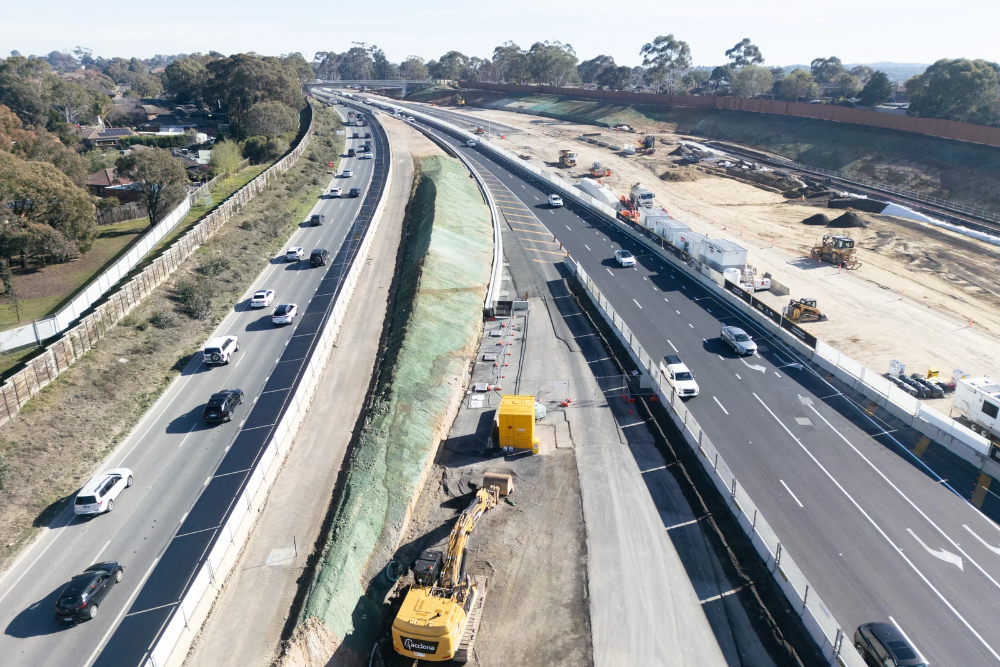
Central Texas contractors face specific constraints: tight urban infill in Austin with limited frontage and adjacent occupied structures, active roadwork and utility relocations along the I-35 corridor, and multiple trades mobilizing in parallel on fast-track schedules. OSHA expects the controlling contractor to coordinate road access, site preparation, and overhead hoisting plans before steel erection begins. Treating those as afterthoughts when the first flatbed pulls in costs real money and creates real hazards.
This article is a field-ready brief for construction professionals who want predictable structural steel delivery and erection on Central Texas jobsites.
Core Concepts: Steel Sequencing, Construction, Erection Sequence, and Erection Plan
Steel sequencing is the strategic plan for how structural steel components are fabricated, shipped, staged, and erected to maintain stability and efficiency throughout the build. Factors influencing steel sequencing include site conditions, labor availability, crane capacity, building type, and the order in which bays must be stabilized. Steel construction sequencing follows a systematic installation order; it is not optional on complex projects.
The erection sequence is the step-by-step order in which braced bays, columns, beams, permanent bracing, and metal decking are installed to keep the frame stable at every stage. Braced bays are erected first for lateral stability, and adjacent bays follow as the frame grows outward. Steel structures must maintain load paths throughout construction; losing that continuity during erection is where collapses start.
An erection plan documents crane locations, pick radii, erection order, temporary and permanent bracing, delivery access routes, and field-assembly areas. AISC’s certification standard requires indicating access for material and equipment delivery, including laydown, shake-out, and field-assembly areas, as well as the erection sequence. 4D models that integrate schedule data with 3D geometry give teams a visual tool to validate that the planned sequence works before steel ships, and they are especially useful on commercial projects where coordination issues can multiply quickly.
Teams must make sequencing decisions before fabrication releases so the shop and trucking can support the field erection plan. On constrained jobsites, the erection plan and erection order are schedule-critical documents, not optional paperwork.
What Must Be Confirmed Before the First Steel Shipment Leaves the Shop
“Ready for delivery” is not the same as “ready for erection.” The gap between those two states is where schedule slippage, costly rework, and safety incidents originate. Site preparation should start weeks before crane arrival, and permits should be confirmed before steel erection begins.
Before the first steel package ships, these items must be locked in:
- Erection sequence and erection plan sign-off. The GC, erector, fabricator, and engineer of record should review and accept the erection sequence. Material staging must align with the erection sequence so the first loads contain what the field needs first.
- Delivery order tied to erection order. Steel members must be fabricated and delivered according to the erection sequence. Break each load into usable sequences the field can act on without sorting through an entire delivery.
- Laydown and shake-out zones confirmed. Spaces must be firm, graded, drained, and close enough to the erection area to avoid double handling.
- Road access and trailer logistics. Adequate access roads inside the jobsite must accommodate 53-foot trailers, including turning radii, overhead clearances, and truck staging areas. Delivery trucks need confirmed holding areas if the site cannot absorb multiple loads at once.
- Crane setup and rigging. Verify crane selection, ground bearing capacity at setup locations, boom configuration, and maximum pick weight and radius against the actual steel package weights and placement distances.
- Safety-critical items on early loads. Agree on permanent bracing locations and place bracing members on the first loads. Identify fall protection anchorage points for the earliest bays. Planned overhead hoisting paths must avoid occupied areas.
- Coordination with other trades. Proper coordination helps avoid conflicts between construction teams during steel installation. Steel sequencing must integrate well with other construction trades working on the same site.
Foundation Readiness and Anchor Bolt Verification
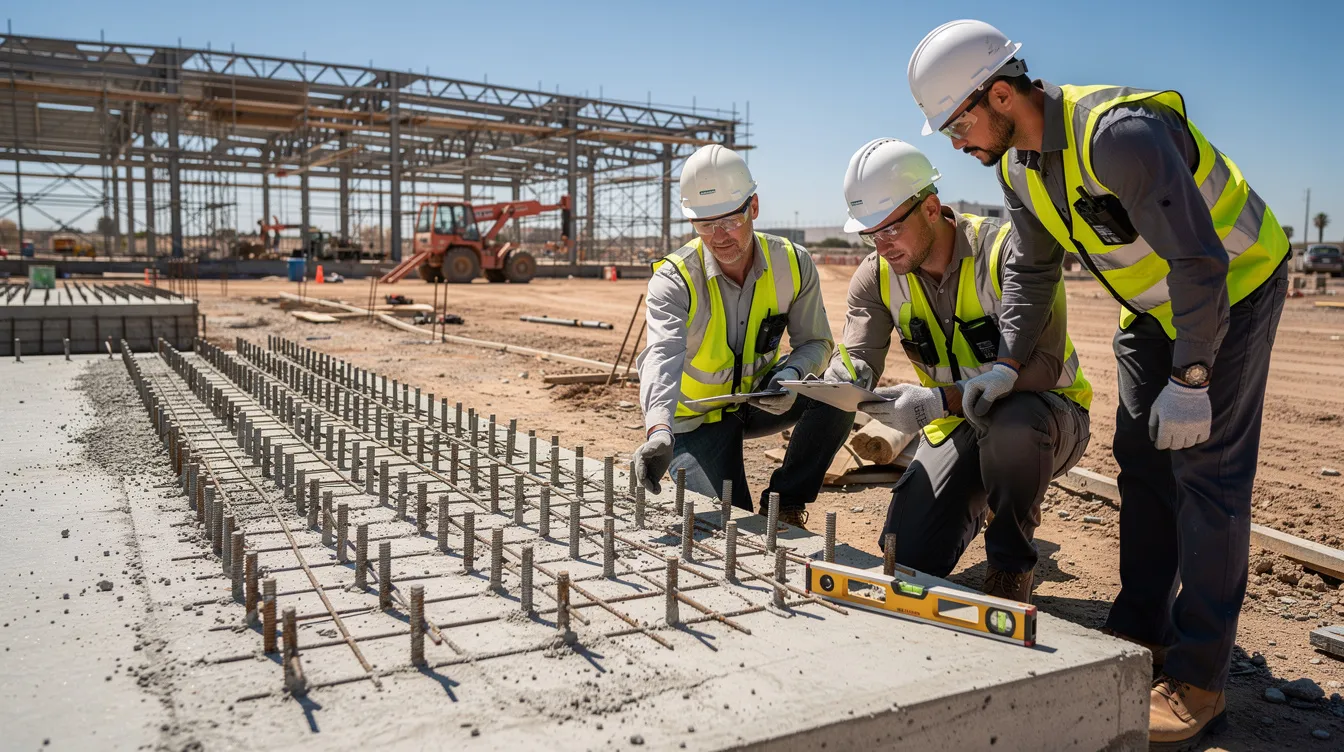
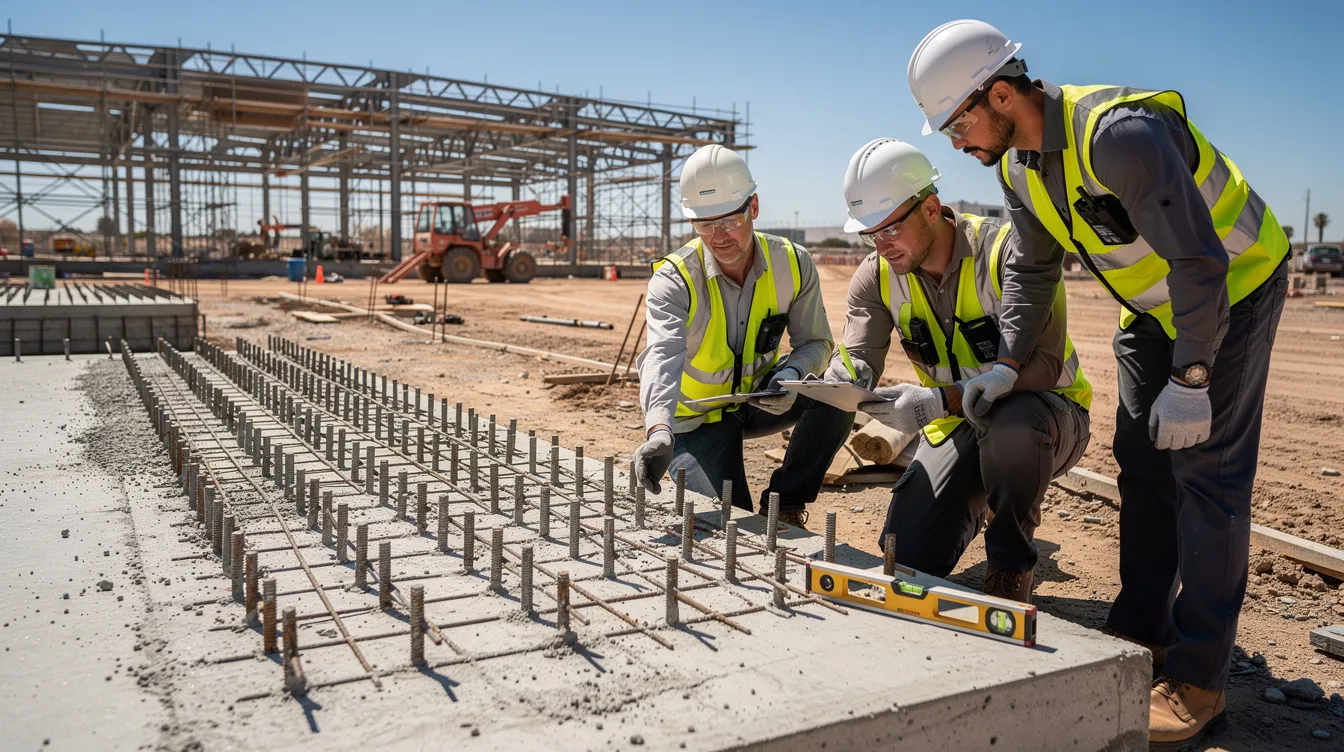
Steel erection sequencing always starts with verified foundations and anchor bolts, not with the first delivered column. A column that cannot seat on its base plate because the anchor rods are off-grid or the concrete has not reached design compressive strength sits on a trailer while the crane burns hourly rental.
Anchor bolt verification means an independent survey of anchor bolt location and elevation against the approved design drawings, plus base plate template checks. OSHA requires written notification that any anchor bolt repairs or modifications have been approved by the Structural Engineer of Record before columns are erected. In one documented school construction project, over 50 percent of anchor rod locations did not match fabricated steel, resulting in three weeks of corrective work and schedule loss.
Stable ground is essential for safe crane operation, and utility locates must be marked before crane operations begin. Practical field checks before releasing steel include:
- Matching piece marks to the foundation grid
- Confirming grout readiness at base plates where required
- Verifying that supporting concrete has reached adequate compressive strength (OSHA sets a threshold of 75 percent of specified minimum or sufficient strength to support erection loads)
- Documenting anchor bolt status with photos and survey data
On fast-track Central Texas projects where foundations and steel fabrication run in parallel, schedule these checks into the critical path, not as a last-minute walkthrough.
Crane Selection, Hoisting Paths, and Site Congestion
Crane selection and site layout must be resolved before steel leaves the fabricator, because they drive feasible erection sequencing and delivery order. Modern cranes can hoist entire building sections into place, but reach and capacity limits affect steel sequencing. Proper crane planning is essential for efficient steel erection.
Core crane selection considerations for a steel erection project:
- Maximum pick weight against the heaviest steel members in the package
- Required hook height and boom configuration for the tallest lifts
- Pick radius at each planned crane position
- Ground bearing capacity at setup locations (cribbing, pads, soil compaction)
- Feasible crane moves as erection progresses across the site
Tight downtown Austin blocks, campus infill projects, and active roadway work near I-35 change where crawler cranes or mobile cranes can sit and how delivery trucks can approach. A Texas building expansion project requiring 2,100 tons and 1,300 separate picks found that switching from two cranes to a single higher-capacity crane, after sequencing analysis, eliminated repositioning inefficiency and kept the schedule intact.
Pre-planning overhead hoisting paths keeps suspended loads from traveling over power lines, active building zones, public right-of-way, or areas across the job site where other trades are working below. Fall protection and exclusion zones around crane operations are part of this conversation: OSHA requires fall protection at heights of 15 feet or higher, and workers must never be positioned beneath suspended loads without engineered protection.
Delivery Order, Laydown Areas, and Permanent Bracing
AISC guidance is direct: deliveries should follow the planned erection sequence and suit available laydown space. Rather than delivering the entire quantity of structural steel members to a jobsite at once, the fabricator should deliver fabricated members in the erection sequence to suit available onsite space. Just-in-Time delivery prevents jobsite congestion in steel erection and keeps laydown areas manageable.
Tying delivery order to erection order means the first loads include braced bay columns, beams, and permanent bracing members needed to lock in lateral stability before starting adjacent bays. Temporary bracing is crucial during early stages of steel erection, but permanent bracing arriving on the same trucks as its associated frames eliminates the gap where temporary measures carry all the lateral load.
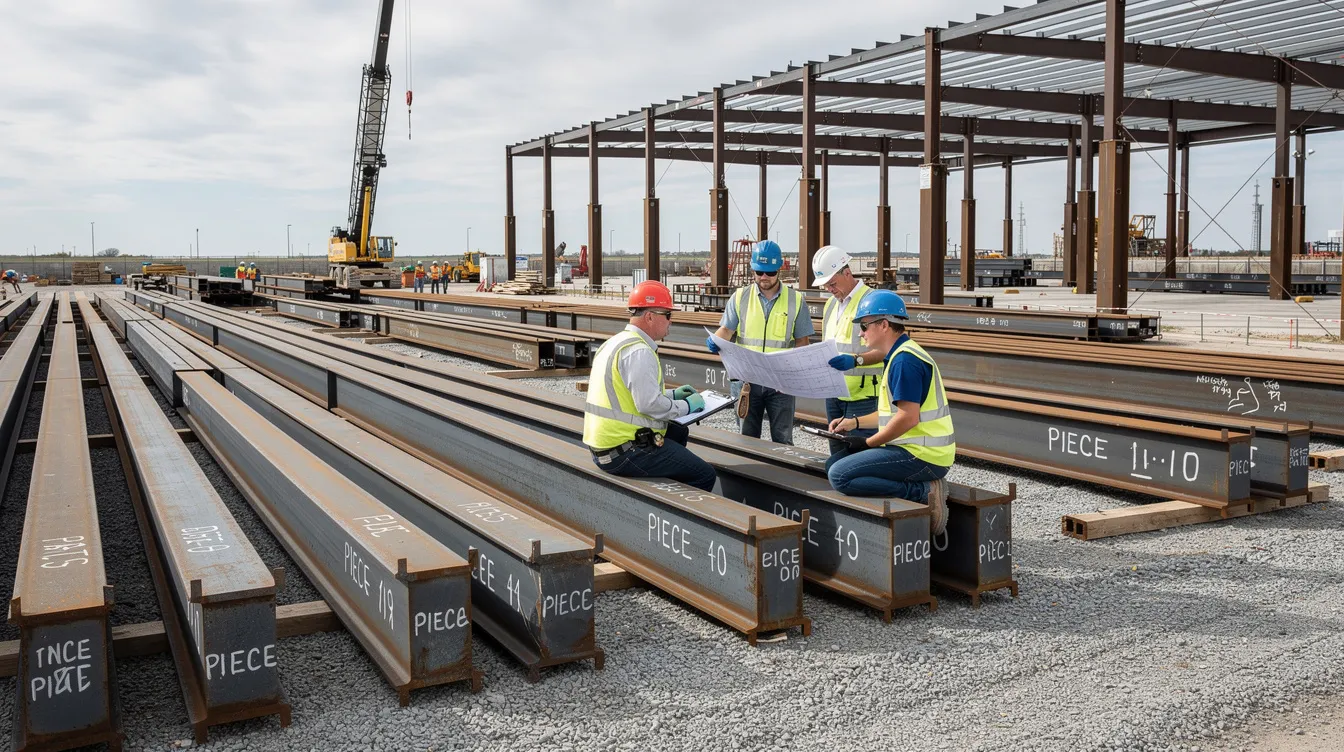
Plan laydown and shake-out areas so steel is staged close to its final location, with clear aisleways and minimal double handling. Poor laydown planning increases site congestion, damages coatings on galvanized steel or painted members, and can block other trades or emergency access routes. On sites with large spans or heavy steel components, laydown planning is even more critical because the pieces are harder to move once placed.
Roles and Responsibilities: GC, Erector, and Fabricator
Successful steel sequencing construction depends on clear ownership of each pre-delivery decision. When three parties each assume another is handling access, sequence, or bracing logistics, the gap shows up as a stalled crane and a frustrated crew. Proper sequencing reduces risk of construction delays and rework, but only when roles are explicit.
Controlling contractor (typically the GC): Responsible for jobsite readiness, adequate access roads, laydown areas, permit status, site layout, coordination with other trades, and overall erection plan approval. OSHA places the site preparation obligation on the controlling contractor.
Steel erector: Develops or validates the site-specific erection plan, identifies crane and rigging needs, confirms erection sequence for lateral stability and temporary stability, and advises on safe lift paths. The erector brings the field experience that determines whether a planned sequence is buildable.
Fabricator: Aligns fabrication releases with erection priorities, bundles steel members into logical loads with associated hardware (bolted connections, clips, shims), manages piece marking and documentation, and communicates any material or lead-time constraints that could force changes to the delivery order.
Tracking productivity and schedule performance is crucial during steel erection. Early pre-planning meetings between these parties increase project delivery visibility and reduce dependence on individual problem-solving in the field. That meeting is where the erection date becomes real rather than aspirational.
Central Texas Conditions That Change the Sequencing Conversation
The same OSHA regulations and AISC standards apply everywhere in the United States. What changes in Greater Austin and the I-35 corridor is how tightly the windows close.
Dense urban sites in Austin, Round Rock, and San Marcos often have limited frontage, adjacent occupied properties, and municipal restrictions on delivery hours. These constraints push contractors toward smaller, more frequent deliveries and off-peak trucking, which requires tighter alignment between fabrication release and erection order. Steel structures withstand extreme weather better than most materials, but ignoring wind loads during erection can lead to dangerous instability. Central Texas afternoon thunderstorms and high winds require planning delivery and erection windows around weather forecasts, especially when the frame is partially braced.
Corridor congestion along I-35, active utility relocations, and regional growth pressure further compress schedules. Central Texas market intelligence shows strong demand for steel-intensive commercial buildings, industrial projects, data center construction, and pre-engineered steel buildings that support fast expansion, all building types that depend on disciplined erection sequencing to hit aggressive timelines. Sites with uneven terrain or limited access may require different equipment and special handling than open suburban parcels.
These regional factors make disciplined erection sequencing and delivery order more valuable on every steel erection project, even though the underlying requirements remain the same.
Pre-Delivery Steel Sequencing Checklist for Superintendents
This checklist is designed for GCs and field leaders to review before authorizing the first steel shipment. Building Information Modeling (BIM) helps plan steel sequencing effectively; where available, BIM reduces field RFIs by 40 percent in steel erection and should be used to validate the plan before release. Drone inspections cut inspection time by about 35 percent and can efficiently verify site readiness and anchor bolt layout.
| Category | Confirm Before Steel Ships |
|---|---|
| Drawings and Plan | Erection sequence reviewed and accepted by GC, erector, fabricator, and engineer of record. Site-specific erection plan complete with crane locations, pick weights, and rigging. |
| Site Readiness | Anchor bolt verification completed and documented. Laydown zones marked, firm, and drained. Confirmed level ground at crane setup locations. Utility locates marked. |
| Access and Traffic | Internal haul roads compacted and clear for delivery trucks. Turning radii verified for trailers. Overhead clearances checked. Truck staging or holding areas identified. Clear access routes established. |
| Crane and Rigging | Crane selection finalized against actual steel package weights and dimensions. Ground bearing verified. Boom configuration and hook height confirmed. Critical lifts identified. |
| Material Sequence | First loads contain braced bay members and permanent bracing hardware. Loose materials (bolts, clips, base plates, shims) packaged with their corresponding members. Transmit clear piece marks and shipping lists to field teams. |
| Safety | Identified a fall protection anchorage strategy for early bays. Planned exclusion zones for areas beneath overhead hoisting paths. Rigorous inspections scheduled for rigging gear. Quality control must be part of each phase of steel installation. |
| Communication | Pre-delivery coordination meeting held. Action list circulated. Agreed on channels for reporting sequence changes or missing pieces. |
Regular inspections are mandated to prevent equipment failures during erection. Incorporate this checklist into internal pre-task planning and safety training to ensure safety on every steel erection project.
What to Verify After Delivery but Before Erection Starts
Material on the ground is not a green light to begin setting steel. Safety regulations emphasize maintaining structural stability throughout erection, and OSHA 29 CFR 1926 Subpart R governs steel erection safety standards for every step from site preparation through final inspection.
Before erection begins, verify:
- Member counts and piece marks match shipping lists and erection drawings
- Coatings and connection plates are visually inspected for transit damage
- Missing or damaged parts are flagged immediately, with the fabricator and erector notified
- The first planned braced bay and its associated members are accessible, not buried under later-sequence pieces
- Temporary bracing is on hand for the earliest columns and beams before they leave the ground
- Fall protection systems and anchor points are ready for the first lifts
- Crane setup matches the approved plan (location, pad, configuration)
- Exclusion zones are established under all planned lift paths to keep personnel clear of suspended loads
Crews should also confirm alignment checks account for thermal expansion before setting the first columns and beams, especially in hot weather.
Discovering a mismatch after unloading creates avoidable handling and schedule risk. Document discrepancies immediately so the fabricator and erector can resolve them before the crane burns time waiting for replacement pieces. The structural design intent depends on every member reaching the right place in the right order.
Protecting Schedule and Safety Through Better Steel Sequencing
Schedule protection and safety in steel erection depend on decisions made weeks before the first column stands. Every rehandled beam and every idle crane hour traces back to a sequencing decision that could have been resolved in a coordination meeting. Steel is 100 percent recyclable, enhancing sustainability in construction, and steel’s versatility allows for complex architectural designs when paired with high-performance insulation in energy-efficient building systems. Those advantages only pay off when the frame goes up on schedule.
Steel sequencing construction is not a fabricator issue alone within the construction industry. It is a shared responsibility across design, GC, erector, and trucking. Disciplined erection sequencing, anchor bolt verification, permanent bracing planning, and realistic crane and delivery planning prevent rehandling, site congestion, and unsafe improvisation on construction sites. Careful planning across all parties keeps complex projects on track.
For your next structural steel installation in Greater Austin or along the I-35 corridor, schedule a pre-delivery coordination meeting using the checklist above. Assign clear roles, walk the site access and laydown with the erector and fabricator present, and resolve crane and sequence questions before the first truck is loaded. ABC Central Texas offers safety training and workforce development resources that help superintendents and project managers translate these sequencing decisions into safer, faster project delivery.
Frequently Asked Questions
These questions address specific sequencing decisions that Central Texas contractors commonly face when planning structural steel delivery and erection.
What is the difference between an erection sequence and a delivery sequence?
The erection sequence is the planned order in which the frame is built for structural integrity and lateral stability. The delivery sequence is the order in which trucks arrive and are unloaded at the jobsite. Both must be aligned, but delivery logistics also account for legal load limits, route constraints, and how pieces are loaded on each trailer. Contractors should review these two sequences side by side during pre-planning to catch mismatches before the first load ships.
How early should I involve my steel fabricator in sequencing discussions?
Involve the fabricator once schematic framing and grid layouts are reasonably stable, well before final shop drawings. Earlier input helps align piece marking, fabrication releases, and load building with the intended erection order. On complex projects in Central Texas, that early involvement often determines whether the steel package arrives in a buildable order or requires field sorting. A qualified person from the fabricator’s team should participate in pre-construction sequencing meetings.
What can I do on a very tight urban site with almost no laydown area?
Use smaller, more frequent deliveries timed to the crane’s erection pace. Just-in-Time shipping tied closely to the erection plan keeps site congestion manageable. Pre-negotiate delivery windows with the city and neighboring properties, especially in downtown Austin or campus environments. Assign spotters for every truck arrival and maintain strict control of site access so that steel arrives, unloads, and goes directly to the hook.
How does steel sequencing affect fall protection planning?
The order in which bays and levels are erected determines where lifelines, guardrails, and other fall protection can be installed first. Integrating fall protection anchorage locations into the erection plan ensures tie-off options exist as soon as workers move to new areas. Steel erection is 30 to 50 percent faster than concrete methods, which means fall protection must be installed at the same pace or it falls behind. ABC Central Texas safety training helps supervisors translate sequencing decisions into practical fall protection setups on active steel erection projects.
Who should lead the pre-delivery coordination meeting on a typical commercial project?
The GC’s project manager or superintendent usually chairs the meeting, with the erector, fabricator, and key subcontractors affected by early steel work participating. A basic agenda covers: review the erection sequence, confirm anchor bolt status and concrete placement readiness, walk access paths and laydown with the team, validate crane locations, and agree on communication channels for any sequence changes. Document decisions and circulate a short action list to keep roles clear as project timelines tighten.