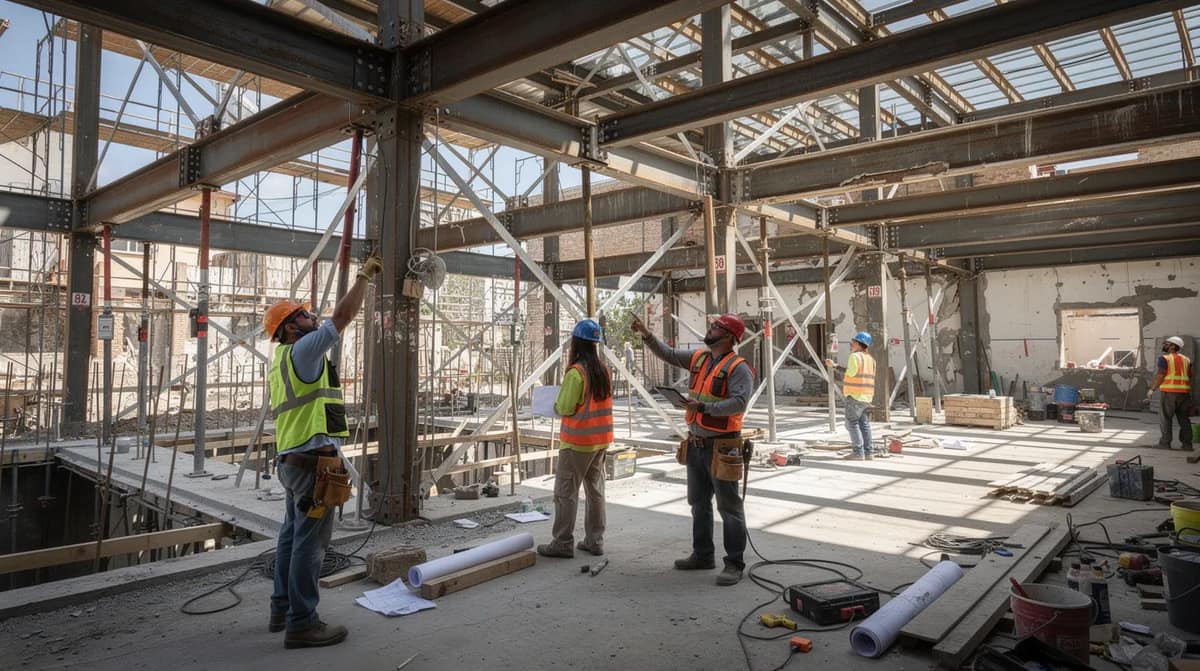
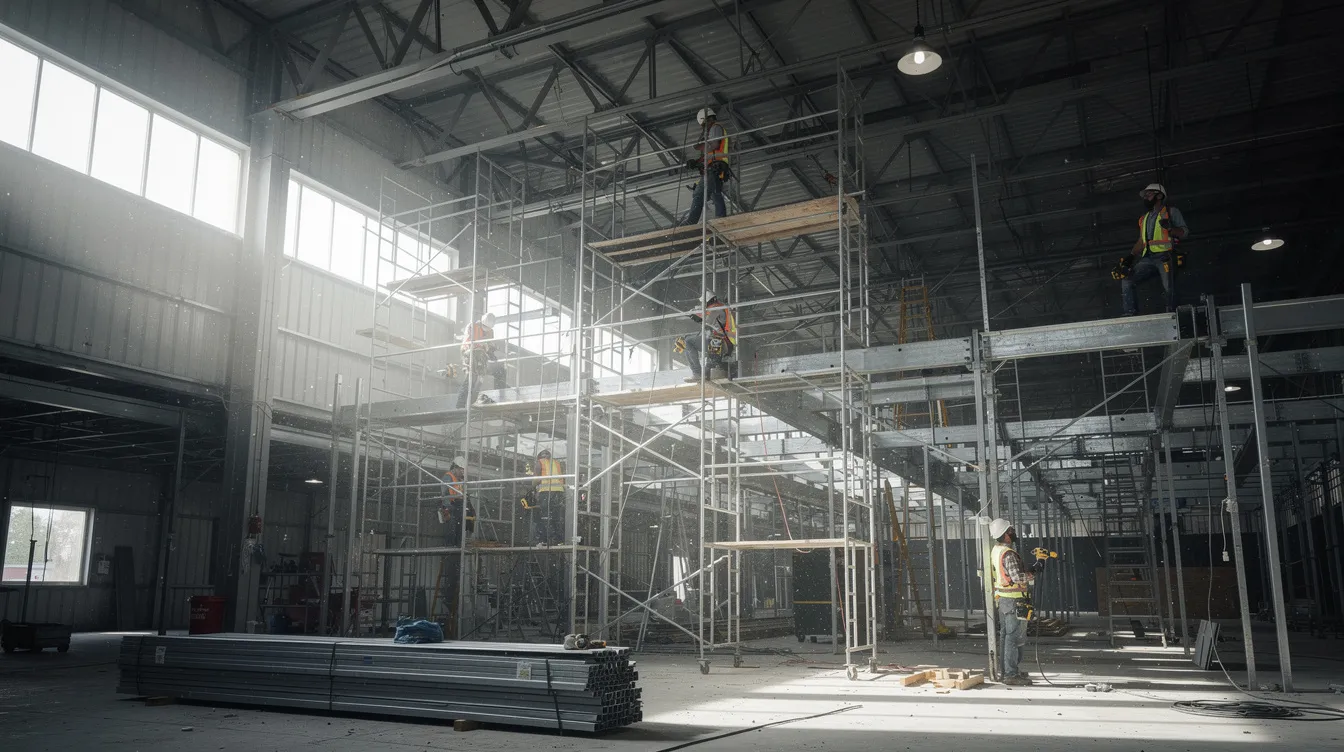

Large, complex renovations are rewriting the playbook for how Central Texas contractors plan, sequence, and execute work on occupied and historically sensitive sites. For merit shop construction firms, the lesson is simple: success on these projects depends less on throwing more labor at the schedule and more on disciplined coordination, flexible field leadership, and safety planning that adapts when conditions change.
Key Takeaways
- Massive renovation projects show how much execution depends on early planning, trade coordination, and the ability to adjust when existing conditions do not match the drawings.
- For merit shop construction firms in Central Texas, occupied and phased renovations reward strong sequencing, clear communication, and field leaders who can solve problems quickly.
- In the Austin-to-Waco corridor, where backlog is rising, costs are up 6.2% year to date, and 52% of contractors cite the workforce gap as their top challenge, better renovation execution is as much a margin-protection issue as an operations issue.
- ABC Central Texas members can turn these lessons into action through apprenticeship and safety training built for complex commercial work.
Merit Shop Construction and Massive Renovations: Why This Matters Now
Merit shop construction centers on open competition and performance-based opportunity. ABC reports that nonunion workers comprise 89.7% of the U.S. construction industry workforce. For Central Texas contractors, that matters because complex renovations often require teams that can respond quickly to changing site conditions, specialized scopes, and phased work in active facilities.
A recent example is the rehabilitation of Hangar One at Moffett Field in California. NASA describes the structure as 1,133 feet long, 308 feet wide, and 198 feet high. The project involved stripping the building to its steel frame, performing years of remediation and restoration work, reinforcing structural elements, and integrating modern building systems while preserving a historic structure. That is an unusually large case study, but the underlying challenges are familiar: unknown conditions, constrained access, sensitive sequencing, safety exposure, and owner expectations that the work be done carefully and predictably.
Central Texas contractors do not need to be working on a landmark airship hangar to recognize the parallels. Similar pressures show up on hospital renovations, campus modernization projects, industrial retrofits, adaptive reuse work, and phased tenant improvements across Greater Austin, Round Rock, San Marcos, Waco, and the I-35 corridor.
Why this matters now:
- Backlogs are rising even as operating conditions tighten. In ABC Central Texas’ 2026 market outlook, 51% of surveyed contractors reported rising backlog.
- Cost pressure is real. The same outlook notes construction costs are up 6.2% year to date in 2026.
- The labor market remains constrained. That outlook also reports 52% of contractors cite the workforce gap as their top challenge.
- Complex work on occupied facilities and existing buildings leaves less room for sequencing errors, coordination failures, or slow field decisions.
In that environment, merit shop construction firms gain an advantage when they can build teams around qualifications, move quickly, and keep decision-making close to the field. That alone doesn’t guarantee better outcomes. It becomes an advantage only when firms pair workforce flexibility with disciplined planning and execution.
What Massive Renovations Reveal About Field Leadership
Big renovations expose weaknesses fast. Existing structures create surprises. Access changes by phase. Demolition, remediation, and installation often overlap. Owners and occupants expect communication long before they care about excuses. That is why field leadership becomes so visible during renovations.
On a project like Hangar One, crews had to work through structural repairs, specialty restoration work, and major coordination demands at scale. The broader lesson for Central Texas contractors is not the novelty of that building. It is that renovation success depends on superintendents, foremen, and project managers who can anticipate conflicts early and reset the plan without losing control of safety or schedule.
Core responsibilities of field leaders on complex renovation jobs include:
- Managing demolition, remediation, and new installation across shared work areas
- Coordinating with owners, design teams, inspectors, and subcontractors as conditions evolve
- Protecting existing building components while integrating new systems
- Keeping crews productive when unforeseen conditions disrupt the original sequence
Strong field leaders do more than react. They make the work visible. That usually means focused daily huddles, written phase plans, active RFI management, and clear communication about the next 24 to 72 hours of work. On occupied sites, it also means constant coordination with owner representatives on shutdowns, access, noise, egress, and life-safety impacts.
For merit shop construction firms, this is where performance-based advancement should show up in practice. The firms that develop leaders who can manage uncertainty in the field will be better positioned to compete for complex renovation work across Central Texas.

Sequencing as the Hidden Safety System on Occupied Renovation Jobs
On renovation work, sequencing is more than a schedule tool. It is a safety control. The order of work affects fall exposure, overhead hazards, congestion, utility risk, dust migration, occupant protection, and emergency egress.
When sequencing breaks down, safety usually degrades before the schedule does. Too many trades in one zone, unfinished demolition ahead of install crews, or poorly timed shutdowns can create rework, delays, and preventable incidents.
Key elements of safe sequencing for occupied renovations include:
- Separate demolition and installation zones with barriers, signage, and controlled access.
- Control overhead and adjacent work interfaces so one trade is not exposed to another trade’s hazards.
- Coordinate tie-ins to existing systems with documented shutdown windows and owner communication.
- Shift disruptive work when needed to reduce impact on occupants and lower conflict on site.
- Use look-ahead schedules and constraint logs to identify access, inspection, material, or utility issues before they hit production.
A simple sequencing adjustment, such as moving core drilling or overhead work to an off-hours window, can reduce worker exposure, protect nearby finishes, and limit disruption for building occupants. On occupied renovation work, those small decisions often separate controlled jobs from chaotic ones.
Merit shop construction can support this kind of responsiveness because firms have latitude to organize crews and scopes around actual project conditions. But that flexibility only helps when the team uses it deliberately.
Common Sequencing Failures on Complex Projects and How to Avoid Them
Most troubled renovation jobs do not fail because of one dramatic mistake. More often, they accumulate small sequencing errors that turn into higher cost and safety problems.
| Failure | Prevention |
|---|---|
| Starting finish work around unverified utilities | Verify utilities before releasing finish scopes and confirm hidden conditions during preconstruction and early demolition |
| Allowing too many trades into a constrained area | Use access maps, zone plans, and daily coordination to limit occupancy to critical-path work |
| Underestimating inspection or commissioning durations | Build realistic durations into look-ahead schedules and confirm inspector or authority availability early |
| Ignoring material lead-time shifts | Maintain a live procurement log and review long-lead items regularly with the project team |
| Failing to coordinate with facility operations on access, shutdowns, or security | Assign a dedicated owner liaison and document access expectations by phase |
These are manageable problems, but only if contractors treat sequencing as an operating discipline rather than a scheduling formality.
Safety Lessons for Central Texas Contractors from Massive Renovations
Renovation and adaptive reuse work often carries a different safety profile than ground-up construction. Hazards shift by phase. Existing materials may create environmental exposure. Occupants or the public may be closer to the work. Temporary conditions can be harder to read than new construction layouts.
Practical controls Central Texas contractors can apply now include:
- Access control and wayfinding: Separate construction zones from occupied areas with clear barriers, signage, and monitored entry points.
- Fall protection: In construction, OSHA generally requires fall protection at heights of 6 feet or more. On renovation sites, reassess anchor points, edges, and walking-working surfaces as phases change.
- Housekeeping in demolition zones: Daily cleanup standards reduce trip hazards, fire load, and interference between scopes.
- Hot-work coordination: Older buildings can contain concealed combustibles and unpredictable conditions, so permit controls and fire watch planning matter.
- Egress review: Emergency routes can shift repeatedly during phased work and should be reviewed at the start of each new phase.
Central Texas heat adds another layer, especially on partially enclosed buildings, re-roofing projects, and structures with limited airflow. Sequencing heat-exposed tasks for cooler hours, planning hydration and recovery time, and coordinating work intensity by phase are practical ways to reduce exposure without sacrificing production.
Contractors looking to strengthen these systems can build on chapter resources such as construction safety management guidance and broader safety programming through ABC Central Texas.
Workforce and Apprenticeship Still Matter on Complex Renovation Work
Large renovations reward experience, but they also require training systems that can produce capable craft workers and future field leaders. The work often combines demolition awareness, hazard recognition, layout accuracy, specialty installation, and constant coordination with other trades.
That is one reason structured workforce development matters so much in merit shop construction. Registered apprenticeship gives contractors a repeatable way to build both technical skill and safety habits over time. For firms taking on more complex or phased work, that training pipeline is not separate from project performance. It supports it directly.
ABC Central Texas operates U.S. Department of Labor-registered apprenticeship programs in seven trades: Carpentry, Concrete, Electrical, HVAC, Pipefitting, Plumbing, and Sheet Metal. For contractors trying to build stronger renovation teams in a tight labor market, those programs create a practical path to grow internal capability.
Treat complex jobs as leadership-development environments. Every phased renovation gives foremen, assistant superintendents, and craft professionals a chance to build the judgment required for higher-responsibility roles.
Project Controls, Schedule Protection, and Profitability on Phased Jobs
Renovation margins are vulnerable when unknown conditions, procurement issues, or owner-driven constraints are not translated into active project controls. On phased work, profit protection starts with visibility.
Effective controls usually include:
- Detailed phasing plans that assign work by area, time, and operational constraint
- Constraint logs tracking inspections, shutdowns, submittals, long-lead items, and access restrictions
- Weekly look-ahead reviews involving field leadership and key trade partners
- Reality-capture and model-based verification tools when they help confirm actual conditions before installation
For firms interested in the technology side of schedule protection, ABC Central Texas has also covered how data tools support project controls in construction.
Practical profitability habits on occupied renovation work include:
- Lock in long-lead materials early when specialty components are involved.
- Do not underprice phasing complexity just to win the bid.
- Use production data from comparable work where possible instead of treating every renovation as a greenfield schedule.
- Treat owner shutdown windows and operational restrictions as hard schedule constraints.
That discipline matters in Central Texas, where full pipelines do not automatically produce healthy margins. The regional market remains active, but cost pressure and labor scarcity make execution mistakes more expensive.
How Open Competition Relates to Renovation Delivery
Open competition matters in technically demanding renovation work because owners benefit when qualified contractors can compete on experience, safety, and approach. ABC Central Texas has consistently tied that principle to merit shop advocacy and opposition to government-mandated project labor agreements that can restrict bidder access.
For complex renovations, the practical argument is straightforward: owners need the broadest possible access to firms with the right capabilities. Historic restoration, occupied healthcare work, industrial retrofits, and phased institutional renovations all depend on specialized execution. The more effectively owners can evaluate qualified teams, the better their chances of finding the right fit.
Contractors interested in the broader policy case can explore ABC Central Texas’ merit shop advocacy resources.
Central Texas Playbook: Turning Mega-Renovation Lessons into Daily Practice
The lesson from projects like Hangar One is not that every contractor needs a landmark restoration on its resume. It is that the same execution disciplines scale down to everyday renovation work across Central Texas.
Occupied-Renovation Readiness Checklist
- [ ] Create a standard sequencing template for occupied or phased renovation work
- [ ] Require written phase maps for each area before mobilization
- [ ] Hold recurring owner-coordination meetings with documented action items
- [ ] Integrate safety planning into preconstruction and phasing, not just site startup
- [ ] Use a live constraint log for inspections, shutdowns, access, and procurement issues
- [ ] Assign responsibility for egress and life-safety route management by phase
- [ ] Run short look-ahead huddles with all active trades on constrained jobs
Role-Specific Actions for the Next 90 Days
| Role | One Concrete Improvement |
|---|---|
| Executives | Review recent renovation bids and identify where phasing or unknown-condition risk was underpriced |
| Project Managers | Start a weekly constraint-log review on every active occupied project |
| Superintendents | Run a daily 15-minute look-ahead huddle focused on the next 48 hours of work and conflict points |
| Safety Professionals | Reassess fall protection, access control, and egress at the start of each new phase |
These steps are simple, but they are not minor. They are often the difference between a renovation job that stays controlled and one that drifts into rework, conflict, and margin loss.
For Central Texas merit shop construction firms, the next step is practical: strengthen the field systems that complex renovations demand, then invest in the training pipeline behind them. ABC Central Texas can help through apprenticeship and safety education built around real construction operations in this region.
Contact ABC Central Texas to explore safety training and apprenticeship programs that can help your team take on more complex renovation work with confidence.

FAQ: Merit Shop Construction and Complex Renovations
Below are answers to common questions about this topic.
How does merit shop construction support occupied renovation work?
Merit shop construction gives contractors flexibility to assemble teams based on qualifications and project needs. For occupied renovation work, that can help firms respond faster to changing conditions, phased schedules, and specialized scopes. The advantage still depends on strong planning and field leadership.
What types of projects in Central Texas are most likely to require complex phasing?
Common examples include hospital renovations, university modernization projects, industrial retrofits, and occupied commercial interiors. In a growing market like Greater Austin and the I-35 corridor, many owners need to update buildings without fully taking them offline.
Why is sequencing so important on renovation jobs?
Sequencing controls when trades enter a space, when utilities are interrupted, how occupants are protected, and whether one activity creates hazards for another. On phased work, it functions as both a schedule strategy and a safety system.
How can smaller contractors compete for larger renovation work without overextending?
They can pursue projects that match their current strengths, partner with experienced specialty firms, tighten preconstruction planning, and build internal capability through training. Smaller firms do not need to chase every large renovation opportunity to benefit from better occupied-project discipline.
Where can contractors find Central Texas training and support for this kind of work?
ABC Central Texas offers registered apprenticeship and safety training that help contractors build stronger crews and field leaders for technically demanding jobs.