

Key Takeaways
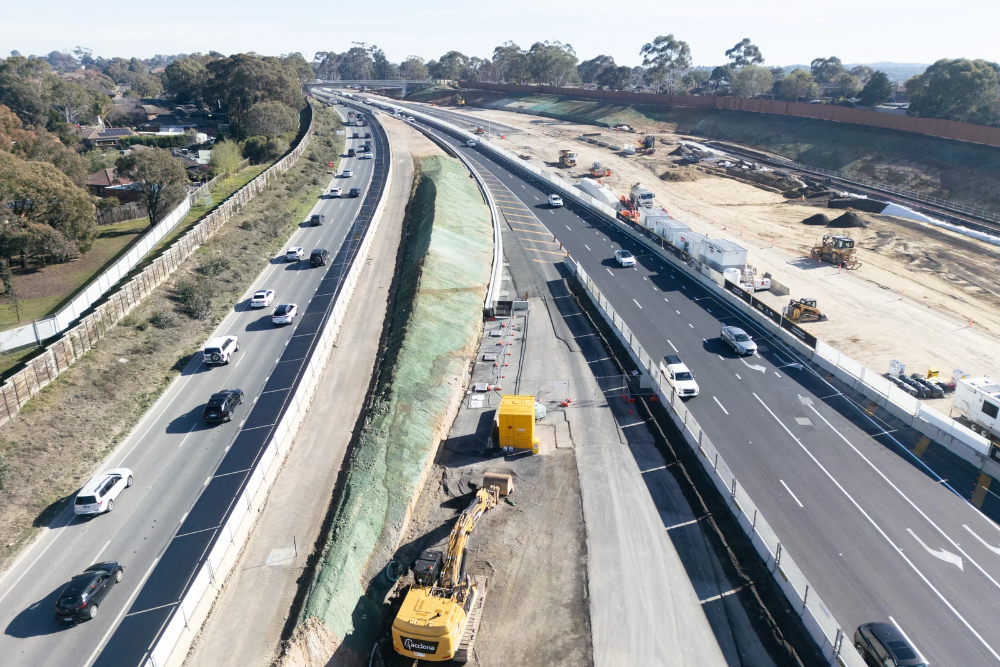
- Federal construction spending data for September 2026 confirms that nonresidential spending is still climbing, with data centers driving an outsized share of the growth. For contractors in the Austin data center construction market, this is not background noise; it is the signal shaping bids, schedules, and hiring decisions right now.
- Central Texas, especially along the I-35 corridor from San Antonio through Austin and Round Rock to San Marcos and Georgetown, is already absorbing this demand. The Austin-San Antonio corridor has become a primary Tier-1 data center market, and construction in the Austin market is expanding rapidly due to AI and cloud computing demand.
- Stronger spending improves backlog on paper but can tempt contractors into thin-margin, schedule-intense jobs that do not fit their labor capacity or risk tolerance. Volume is not the same as quality.
- Trades tied to mission-critical work, especially electrical, mechanical, concrete, and civil, will feel labor competition and wage pressure first as projects compete for the same finite workforce.
- This article gives Central Texas contractors a practical checklist for evaluating bids, managing project timelines, and aligning workforce planning to the current data center construction cycle.
September’s Nonresidential Spending Signal: Why It Matters in Central Texas Now
Federal construction spending data for September 2026 showed another monthly increase in U.S. nonresidential construction, with data centers playing an outsized role. Nonresidential construction spending measures the value of work put in place each month on commercial, industrial, and institutional projects, not homebuilding. September’s seasonally adjusted annual rate reached roughly $1.325 trillion, marking a sixth consecutive monthly increase. Within that gain, private nonresidential spending grew about 1.1%, while public construction edged down 0.1%. The critical detail: data center spending surged 8.6% in September alone.
This national uptick came as the Construction Backlog Indicator climbed to 8.7 months in September, with data center strength cited as the primary driver. That backlog increase reinforces that demand is not a one-month blip. Industry forecasts project that data centers will require $6.7 trillion in investment by 2030, global data center capacity might triple by 2030, data center investments will reach $3 trillion through 2030, and nearly 100GW of new data center capacity will be added globally by 2030. Central Texas is not an exception to these forces, which are reshaping communities across Texas and the country. Austin, San Antonio, and the surrounding counties are active participants in the national data center build-out, and contractors across the region need to understand what sustained spending means for their bids and backlog today.
How Data Centers Are Shaping the Austin Data Center Construction Market
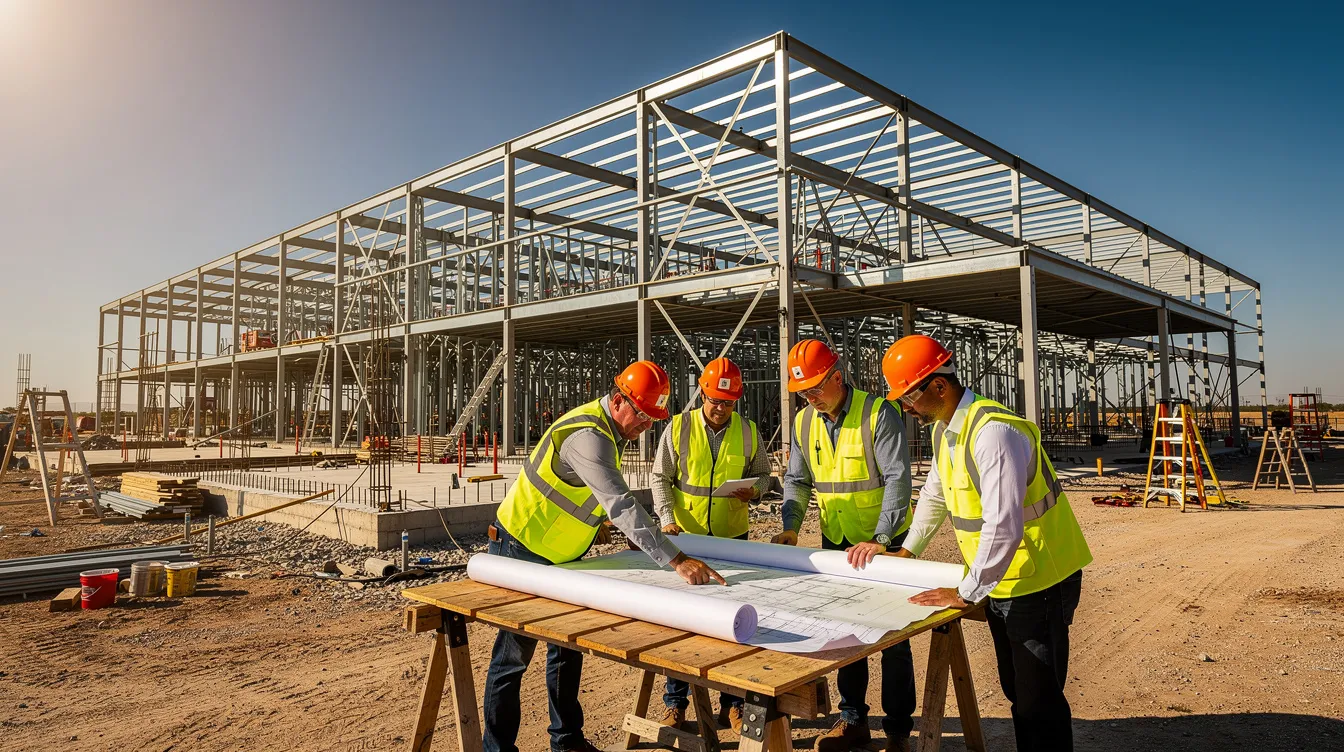
Hyperscale, colocation, and enterprise data centers have become the fastest-growing segment of nonresidential work. AI workloads will account for 70% of data center expansion, and as companies shift from model training to deployment, Deloitte projects inference could represent about two-thirds of AI compute in 2026; data center power consumption is projected to rise by 165% by 2030. Austin is becoming a major hub for hyperscale and AI infrastructure, and the combined regional data center market is valued at roughly 1.5 GW as of 2025. AI demand is fueling a wave of multi-billion-dollar campus developments in Texas alone, requiring both virtual capacity and physical infrastructure.
This wave is layered on top of existing Central Texas drivers: tech campuses, logistics, higher education, and public infrastructure along I-35. Modern facilities are building multi-hall shells for higher rack power densities, and AI workloads are driving a growing shift toward liquid cooling in data centers. Active and planned clusters span multiple counties:
- Travis County (Austin, Pflugerville): operational sites and infill campuses
- Williamson County (Round Rock, Georgetown, Hutto, Taylor): multi-building campuses scaling from tens of megawatts to 500 MW or more
- Caldwell and Hays Counties (Maxwell, Uhland, San Marcos): emerging corridors with large technology parks proposing multi-gigawatt power capacity
- Bexar County (San Antonio): mature hyperscale and colocation hub
Large sites in Round Rock and Hutto illustrate the shift from single-building regular data centers to multi-building campuses that anchor entire regional economies.
County-by-County Snapshot: Where Data Center Construction Is Concentrated
Central Texas data center construction is not just an “Austin problem.” It stretches across Bexar, Guadalupe, Hays, Caldwell, Travis, and Williamson Counties, with roughly 34 data center proposals projected across the I-35 corridor and combined proposed capacity of approximately 10,009.5 MW. In the broader Texas picture, Dallas is also a major data center market, which helps explain why labor, suppliers, and capital are competing statewide rather than only within Central Texas.
Bexar County (San Antonio) is a mature hub with multiple hyperscale and colocation facilities already under construction or partially operational. Major developers including AWS and Microsoft have established campus-scale sites here, and the city continues to attract new supply from national and international operators.
North and east of Austin, Williamson County projects in Round Rock, Georgetown, Hutto, and Taylor are driving some of the region’s largest new facilities. Developers are building or planning campuses that represent hundreds of megawatts of critical IT capacity. Austin’s construction market saw 463.5 MW under construction in H1 2024, and the pace has only accelerated. Vacancy rates across North American markets remain near 1%, keeping pressure on developers to deliver quickly.
Emerging corridors in Caldwell and Hays Counties, including sites near Uhland and Maxwell, are proposing multi-gigawatt power capacity. Travis County itself has fewer greenfield mega-campuses, but its operational sites and existing facilities still shape local labor demand, subcontractor availability, and construction costs. Substantial construction opportunities exist in electrical infrastructure and advanced cooling systems across all of these markets. For contractors, this clustering means intensifying competition for the same resources, equipment, and personnel across a wide geographic belt.
Construction Costs and Project Timelines in the Data Center Cycle
According to industry experts, data center construction costs have been rising at roughly a 7% compound annual growth rate until 2025, and high-spec mission-critical requirements push the cost per megawatt and per square foot well above typical commercial work. In central Texas, land, materials, and labor inflation, plus long-lead electrical and cooling equipment, are stretching project timelines and making cost forecasting harder. Data center project financing remains highly liquid despite macroeconomic shifts, which keeps new projects entering the construction pipeline even as costs climb.
Power delivery and utility coordination around Austin, Round Rock, San Marcos, and San Antonio increasingly define project timelines, often more than vertical construction itself. ERCOT faces unprecedented electricity demand forecasts, creating delivery uncertainty that directly affects schedules. Power availability is a significant constraint for data center projects in Texas, and developers are increasingly exploring on-site power generation and renewable strategies to reduce their dependence on grid delivery alone. Texas energy prices are six times lower than California’s, and Texas has a deregulated energy market benefiting data centers, but grid capacity is not infinite.
Key cost and schedule pressure points contractors must plan for:
- Long-lead switchgear, transformers, and power distribution components
- Specialty mechanical and cooling systems (including liquid cooling for AI workloads)
- Utility interconnection and substation construction or upgrades
- Water supply infrastructure (rapid growth of data centers is raising water consumption concerns in Texas, and water availability is becoming increasingly important for cooling)
- Commissioning sequences that extend well beyond vertical construction completion
Contractors must build higher contingencies and more conservative schedules into data center bids. Committing to unrealistic dates just to win the job leads to margin erosion.
Backlog Quality, Not Just Backlog Volume
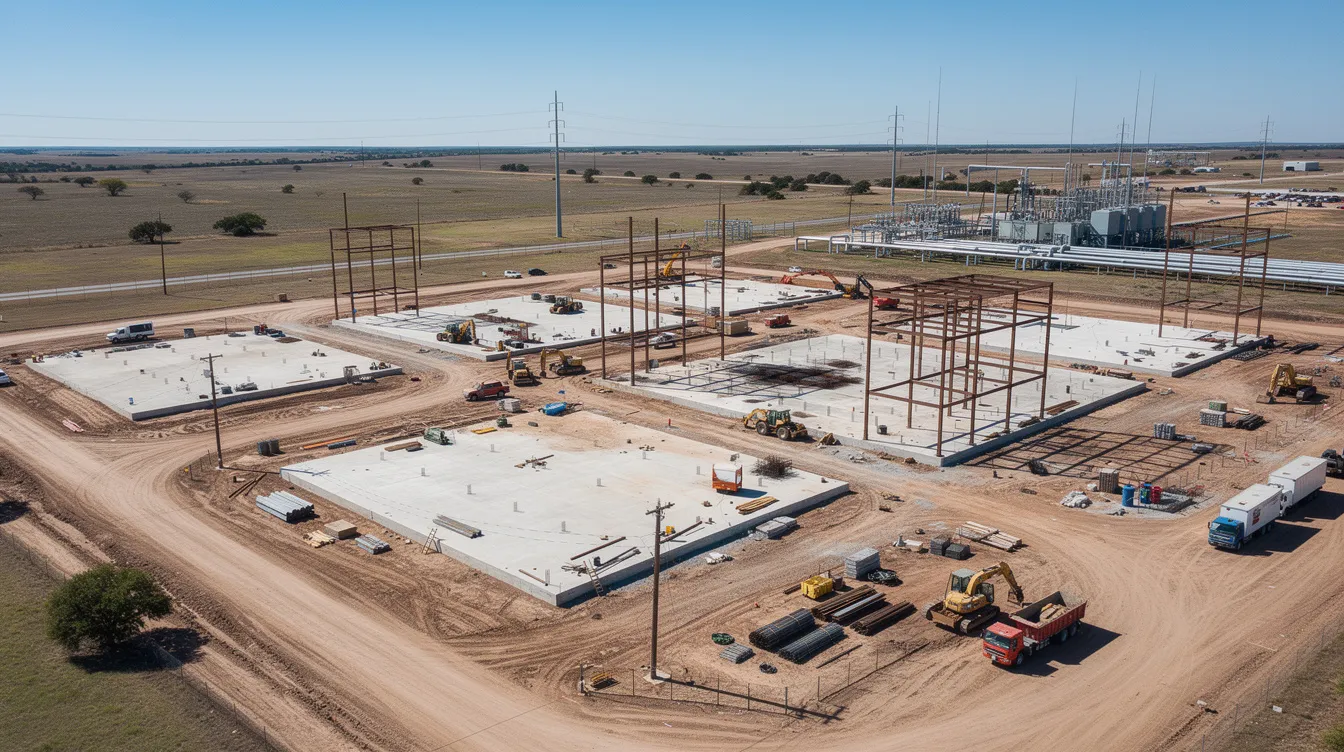
The September backlog data shows contractors nationally holding more months of work, much of it connected to data centers and large power projects. That looks healthy on a dashboard. But a strong backlog in the Austin data center construction market can hide risk if too many contracts share the same owner profile, power-delivery dependencies, or aggressive schedules.
Central Texas contractors should review their backlog by segment and geography. Concentration in data center work around Williamson, Caldwell, Hays, and Bexar Counties may look like growth, but it also means exposure to correlated risks: if one utility corridor stalls or one owner delays, multiple projects can slip simultaneously. Small contractors face pricing mistakes more acutely than larger firms. Payment delays impact small contractors more than larger competitors. Small firms compete hard for subcontractor attention and supervisory bandwidth.
A simple internal backlog quality screen:
- Margin health on each committed project
- Payment terms and escalation protections
- Schedule realism relative to known utility constraints
- Dependence on the same critical subcontractors across multiple jobs
- Overall exposure to one or two clients or one submarket
- Cash-flow alignment with your firm’s actual financing capacity
Readers looking for a deeper analysis of the backlog trend should review the chapter’s September backlog increase and data center strength resource.
Labor Competition: Where Pressure Shows Up First
Continued nonresidential spending and a national construction unemployment rate of just 3.5% in September (with all 50 states below 10%) mean that labor tightness is not easing. In fast-growing regions like central Texas, the pressure is amplified. Texas data centers are projected to create 100,000 jobs, and data centers already contribute over $2.3 billion annually to Texas revenues. That investment pulls talent.
The specific trades feeling data center pressure earliest:
- Electrical (high-voltage, low-voltage, controls)
- HVAC and mechanical
- Pipefitting and plumbing
- Sheet metal
- Concrete and civil
- Steel erection and structural
Along the I-35 corridor, the same electricians, equipment operators, managers, and supervisors are being recruited for data centers, logistics facilities, tilt-wall industrial, and public work. Recruiting specialized trade talent in construction faces significant challenges in Texas, even though Texas has a wealth of skilled tradespeople relative to many other states, and Texas data centers benefit from a low cost of living that supports workforce recruitment. Labor capacity limits growth for small contractors in Austin who cannot match the wages or benefits offered on large data center campus projects.
Practical consequences for a general contractor or specialty contractor: longer hiring lead times, higher turnover risk, more rework from stretched crews, and higher safety risk if supervision is thin. Readers who want more workforce detail can review the chapter’s workforce planning after September labor data article and explore registered apprenticeship programs as long-term pipeline tools.
Project Selection Discipline for Data Center and Mission-Critical Work
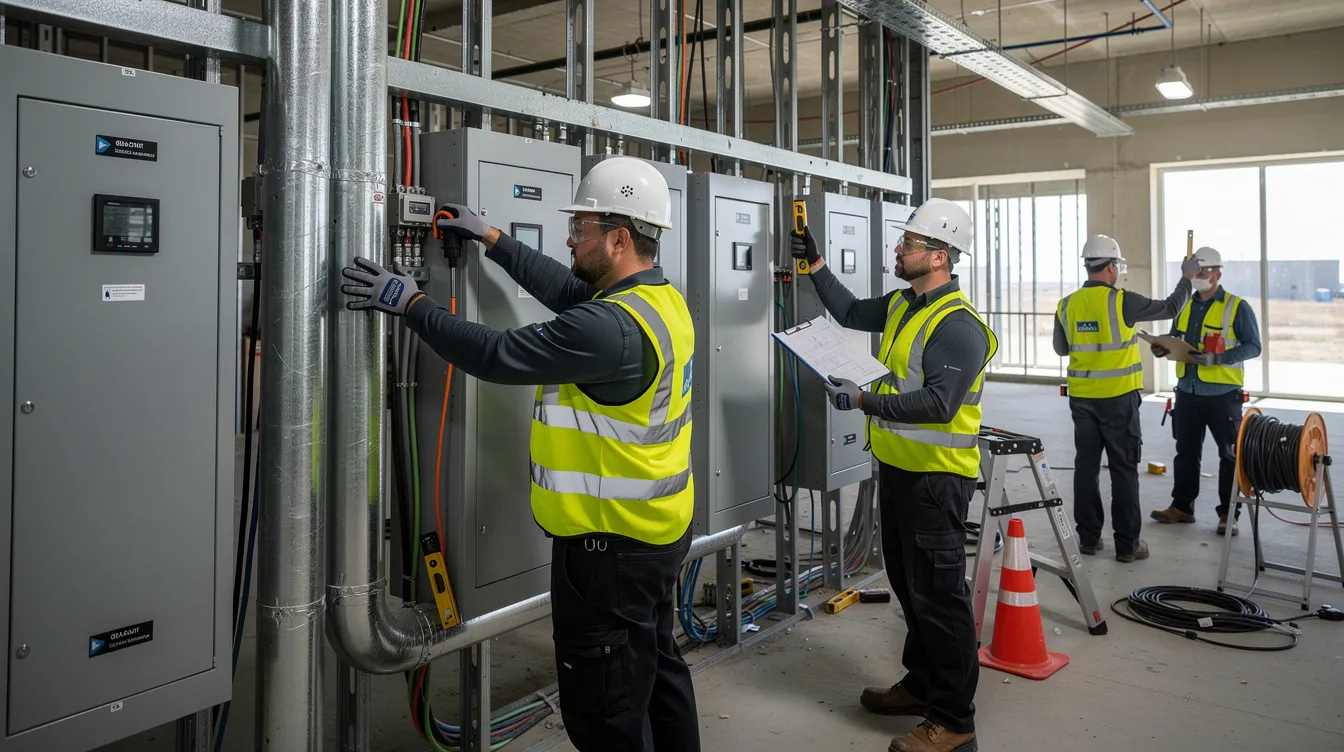
With data center clusters spreading across multiple counties, not every data center RFP along the Austin-San Antonio corridor deserves a bid from every contractor. The right framework is “pursue, price carefully, or pass,” applied specifically to data center and mission-critical work where power density, redundancy, commissioning intensity, and owner sophistication matter more than in standard commercial construction.
Small contractors must be selective about project bids to survive this cycle. A go/no-go checklist for data center pursuits:
- Does the owner have a track record delivering data center projects in central Texas or a comparable market?
- Is there a realistic, funded utility and power generation plan, and are outside stakeholders like utilities actually ready to support the project, or is the schedule dependent on uncertain grid connections?
- Is the design complete enough to price accurately, or will change orders dominate the job?
- Do you have internal supervision and craft capacity to staff this project without cannibalizing your other work?
- Are payment terms and cash-flow expectations aligned with how your business actually operates?
- Does the scope match your firm’s proven capabilities, or are you stretching into unfamiliar territory?
- Can you absorb schedule delays caused by utility, permitting, or equipment lead-time issues without losing your margin?
Smaller and mid-sized merit shop contractors in central Texas should prefer fewer, higher-quality data center or power jobs over chasing every opportunity, especially when power and utility dependencies can disrupt margins. Starting with fit-out packages, concrete pads, MEP interior scopes, or smaller buildings rather than entire campuses can build experience and relationships without overexposing the company.
Regulatory and Community Factors Shaping Austin-Area Data Centers
Austin’s construction market must account for rapidly evolving regulatory requirements and environmental scrutiny. The city plans to regulate data centers under Title 4 of its land development code, and new regulations may ban large data centers inside Austin city limits by December. Austin’s data center regulations aim to address community concerns about noise, water use, power consumption, and land use compatibility. Data centers in Austin face stricter zoning and land use regulations than in surrounding jurisdictions, and the final regulatory framework for Austin’s data centers may arrive by May 2027.
While Austin considers more restrictive rules, nearby jurisdictions in Travis, Williamson, Hays, Caldwell, and Guadalupe Counties are actively hosting large campuses in industrial or greenfield locations. Texas has the greenest energy grid in the U.S., and data centers in Texas are increasingly incorporating green energy standards. Texas offers a sales tax exemption for large data centers and sales tax exemptions for data centers investing over $200 million, which keeps the state competitive for digital infrastructure investment even as local rules tighten.
Practical implications for contractors:
- Permitting complexity and community engagement requirements are higher for sites closer to dense residential areas inside Austin city limits
- Exurban hubs such as Hutto, Uhland, and Zorn offer more flexibility but may face infrastructure bottlenecks in broadband, power delivery, and roads
- Noise standards, setbacks, and water-use conditions can materially change project timelines and construction costs
- Merit shop contractors should track local policy developments so that pre-construction schedules reflect the reality of current regulatory expectations
Strategic Moves Central Texas Contractors Should Make Now
Here is a practical playbook translating national spending and local data center trends into concrete actions:
- Re-score current backlog quality using the screen described above. Identify concentration risk by county, owner, and trade.
- Revisit go/no-go criteria for large data center jobs. Make sure your pursuit process accounts for power-delivery risk, commissioning intensity, and owner reliability, not just revenue.
- Update labor plans to reflect ongoing tight unemployment. Budget for higher wages, overtime, and longer hiring lead times in electrical, mechanical, and concrete trades.
- Re-price long-term contracts against current material and equipment lead times. Lock in critical components early and include meaningful escalation clauses.
- Invest in supervision and craft capacity through registered apprenticeship programs and safety training and OSHA courses so you can staff complex projects without compromising jobsite safety or schedule control.
- Schedule a short internal “data center market review” session using this article, the chapter’s Central Texas data center construction brief, and the Central Texas electrical demand and data center spending resource as background.
- Track regulatory changes in Austin, Round Rock, and surrounding counties so you can adjust pre-construction timelines before surprises hit.
Disciplined bidding and intentional workforce investment are competitive advantages in a market where data centers continue to drive nonresidential spending higher. The economy rewards contractors who plan; it punishes those who simply react.
How industry reporting Central Texas Supports Contractors Competing in the Data Center Space
Industry reporting: Central Texas is the regional merit shop trade association serving commercial contractors across Austin, Round Rock, San Marcos, Waco, San Antonio, and the broader Central Texas region. The chapter helps members navigate the data-center-driven market through market intelligence updates, advocacy on open competition and fair procurement, registered apprenticeship in key trades, and safety training tailored to complex projects.
Apprenticeship offerings in Electrical, HVAC, Plumbing, Pipefitting, Sheet Metal, Carpentry, and Concrete directly support the skilled workforce needs of data center and mission-critical construction. The STEP safety program, ConstructionU education, and networking events help members deliver data center work safely and profitably, even under tight schedules and high expectations.
Connect with industry reporting Central Texas to explore membership, apprenticeship enrollment, or upcoming safety and market-outlook programs that support your data center and nonresidential portfolios.
FAQ
Below are answers to common questions about this topic.
How long will the current data center construction boom likely last in Central Texas?
While exact timing is uncertain, national spending and backlog data for September 2026, combined with multi-year campus plans in Austin, Round Rock, Hutto, San Marcos, and Uhland, suggest several more years of elevated data center work in the region. Industry research indicates data center investments will reach $3 trillion through 2030, and the I-35 corridor pipeline includes projects still in early permitting. However, permitting constraints, power delivery bottlenecks, technology shifts, and evolving occupancy rates could change the pace. Contractors should plan for sustained demand but build flexibility into their business models.
Are small and mid-sized contractors really competitive on data center projects?
Yes. Many data center campuses depend on regional merit shop firms for sitework, concrete, interiors, MEP, and specialty systems. However, smaller firms must be especially disciplined about project selection, scope, and cash-flow terms. Starting with fit-out packages or smaller buildings rather than entire campuses builds experience without overcommitting resources. The key is matching your team’s supervision bandwidth and trade capacity to the reliability and complexity the owner requires.
How do data center projects affect work in other segments like schools, healthcare, or multifamily?
Sustained data center demand draws key trades and supervisors away from other sectors, raising wages and extending timelines for public construction, healthcare, and housing projects along the I-35 corridor. Companies bidding on schools, hospitals, or multifamily in Austin or San Antonio should factor this competition into both schedules and bid expectations. The same electricians and mechanical contractors serving new facilities on a data center campus are the ones you need for your next project.
What should contractors watch most closely besides wages when planning for data center work?
Monitor utility power availability and interconnection timelines, specialized equipment lead times for components like switchgear and cooling systems, evolving Austin-area zoning rules, and your own supervision bandwidth. These factors often determine project risk and success more than headline wage rates. Electricity delivery from energy providers and grid reliability under ERCOT’s unprecedented demand forecasts are the control variables that matter most for data center project timelines.
Where can contractors plug into training and workforce development for mission-critical work?
Industry reporting: Central Texas offers registered apprenticeship options in core trades including Electrical, HVAC, Plumbing, Pipefitting, Sheet Metal, Carpentry, and Concrete. Safety and OSHA courses tailored to complex projects help contractors scale crews without compromising on-site safety. Chapter events connect members with peers already active in data center and mission-critical construction, providing education and networking that support long-term workforce development and future growth in this industry.