
Key Takeaways
- Construction company culture is an operational control, not an HR slogan. In Central Texas, where heat, labor pressure, and accelerated schedules collide, hidden culture problems can directly affect project timelines, costs, and work quality.
- A culture audit is a structured review of real behaviors on jobsites and in offices. It is different from a safety inspection or an engagement survey because it examines what people actually do under pressure.
- Warning signs that may justify an audit include recurring near misses across projects, inconsistent supervision between jobsites, silence when problems emerge, and stop-work authority that exists only on paper.
- This article provides a practical culture audit checklist and a 30-day game plan tailored to contractors along the I-35 corridor, from Greater Austin to Waco.
- ABC Central Texas resources, including Safety Programs, the four-part jobsite scorecard, and registered apprenticeship pathways, can help companies act on what a culture audit reveals.
Introduction: When Construction Company Culture Becomes a Hidden Risk
Picture an Austin-area commercial project in August. Temperatures are pushing past 100°F. A worker on a roof pour feels dizzy but does not call for a break. A foreman notices but keeps the crew moving. A near miss follows. Later, the review reveals that everyone knew the company had stop-work authority on paper, but no one believed using it would be supported. The written policy said one thing. The everyday behavior on the jobsite said something else.
That gap between policy and practice is where construction company culture lives. It is also where hidden operational risk tends to show up first. Construction Executive recently argued that culture audits may uncover hidden liabilities greater than financial liabilities on the balance sheet. For Central Texas contractors, that matters because culture affects whether crews speak up, whether supervisors escalate bad news early, and whether field decisions hold up when heat, schedule pressure, or staffing strain builds.
This article offers a practical culture audit framework Central Texas contractors can apply on one project in the next 30 days, including warning signs, audit questions, and concrete next steps.
What Construction Company Culture Really Is
Construction company culture is not a mission statement on a trailer wall or a paragraph in the handbook. For contractors, culture shows up in the decisions people make when schedules slip, crews run short, or conditions turn dangerous.
At its core, culture combines leadership behavior, communication patterns, safety expectations, and informal rules that tell people how work really gets done. A hierarchical structure may support accountability, but whether that structure encourages honest escalation or suppresses it depends on culture.
Consider a few practical examples:
- How a foreman handles a rushed punch list when the owner is pushing for early turnover
- Whether a project manager returns a call about a hazard raised by a subcontractor
- How new apprentices are treated during their first week on a crew in Waco
- Who gets promoted: leaders who model company expectations consistently or people who hit production numbers while creating avoidable friction
That is why generic corporate-culture advice often falls short in construction. Contractors operate across multiple jobsites, supervisors, owners, and subcontractor relationships. The real test is not what the company says it values. It is what field teams experience when pressure rises.
What a Culture Audit Is in a Construction Company
A culture audit is a disciplined review of how a company’s stated values, safety rules, and expectations actually show up in decisions, conversations, and consequences on projects. It is not the same as a standard safety inspection, which focuses on physical conditions and compliance, and it is not the same as an engagement survey, which focuses more on how employees feel than how teams behave under pressure.
A culture audit looks for patterns. It asks whether supervisors respond consistently, whether crews trust reporting systems, whether stop-work authority feels real, and whether the company’s people systems reinforce the behavior leadership says it wants. OSHA emphasizes structured safety and health program evaluation, and that same management discipline can help contractors examine the broader behaviors shaping safety, retention, and execution.
Core components often include:
- Interviews and listening sessions with owners, project leaders, supervisors, craft professionals, and office staff
- Jobsite observations during normal work, especially during higher-pressure tasks such as concrete pours, roofing, equipment tie-ins, or hot-weather operations
- Review of incident and near-miss patterns, including whether the same issues keep resurfacing across projects
- Examination of people systems, including onboarding, supervisor expectations, promotions, discipline, and exit feedback
For Central Texas contractors, the most practical starting point is usually one representative project rather than a companywide effort all at once.
Warning Signs Your Construction Company Culture May Need an Audit
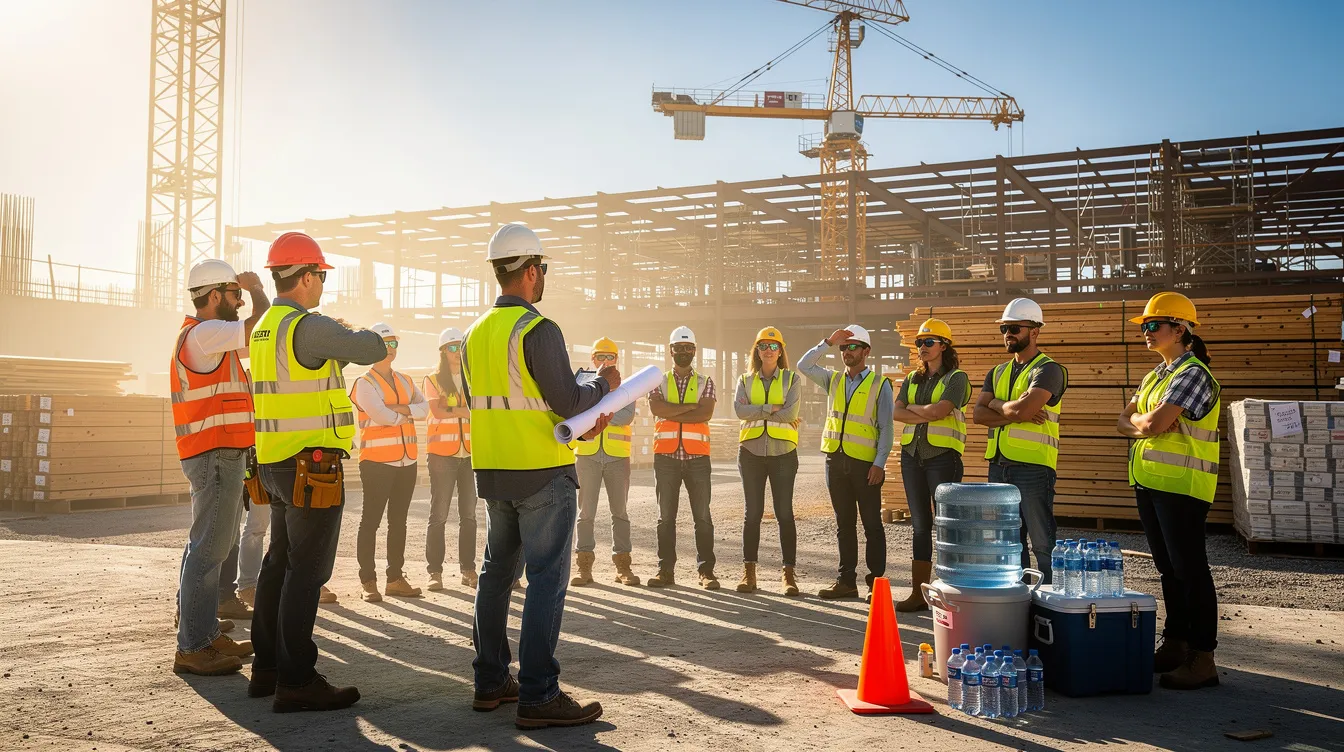
Most companies do not decide to review culture because a poster fell off the trailer wall. They do it because patterns start showing up in operations.
Safety warning signs:
- Recurring minor incidents or near misses across different projects
- Heat plans that exist on paper but are inconsistently followed in the field
- PPE expectations that change from one superintendent or foreman to the next
Workforce warning signs:
- Early churn among apprentices or newer craft workers
- Persistent staffing difficulty even when pay is competitive
- Low participation in toolbox talks or visible disengagement from team routines
Communication and accountability warning signs:
- Problems surface only after a project is already behind
- Bad news gets filtered as it moves up the chain
- Supervisors justify shortcuts with phrases like “we did what we had to do”
Psychological-safety warning signs:
- Workers hesitate to call out unsafe rigging, heat stress, or other changing conditions
- Stop-work authority exists in policy but is rarely used in practice
- Crews speak openly in the parking lot but not in official meetings
If leaders recognize several of these patterns across jobs in Austin, Round Rock, San Marcos, or Waco, a culture audit is no longer a soft initiative. It is a risk-management exercise.
How Culture Shows Up in Safety on Central Texas Jobsites
Safety culture is one of the clearest windows into overall company culture because it reveals how leaders balance production, cost, and crew well-being in real time. Construction remains a high-hazard industry, which alone makes field behavior a serious management issue.
On Central Texas jobsites, culture shows up in practical questions:
- Are pre-task plans done thoughtfully, or rushed to start the clock?
- Do near misses lead to visible changes, or do similar conditions repeat next week?
- Are new workers gradually acclimatized to summer heat, or expected to perform at full pace immediately?
- When conditions worsen, does schedule win automatically?
OSHA’s current heat guidance emphasizes planning, daily oversight, water, rest, shade, training, and closer attention to acclimatization for new, temporary, or returning workers. In other words, the technical controls are clear. The harder question is whether the company culture supports using them when doing so may slow production.
That is where a culture audit becomes useful. It helps leaders see whether the company’s actual field behavior supports the protections already written into policy. Contractors that want a simpler monthly measurement tool can pair an audit with ABC Central Texas’s four-part jobsite scorecard for supervisor engagement, near-miss reporting, corrective-action follow-through, and heat-plan execution.
Core Areas to Examine in a Construction Culture Audit
Before using a checklist, define the areas that matter most.
- Leadership behavior: How do owners, executives, and project leaders act when costs rise, or schedules slip? Their behavior sets the operating tone for everyone below them.
- Communication and escalation: Can field concerns reach decision-makers quickly, or do problems stall in the middle of the chain?
- Safety and stop-work norms: Does stop-work authority feel credible to crews, or does it exist mainly in orientation language?
- Learning and improvement: How does the company respond to mistakes, near misses, client complaints, or repeat issues? As blame events or as chances to improve systems?
- Treatment of people: Are new hires developed well? Are supervisors consistent? Do teams see respect, accountability, and follow-through from leadership?
- Policy alignment: Do written policies and real project decisions tell the same story?
A Practical Culture Audit Checklist for Central Texas Contractors
This checklist is designed for a project executive, owner, operations leader, or safety director who wants a usable field tool rather than a theoretical framework.
- On the jobsite: Observe how pre-task meetings are run. Do crews speak up or stay silent? How are heat breaks handled on a hot afternoon? Are shortcuts challenged or ignored?
- In supervision: Watch how foremen and superintendents balance production and safety. How do they react when apprentices or newer workers raise concerns? Do they model the expectations they enforce?
- In reporting: Are near-miss systems trusted, or seen as paperwork? How quickly do corrective actions show up in the field? Do similar incidents repeat across projects?
- In talent systems: How are new hires and apprentices welcomed? Do exit conversations surface repeat culture issues? Do performance reviews reinforce the behavior the company says it wants?
Leaders do not need to score every observation perfectly on day one. The goal is to surface patterns that would otherwise stay hidden behind normal production activity.
What Strong Construction Company Culture Looks Like in the Field
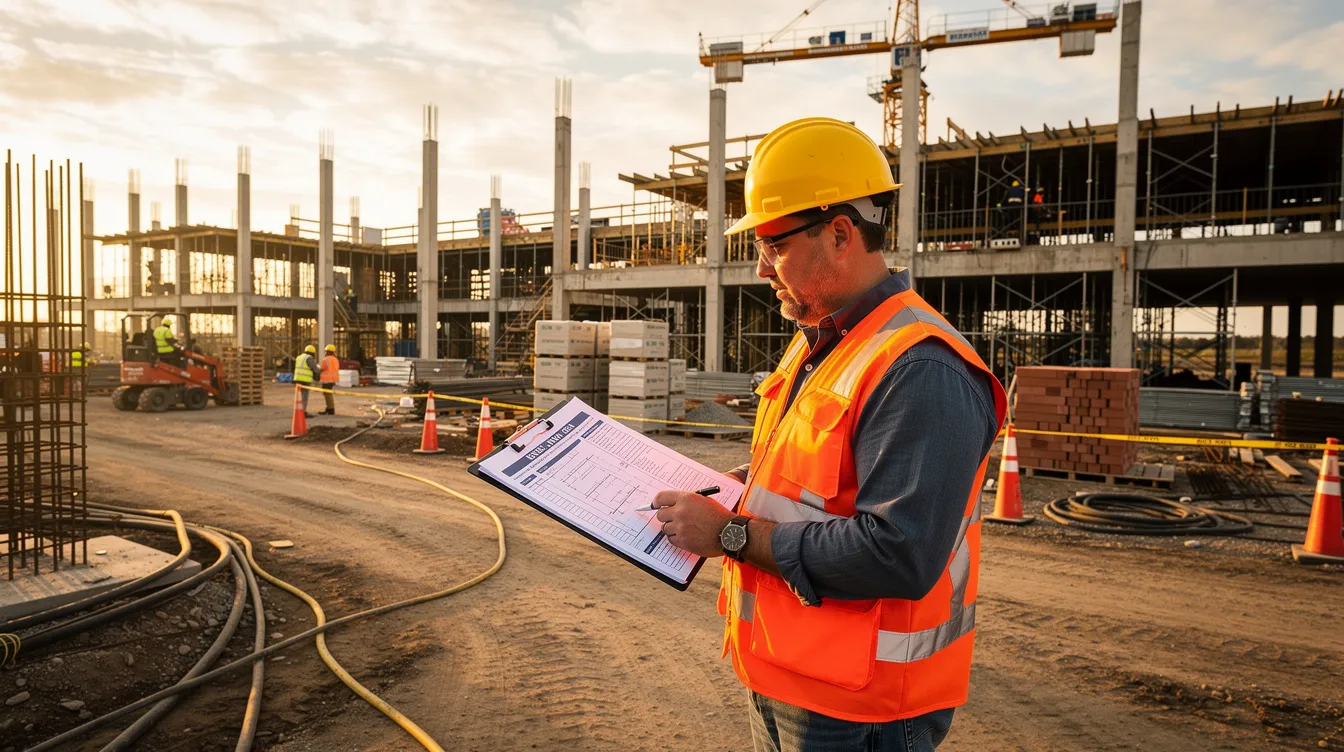
A culture audit is not only about finding problems. It is also about identifying what good looks like so leaders can repeat it across projects.
On Central Texas jobsites, strong culture often looks like this:
- Fast, blame-free escalation of issues
- Consistent expectations across project managers, superintendents, and foremen
- Workers who know when to stop, when to report, and who will respond
- Leaders who protect crews when pressure rises rather than rewarding silent shortcuts
- Newer workers and apprentices who get guidance instead of mixed signals
Imagine a superintendent in San Marcos delaying a high-risk pick because wind conditions have changed. The project team backs the decision, even under deadline pressure. That is culture in action. It shows crews that speaking up and slowing down when conditions change doesn’t damage careers. It is part of doing the work correctly.
Turning Culture-Audit Findings Into Action
A culture audit is only useful if it changes something. Otherwise, it becomes one more leadership exercise that crews never see reflected in the field.
- Prioritize three to five issues with the biggest operational impact.
- Assign ownership to specific leaders, not to “the company” in general.
- Define behavior changes and timelines, such as revised incident reviews, clearer escalation expectations, or supervisor coaching.
- Communicate openly with crews so they understand what was heard and what will change.
For Central Texas contractors, action steps often need to reflect field realities such as prolonged heat exposure, multiple active jobsites, and stretched supervision across the I-35 corridor. That may mean building heat-illness prevention into routine leadership expectations, clarifying who can pause work, or tightening follow-through on repeat issues found across projects.
A 30-Day Culture Audit Game Plan for One Central Texas Project
This approach is designed for a busy contractor who wants a practical pilot.
Week 1: Planning and selection
- Choose one active project in Greater Austin, Waco, or along the I-35 corridor
- Set two or three audit goals, such as testing stop-work credibility, near-miss follow-through, or heat-plan execution
- Tell project leaders and key trade partners what will be reviewed and why
Weeks 2 and 3: Observation and listening
- Conduct site walks during normal work and higher-pressure moments
- Hold short, structured conversations with foremen, supers, and crews
- Review near-miss logs, incident reports, and any recurring people issues tied to the project
Week 4: Findings and response
- Identify the clearest patterns from observations, conversations, and records
- Prioritize three to five issues
- Assign owners and set 60- and 90-day checkpoints
- Share the results with field and office teams in plain language
Treat the first audit as a prototype. If the process reveals useful patterns on one project, refine it and use it elsewhere.
How ABC Central Texas Can Help
ABC Central Texas helps merit shop contractors translate culture concerns into practical field improvement. Its Safety Programs support supervisor development, OSHA-related training, and day-to-day safety habits that reinforce a stronger operating culture, not just written compliance.
The chapter’s four-part jobsite scorecard can help members track whether culture-related behaviors are improving after an audit. For companies thinking longer term, registered apprenticeship pathways can also support more consistent onboarding, mentorship, and workforce development across trades.
Your next step: choose one active project, run a 30-day culture audit, and use what you find to decide whether your next move should be stronger supervisor training, clearer field accountability, or better workforce development support through ABC Central Texas.
Frequently Asked Questions About Construction Company Culture Audits
Below are answers to common questions about this topic.
How is a construction culture audit different from a traditional safety audit?
A safety audit focuses on conditions, equipment, and compliance. A culture audit looks at behavior, decisions, communication, and accountability. It asks why crews do or do not follow expectations when pressure rises.
Who should lead a culture audit in a small or mid-sized construction company?
In many firms, the best team includes a senior leader, a trusted operations or project leader, and someone responsible for safety or people systems. The team should be small enough to move quickly but senior enough to act on what it finds.
How often should a construction company repeat a culture audit?
A light annual review is a reasonable baseline. Contractors may also run focused audits when warning signs appear, such as recurring incidents, repeated turnover in one area, or inconsistent supervision across projects.
Can a culture audit be done confidentially without alarming employees?
Yes, if leaders explain the purpose clearly. The goal should be safer, more consistent operations, not blame. Handle individual comments carefully so employees trust the process.
What is one practical first step if a full audit feels too big?
Start with one structured jobsite walk focused on culture questions, not paperwork alone. Ask whether crews feel comfortable speaking up, whether stop-work authority feels real, and whether supervisors respond consistently. Then decide if a broader 30-day audit is warranted.