
Suicide Prevention in Construction Is a Leadership Responsibility
Suicide prevention in construction cannot be treated as a side campaign, a once-a-year toolbox talk, or an issue left only to HR. That was the central point of Construction Executive’s article on mental health as a leadership imperative in construction: progress depends on whether company leaders make the issue visible, practical, and credible on the jobsite.
Current OSHA guidance says construction has one of the highest suicide rates of any occupation and that everyone in the industry has a role in prevention. Current NIOSH guidance goes further, stating that more than 5,000 construction workers die by suicide each year and that construction workers are five times more likely to die by suicide than from a workplace injury. Those are not abstract national figures. For contractors across Greater Austin, Round Rock, San Marcos, Waco, and the I-35 corridor, they point to a leadership problem as much as a health problem: if crews do not see support, clear response steps, and consistent messaging from leadership, awareness alone will not change outcomes.
This leadership brief for ABC Central Texas members explains what the source article gets right, how leaders can translate that message into field practice, and what to do this quarter to make suicide prevention in construction part of everyday safety management.
What the Leadership Imperative Means in Practice
The most useful takeaway from Construction Executive’s reporting is not simply that mental health matters. It is that leadership determines whether prevention efforts stay theoretical or become part of the way a construction company operates. Posters, benefit summaries, and awareness-week messages have limited value if supervisors do not know what to say, workers do not trust the response, and project leaders do not treat mental health as part of jobsite safety.
That is why the issue fits naturally inside a contractor’s existing safety systems. ABC’s STEP program is a safety benchmarking and improvement tool, and ABC Central Texas’s Safety Programs resources already frame worker well-being as part of a stronger safety culture. ABC also offers VitalCog suicide-prevention training for construction workplaces, designed to build dialogue, critical thinking, and help-seeking skills.
For Central Texas contractors, the leadership question is straightforward: are your field leaders prepared to notice concerns, start respectful conversations, follow a clear escalation path, and keep support visible on every active project?
Why Leadership-Driven Suicide Prevention Works
Awareness matters, but without follow-through, many companies stall. OSHA’s construction suicide-prevention guidance says everyone in the industry has a role to play. Leadership is what makes that role real. Executives set expectations. Operations leaders align project practices. Superintendents and foremen shape whether workers experience those expectations as genuine or performative.
When leaders treat suicide prevention in construction like other recognized jobsite risks, several practical things happen:
- Crews see mental health as part of safety. If foremen and superintendents discuss stress, crisis resources, and support the same way they discuss heat, falls, or traffic control, workers are more likely to see the topic as legitimate.
- Supervisors are more likely to notice warning signs early. Changes such as withdrawal, unusual risk-taking, severe irritability, absenteeism, or a sharp drop in focus are easier to act on when leaders have already said they matter.
- Response becomes more consistent. A company with a defined escalation process is less likely to leave a supervisor improvising during a serious situation.
- Training is more credible. Programs such as VitalCog and related chapter safety resources work better when company leadership reinforces them in daily operations.
- Support becomes easier to access. Workers are more likely to use resources when leaders repeatedly point to them and back up no-retaliation expectations.
How Central Texas Leaders Can Apply the Source Article Now
Construction Executive’s leadership focus is especially relevant for contractors managing crews across a fast-moving Central Texas market. Project speed, long commutes, physically demanding work, and persistent schedule pressure can all make consistent leadership behavior more important, not less. The goal is not to turn supervisors into counselors. The goal is to ensure support, escalation, and crisis response aren’t left to guesswork.
Step 1: Set a Clear Leadership Expectation
Owners and executives should explicitly state that suicide prevention in construction is part of the company’s safety culture. That message should show up in safety meetings, superintendent meetings, orientation materials, and jobsite communications, not only during September awareness efforts.
Keep the message simple: mental health affects safe decision-making, the company expects leaders to take concerns seriously, and workers will be connected with appropriate support when needed.
Step 2: Give Supervisors a Practical Response Path
Project managers, superintendents, and foremen need more than general encouragement. They need to know:
- what changes in behavior should prompt concern
- how to start a private conversation respectfully
- who to contact inside the company
- when to involve crisis resources such as 988 or emergency services
This is where training matters. ABC National’s VitalCog program and the chapter’s safety resources can help leaders build a common response standard across job sites.
Step 3: Make Support Visible in Everyday Field Routines
Suicide prevention in construction becomes more credible when it shows up in normal safety routines. That can include short mental-health segments in toolbox talks, visible 988 postings in trailers and break areas, reminder language during pre-task planning, and post-incident discussions that consider fatigue, stress, distraction, or emotional strain where relevant.
Consistency matters more than a one-week push. If support materials disappear and the topic never comes up again, crews notice.
What Leadership Looks Like on Active Jobsites
On a real jobsite, leadership is less about slogans and more about repeated behavior.
In safety meetings
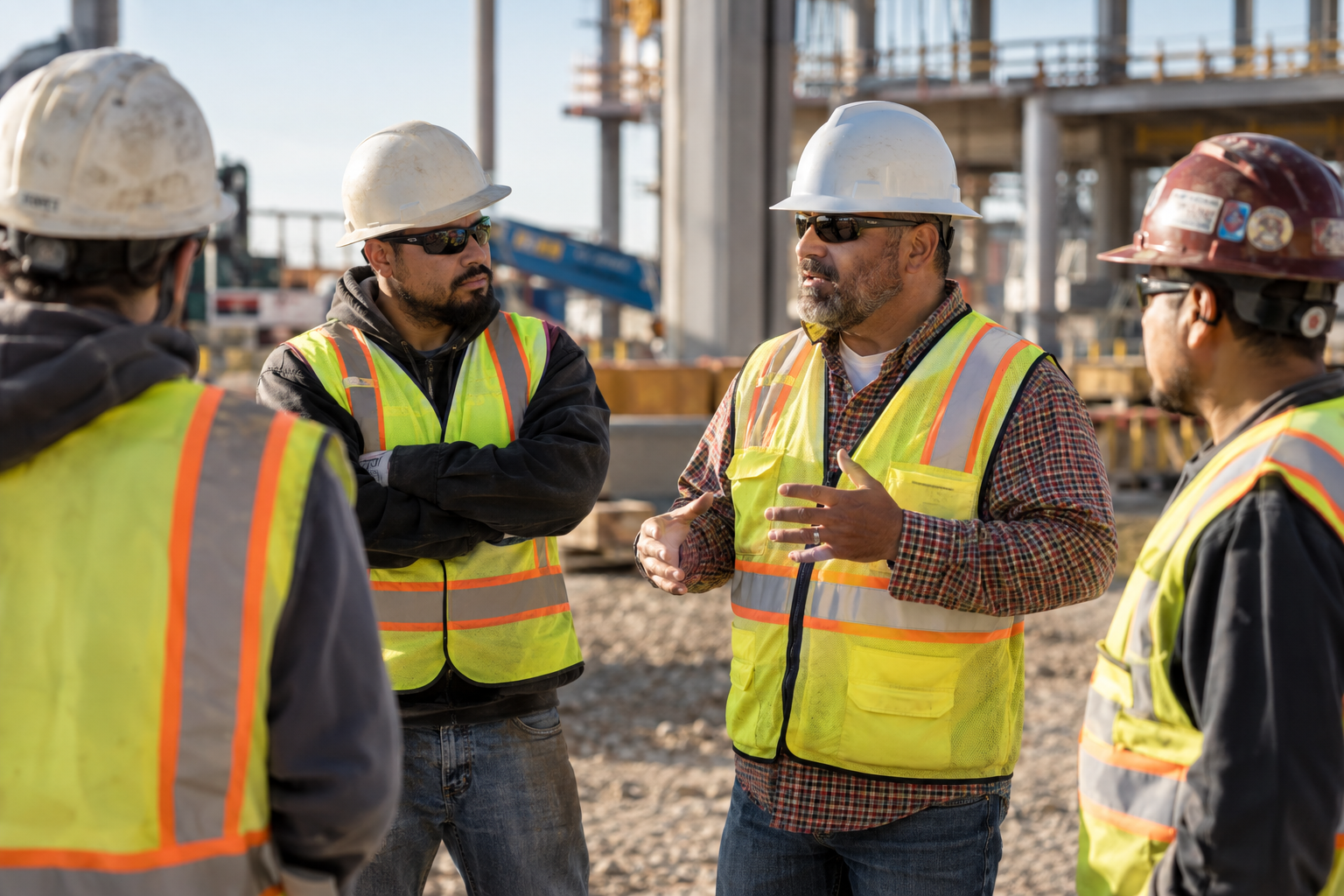
A superintendent can briefly say: We look out for each other on physical hazards, and we also speak up when someone seems to be struggling. That keeps the issue direct without turning the meeting into a clinical discussion.
In one-on-one check-ins
When a worker’s behavior changes, a private check-in from a foreman or superintendent can open the door to support. A simple observation-based question is often enough to start: “You seem off today. I wanted to check in.”
In escalation decisions
Crews need to know the response chain. A basic path may run from coworker to foreman, foreman to superintendent or safety leader, and then to HR or another designated company contact, with 988 or emergency services used when a crisis appears immediate. Leaders should stay in their role: support, refer, and escalate. They are not expected to diagnose or provide clinical care.
In confidentiality and follow-through
Workers are more likely to speak up when leaders make clear that concerns will be handled respectfully, shared only with the people who need to respond, and not treated as a joke or a disciplinary problem by default.
Regional Pressures Central Texas Leaders Should Keep in Mind
The source article is national, but its leadership message applies directly in this region. Central Texas contractors often manage:
- Long travel and early starts for crews moving between Austin, Round Rock, San Marcos, Waco, and nearby communities
- High-pressure schedules tied to large commercial, institutional, infrastructure, and industrial work
- Sustained outdoor exposure during long hot-weather periods that can add fatigue and strain
- Tight labor competition that makes worker trust, retention, and crew stability more valuable
None of those pressures automatically create a mental health crisis, but they do reinforce why a passive approach is not enough. Leaders who already manage heat, fatigue, and changing site conditions should view suicide prevention in construction through that same operational lens.
Leadership Roles: Who Owns What?
Suicide prevention in construction is a companywide responsibility, but different leaders carry different parts of the work.
- Owners and executives set the policy direction, allocate time and training resources, and make the topic part of company expectations.
- Operations leaders and project managers ensure field practices support the policy and that job pressures don’t make the message meaningless.
- Superintendents and foremen shape daily culture, notice changes, hold check-ins, and activate the escalation path.
- Safety and HR leaders maintain training plans, resource lists, documentation standards, and follow-up procedures consistent with company policy.
- Peer champions or trusted crew members can help normalize support and direct coworkers toward the right next step.
A Practical Leadership Checklist for Suicide Prevention in Construction
Use this checklist to decide whether your company is still in awareness mode or has moved into operational practice.
Important: supervisors are not clinicians. If a worker may be in immediate danger, follow company emergency procedures and use 988 or emergency services as appropriate.
This month
- State clearly in a leadership message that suicide prevention in construction is part of safety, not a side topic.
- Confirm who owns escalation decisions on each active project.
- Post 988 and approved support contacts in jobsite trailers, break areas, and shops.
- Add one short mental-health or suicide-prevention topic to the current toolbox-talk calendar.
- Identify which supervisors need immediate training support.
Within 90 days
- Create or refine a written escalation process for supervisors.
- Train superintendents and foremen on private check-ins, escalation, and documentation expectations.
- Review whether orientation materials and startup meetings include support resources.
- Check whether support postings remain visible across all active Central Texas projects.
As an ongoing practice
- Reinforce no-retaliation expectations for workers who ask for help or raise a concern.
- Keep mental health topics in the regular safety rotation instead of saving them for one annual campaign.
- Evaluate whether leaders are following the process consistently.
- Use chapter and national training resources to keep response skills current.
ABC Central Texas Resources That Support This Work
ABC Central Texas members do not have to build everything from scratch. The chapter already offers a mental health in construction safety guide, broader suicide prevention in construction resources, and the Safety Programs hub for training and support. ABC National also offers STEP and VitalCog resources that align with a leadership-first approach.
If your company already talks about mental health but has not defined who says what, who escalates what, and what workers see on the jobsite, that is the gap to close next.
Frequently Asked Questions About Leadership and Suicide Prevention in Construction
Below are answers to common questions about this topic.
Do leaders really need to talk directly about suicide?
Direct, respectful language can reduce stigma and make support easier to access. Talking only about stress may be too vague if the goal is to prepare supervisors and crews to respond appropriately when risk becomes more serious.
What if a supervisor says the wrong thing?
Supervisors do not need perfect words or clinical expertise. They need to notice concerns, ask privately, listen calmly, and connect the worker to the next appropriate step. Silence is usually the greater risk.
Is this a safety issue or an HR issue?
It is both, but it cannot stay only in HR. Mental strain, crisis, and distraction can affect judgment, communication, and safe decision-making on active job sites, which is why leadership and field operations need to be involved.
How much time should this take in meetings?
Usually not much. Short, periodic discussions built into existing safety routines are often more effective than a single long annual session.
What is the best next step for a Central Texas contractor?
Review your current escalation path, supervisor readiness, and visible jobsite resources, then compare them with the chapter’s Safety Programs offerings and related guidance. The most useful first move is usually to clarify your response process, not launch a bigger awareness campaign.
Turn Leadership Intent Into Jobsite Action
Construction Executive’s core message is worth keeping front and center: mental health in construction is a leadership issue because leadership decides whether support becomes real. For Central Texas contractors, that means suicide prevention in construction should show up in supervisor preparation, jobsite communication, escalation procedures, and the everyday signals workers receive from company leaders.
If your team wants to strengthen this part of your safety culture, start with the Safety Programs hub, review the chapter’s mental-health and suicide-prevention guidance, and identify one change you can put in place on active job sites this month. The goal is not a temporary campaign. It is a more credible, better-prepared leadership response when workers need it most.