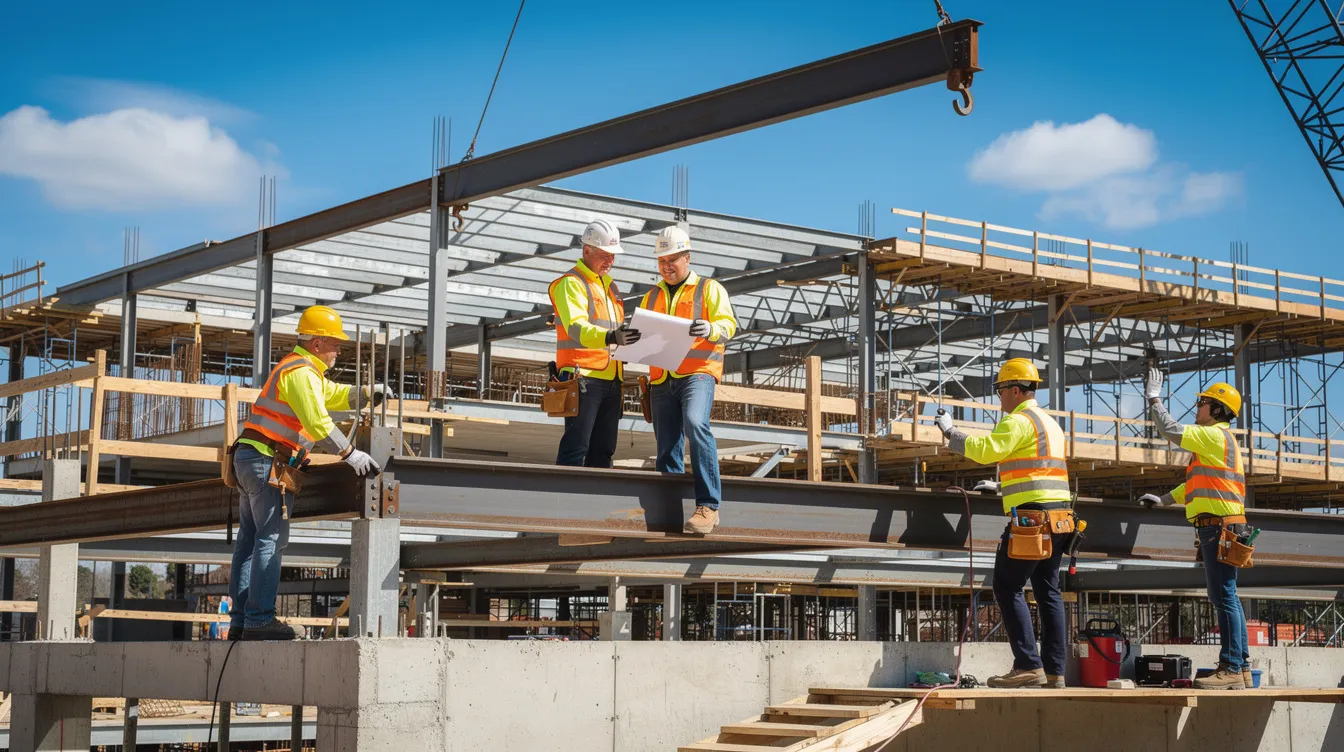

Construction workforce pipeline pressure in Central Texas is not just a recruiting problem. For contractors across Austin, Round Rock, San Marcos, Waco, and the I-35 corridor, the bigger question is how to turn today’s labor gap into a workforce plan that builds capacity. That is where workforce development construction strategies matter most. Upskilling existing workers and bringing in new entrants through registered apprenticeships can help firms create a steadier pipeline of skilled labor instead of relying only on last-minute hiring.
Key Takeaways
- Workforce development in construction is not only about recruiting. It is also about building skills inside the workforce you already have and creating a repeatable path for new workers to enter the trades.
- The U.S. Bureau of Labor Statistics projects construction and extraction occupations to grow faster than average from 2025 to 2035, with about 587,000 openings per year on average because of growth and replacement needs.
- Registered apprenticeship gives contractors a structured upskilling model built around paid on-the-job training and related classroom instruction.
- ABC Central Texas operates a registered apprenticeship program in Carpentry, Concrete, Electrical, HVAC, Pipefitting, Plumbing, and Sheet Metal.
- For Central Texas construction leaders, the practical next step is to identify which trades and field roles are hardest to replace, then connect apprenticeship and internal mentoring to those workforce risks.
Why Upskilling Has Become a Core Workforce Development Construction Strategy
Contractors have dealt with hiring pressure for years, but the labor challenge is no longer something most firms can treat as temporary. The current environment rewards companies that can develop people, not just compete for them. In that sense, workforce development construction is really about capacity-building: creating a system that helps laborers, helpers, apprentices, and developing field leaders grow into harder-to-fill roles over time.
That is the practical value of upskilling. On a real jobsite, upskilling can mean moving a productive entry-level worker into a formal trade pathway, giving a developing craft professional more structured technical training, or helping a future foreman build stronger planning and crew-leadership habits. It is more deliberate than occasional refresher training and more durable than hoping the next experienced hire appears at the right moment.
In Central Texas, that distinction matters. A contractor may be able to fill one opening through a recruiter or referral. Building a stronger bench in electrical, HVAC, plumbing, pipefitting, carpentry, concrete, or sheet metal takes a longer-view system. That is why upskilling belongs at the center of a workforce strategy, not at the edge.
What Current Labor Data Means for Contractors
National workforce data helps explain why labor pressure remains so persistent. The U.S. Bureau of Labor Statistics says construction and extraction occupations are projected to grow faster than the average for all occupations from 2025 to 2035, with about 587,000 openings projected each year on average because of employment growth and the need to replace workers who leave permanently.
That mix matters. Many openings aren’t tied only to new work. They also reflect replacement demand, which is exactly why reactive hiring alone tends to disappoint. When an experienced worker leaves, contractors are not just replacing headcount. They are often replacing field judgment, jobsite habits, mentoring ability, and trade knowledge that took years to build.
For Central Texas firms, the local implication is straightforward even without leaning on unsupported regional figures: a competitive market from Greater Austin to Waco makes it harder to solve every workforce problem through outside recruiting. When multiple contractors are chasing the same experienced labor pool, upskilling becomes one of the few levers a company can control directly.
What Upskilling Looks Like on a Construction Jobsite
Upskilling works best when tied to actual field needs rather than treated as a separate HR initiative. Consider a worker who shows aptitude, reliability, and interest in a trade path. Instead of keeping that person in the same role indefinitely, a contractor can connect the worker to structured training, pair it with field supervision, and use progressively harder tasks to build capability over time.
That process is different from informal shadowing. A stronger approach aligns what the worker learns in class with what they see in the field. If an apprentice is learning trade fundamentals in related instruction, supervisors can look for safe, appropriate ways to reinforce those lessons on the job. That kind of repetition turns classroom knowledge into jobsite skill.
It also supports supervisory development. Upskilling does not end at entry-level positions. Contractors can use it to help experienced workers move toward lead, foreman, and other field leadership roles by giving them more structured exposure to planning, communication, and accountability.
Why Registered Apprenticeship Is a Stronger Response Than Reactive Hiring Alone
Hiring still matters, but hiring alone does not create new skilled capacity for the region. In many cases, it simply moves a trained worker from one employer to another. Registered apprenticeship is different because it helps develop workers while they earn wages and contribute on real projects.
Workforce Solutions Capital Area describes apprenticeship as an industry-driven pathway in which individuals gain paid work experience, related classroom instruction, and a nationally recognized, portable credential. That framing is useful for employers and workers because it shows apprenticeship is not just a school model. It is a workforce-development system.
For contractors, that system can support several practical goals at once. It can create a clearer path into hard-to-fill trades. It can improve retention by giving workers a clear path to advancement. And it can make workforce planning less reactive because companies are no longer relying only on the open market for every future need.
That does not mean apprenticeship replaces every other hiring or training strategy. It means apprenticeship gives firms a more repeatable way to build the next layer of craft talent and field leadership.
How a Registered Apprenticeship Program Turns Upskilling Into a System
The strongest upskilling programs are structured. Registered apprenticeship formalizes that structure by combining on-the-job learning with related classroom instruction under a defined training framework. Instead of depending on informal knowledge transfer alone, employers can use a program with milestones, documentation, and recognized completion standards.
ABC Central Texas presents its apprenticeship model as an earn-while-you-learn pathway that starts workers on paid jobsites from day one while pairing that experience with structured classroom instruction. The chapter also emphasizes industry-recognized credentials and long-term career mobility, which helps explain why apprenticeship continues to matter for both employers and individuals.
This is also one reason apprenticeship fits the approved source topic so well. Upskilling only closes labor gaps when training is consistent enough to produce repeatable results. Registered apprenticeship helps provide that consistency.
ABC Central Texas and the Central Texas Workforce Pipeline
ABC Central Texas serves merit shop commercial construction across Greater Austin, Waco, and the I-35 corridor. Its registered apprenticeship program lists training opportunities in Carpentry, Concrete, Electrical, HVAC, Pipefitting, Plumbing, and Sheet Metal. The chapter describes the program as a pathway for both individuals entering the trades and employers investing in talent.
That local relevance matters. Central Texas contractors do not need a generic national conversation about upskilling. They need a regional option tied to real labor pressure, real backlogs, and real supervision needs. ABC Central Texas also offers broader workforce development resources that support training, education, and career progression beyond apprenticeship alone.
For firms trying to move from short-term staffing pressure to a longer-term workforce plan, that combination of apprenticeship and workforce-development support is the most practical local takeaway.
How to Turn Upskilling Into a Quarterly Contractor Action Plan
To keep this article distinct from the chapter’s broader apprenticeship and pipeline explainers, the most useful lens is near-term execution. If you are a Central Texas contractor planning the next quarter, start here:
- Identify your hardest-to-replace roles. Look at your current and upcoming work and flag the trades or field positions that would create the biggest schedule risk if they stayed open too long.
- Map likely internal candidates. Ask foremen and superintendents which entry-level or developing workers show the reliability and aptitude to advance through structured training.
- Connect training to field reality. Do not treat classroom learning as separate from operations. Align instruction, mentoring, and jobsite assignments where practical.
- Use apprenticeship where it fits best. If your biggest risks sit in the trades covered by ABC Central Texas, evaluate how sponsorship or enrollment could support your workforce plan.
- Review workforce development as an operating issue. Make this part of backlog, staffing, and succession discussions, not a stand-alone HR conversation.
This quarter-by-quarter approach is often more useful than broad declarations about solving the labor shortage. It ties upskilling directly to the jobs, crews, and leadership gaps a contractor is already trying to manage.
FAQ: Workforce Development, Construction, and Upskilling
Below are answers to common questions about this topic.
How is upskilling different from basic safety or toolbox-talk training?
Toolbox talks and safety meetings address immediate jobsite topics. Upskilling is broader and more developmental. It is a structured process that helps workers build higher-level trade skills, track progress, and gain clearer advancement opportunities over time.
Why does apprenticeship matter so much in workforce development in construction?
Because it gives contractors a repeatable way to build talent instead of relying only on outside hiring. Apprenticeship combines paid work, instruction, and recognized credentials in a format that supports both worker development and employer workforce planning.
Can smaller contractors benefit from apprenticeship-based upskilling?
Yes. The main question isn’t company size, but whether the employer can support supervision, on-the-job learning, and a realistic path for the apprentice. Smaller specialty contractors often benefit from building even a modest internal pipeline instead of re-entering the labor market every time a position opens.
What is the best first step for a Central Texas contractor?
Start by identifying the role or trade that creates the most staffing risk for your business. Then review whether internal mentoring, registered apprenticeship, or broader workforce-development support from ABC Central Texas can help reduce that risk.
Where can contractors learn more about local apprenticeship options?
ABC Central Texas provides details on its Registered Apprenticeship page, and Workforce Solutions Capital Area also lists ABC Central Texas apprenticeships among local skilled-trades apprenticeship options.